8/7/2025
Reviews
Smart Ways to Get More Reviews [Guide]
Practical, proven ways for any business to get more authentic reviews.

TLDR: Reply to every review, not just the angry ones, because your response is written for the next customer reading it, not the one who left it. Use a short, specific, on-brand reply for 5-star reviews; a calm, take-it-private reply for 1 and 2-star; and a thank-you-plus-what-you-changed reply for the 3-star middle. Keep every reply short, never argue facts in public, never post private details, and move real problems to a phone call fast. Copy-paste review response templates for each rating are below, along with the rules that keep a reply from backfiring.
Here is the reframe that changes how you write every reply: your review response is not a message to the person who left the review. It is a message to the next customer reading your profile.
That next person is standing in their kitchen at 9pm with a leaking water heater, comparing three companies on Google. They barely read the individual reviews. What they scan is the pattern, and nothing signals “this business is awake and cares” faster than a row of thoughtful owner replies. A profile full of reviews with zero responses looks abandoned. A profile where the owner answers the good and the bad, calmly and specifically, looks like a company that will pick up the phone when something goes wrong.
Businesses that respond to reviews are widely seen as more trustworthy, and Google has said publicly that replying to reviews can improve your local visibility. So responding is not busywork. It is one of the cheapest reputation and local-SEO moves you have, and most of your competitors are skipping it.
Good review response templates get you moving, but templates alone are a trap if you paste them word for word. The whole point is to look like a human, not a mail merge. Use the templates below as a skeleton, then add one specific detail from the actual review every single time.
Before any template, internalize these. Break them and even a well-written reply can hurt you.
This is the tier most owners skip, and skipping it is a mistake. A happy customer just handed you free advertising in public. The least you can do is show the next reader you noticed.
A great 5-star reply does three things in two or three sentences: thank them by name, echo one specific detail so it reads as genuine, and gently reinforce what you want future customers to know.
Thanks so much, Dana! Glad the new furnace kept up through that cold snap last week, that is exactly what we hoped for. It was a pleasure working on your place, and we are here if you ever need anything. - Mike, [Company]
Notice the specific detail (“that cold snap”). That one clause is what separates a real reply from “Thank you for your feedback!” repeated forty times.
4-star reviews are a quiet gift. Someone liked you but held something back. Thank them, then ask, warmly, what would have made it a 5. You will learn something real, and future readers see a business that wants to get better.
Really appreciate the kind words, Sam, and the honest rating. If there is one thing we could have done to make it a 5-star day, I would genuinely love to know so we can fix it for next time. Thanks for having us out. - [Name]
The 3-star is the most valuable review to answer well and the one owners handle worst. It is not an attack and it is not a rave. It is a customer telling you something specific fell short, usually while trying to be fair. Match that tone.
Thank them, acknowledge the specific gap without excuses, say what you are changing, and offer to make it right.
Thank you for the fair and honest review, Priya. You are right that we ran behind on arrival time, and that is on us; we have since tightened how we schedule the back half of the day so it does not happen again. I would like to make the delay up to you, so please give me a call at [number] when you have a minute. - [Name], Owner
“You are right, here is what we changed” is the single most persuasive thing a stranger can read on your profile. It says you take feedback seriously, which is exactly what they are worried about before hiring you.
Take a breath before you type. The angry review feels like the emergency, but your goal here is narrow and calm: show the next fifty readers that you handle problems like an adult, and get the conversation off the public page.
A strong bad-review reply has four beats and nothing else:
I am sorry to hear this, and I understand why you are frustrated. This is not the experience we want anyone to have, and I would like to understand what happened and make it right. Please call me directly at [number] and ask for [Name]. - [Name], Owner, [Company]
That is the whole reply. Do not itemize your side of the story. Do not correct their timeline. Do not point out that they never paid the invoice. Every extra sentence is a gift to your competitor, because a future reader skimming a long defensive reply concludes the business is exhausting to deal with, regardless of who was right.
If the review is fake, from someone who was never a customer, or violates the platform’s policy, reply once with the same calm tone and then report it. Here is the process for how to remove a fake Google review. For the deeper playbook on tone and structure, see how to respond to bad reviews.

Here is the whole set in one place. Swap the brackets, add one real detail from the actual review, and keep every reply short.
| Rating | What the reader learns | Template |
|---|---|---|
| 5 star | You notice and appreciate | Thanks so much, [Name]! So glad [specific detail] worked out just how we hoped. It was a pleasure, and we are here whenever you need us. - [Your name], [Company] |
| 4 star | You want to improve | Really appreciate the kind words and the honest rating, [Name]. If there is one thing that would have made it a 5, I would love to know so we can fix it next time. - [Your name] |
| 3 star | You take feedback seriously | Thank you for the fair review, [Name]. You are right about [specific gap], and here is what we have changed: [change]. I would like to make it right, so please call me at [number]. - [Your name], Owner |
| 2 star | You respond calmly, not defensively | I am sorry this fell short of what you expected, [Name]. That is not our standard, and I would like to understand what happened and fix it. Please reach me directly at [number]. - [Your name] |
| 1 star | You handle problems like an adult | I am sorry to hear this and I understand your frustration. This is not the experience we want anyone to have. I would like to make it right; please call me at [number] and ask for [Your name]. - [Your name], Owner |
| Fake or policy-violating | You are composed, then you report it | We take all feedback seriously but have no record of this service. If you believe you worked with us, please call [number] so we can look into it. - [Your name] (then report the review) |
Here is the part most articles about review replies miss. The best review response is the one you never have to write in public, because you caught the problem privately first.
Nobody wakes up and drives to Google to praise a company. But plenty of people go straight to Google when they are upset and feel unheard. If the only channel a frustrated customer has is your public profile, that is where the frustration lands. Give them a private lane first, a quick “how did we do?” text or email after the job, and the unhappy ones reply to you instead of the internet. You fix it off the record, and the happy ones get pointed toward leaving the public review you will then get to respond to.
This is not review gating and it is not hiding complaints. You are not filtering who can post. You are simply giving everyone an easy private channel first and only nudging the already-happy customers toward a public review. Tools like VisibleFeedback intercept dissatisfaction before it turns into churn, sending the after-job check-in automatically, routing any unhappy reply straight to you for a fast fix, and pointing the happy ones to your Google or Yelp link. VisibleFeedback was built to catch issues before they show up on Yelp or Google, which means fewer 1-star replies to write and more 5-star ones to enjoy. For more on the mechanics, see why negative reviews happen and how to intercept them and how to handle unhappy customers fast.
Should you respond to positive reviews? Yes. A short, specific thank-you on a 5-star review shows every future customer reading your profile that you are attentive and appreciative, and Google has said replying to reviews can help your local visibility. Skipping the good reviews is the most common mistake owners make, because a profile of unanswered praise looks abandoned.
How fast should I respond to a bad review? Within one to two business days. Fast enough that it reads as “we saw it and we care,” but not so fast that you reply while you are still angry. Draft the calm four-beat reply, take an hour, reread it, then post.
Should I use the same review response template every time? Use the template as a skeleton, never word for word. Paste the same reply under ten reviews and readers will notice, and it defeats the entire purpose, which is to look like a human who is paying attention. Always add one detail from the specific review.
What should I never say in a review reply? Never confirm private details (especially anything health-related, which can violate HIPAA), never argue the customer’s version of events, and never get sarcastic or defensive. You are writing for future readers, not to win the argument in front of you.
How do I get fewer bad reviews in the first place? Give unhappy customers a private way to reach you before they post. A quick after-job follow-up catches problems while they are still fixable, so the frustration comes to you instead of your public profile. More on that in why negative reviews happen and how to intercept them and keeping your best reviews working for you.
Your review replies are not for the customer who left the review. They are for the hundred quiet readers deciding whether to trust you. So answer the good ones with a specific thank-you, answer the middling ones by naming what you changed, and answer the bad ones calmly and briefly before moving the conversation to a call. Do that consistently and your profile starts doing the selling for you.
Start with the templates above. And if you would rather catch the unhappy customers privately, before they ever become a 1-star reply you have to write, start a free 14-day trial of VisibleFeedback, no credit card required.
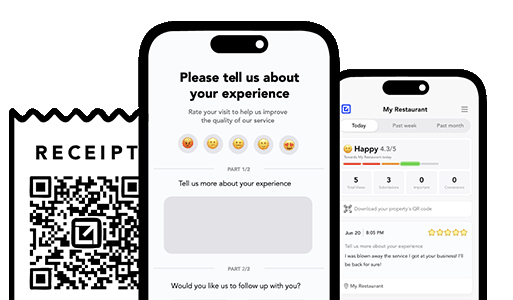
Email clients after every job. Catch issues early, recover unhappy clients fast, and drive repeat work with smart reminders.

Austin Spaeth is the founder of VisibleFeedback, a tool that helps service companies automate post-job follow-ups, catch issues early, and drive repeat work with smart reminders. With a background in software development and a focus on practical customer retention systems, Austin built VisibleFeedback to make it easy to email customers after every job, route problems to the right person, and keep relationships strong without awkward outreach. When he’s not building new features or writing playbooks for service businesses, he’s wrangling his six kids or sneaking in a beach day.
Whether you’re dealing with callbacks, unhappy customers, or low repeat work, we’ll help you tighten the follow up loop.
No credit card required.
