🚀 Start Here For Help

Whether you’re dealing with callbacks, unhappy customers, or low repeat work, we’ll help you tighten the follow up loop.

Turn Jobs Into Repeat Work

VisibleFeedback automatically texts or emails customers after every job.

  • Automated texts or emails post job
  • Catch issues before they go public
  • Reminders that drive repeat jobs
Send My First Follow Up
14 day trial, no credit card required

Recent Reviews Insights

10/13/2026
follow-ups

Window Tinting Follow-Up: More Reviews, Fewer Callbacks, More Repeat Work

A tint job looks perfect in the bay, then haze and tiny water bubbles show up on the drive home and the customer thinks you sold them junk, before the film has even cured. Here's a simple window tinting follow-up system that explains the curing window privately, earns more 5-star reviews, and turns one car into the second car, the house, and the referral.

10/7/2026
local-seo

How to Rank for 'Near Me' Searches: A Local Service Business Playbook

People search 'plumber near me' or 'HVAC near me' and pick from the three businesses Google shows first. Here is exactly how those three get chosen, and how to become one of them.

10/6/2026
Reviews

How to Manage Reviews Across Multiple Locations Without Enterprise Software

Running two to ten locations means two to ten Google ratings that can drift apart without you noticing. Here is a plain-English system to manage reviews across every location, spot the weak one early, and route problems to the right manager, without paying for an enterprise suite.

10/3/2026
Reviews

How to Get More Houzz Reviews for Your Remodeling or Design Business

Houzz is where homeowners vet remodelers and designers before they spend five or six figures, so your reviews there do a lot of heavy lifting. Here's how to get more Houzz reviews, earn Best of Houzz, and catch problems privately before a long project ends in a public one-star.

10/2/2026
Reviews

Why Did My Google Rating Drop? How to Diagnose and Reverse a Falling Star Average

Watched your Google star average slide and have no idea why? Here are the real reasons a Google rating drops, how to diagnose yours in an afternoon, and how to pull it back up.

10/1/2026
Reviews

Do Old Reviews Still Count? Why Review Recency Quietly Decides Who Wins Local Search

Your best reviews might be two years old, and that is a problem. Here is how review recency affects ranking, trust, and the answers AI assistants give about your business, plus how to keep a fresh flow going.

9/30/2026
Reviews

Why Is My Google Review Not Showing Up? How to Fix Filtered and Missing Reviews

A customer swears they left you a five-star review, but it is nowhere on your profile. Here is why Google reviews do not show up, how to tell filtered from deleted, and how to keep it from happening again.

9/27/2026
Reviews

How to Get More Google Local Services Ads Reviews: The Google Guaranteed Playbook

Google Local Services Ads reviews are separate from your Google Business Profile reviews, and they help decide which home service business shows up first with the Google Guaranteed badge. Here is how to get more of them and protect the ones you have.

9/26/2026
Reviews

How to Get More Apple Maps Reviews: The Apple Business Connect Guide for Local Businesses

Apple Maps now shows its own ratings and reviews, and most local businesses have not claimed their listing or asked a single iPhone customer. Here is how to set up Apple Business Connect, earn more Apple Maps reviews, and catch unhappy customers privately before they post.

9/24/2026
Reviews

How to Get More Thumbtack Reviews for Your Service Business

On Thumbtack you pay for every lead, so your review count is what decides whether that lead actually picks you. Here's how to get more Thumbtack reviews, keep them recent, and catch unhappy customers privately before a one-star tanks your conversion.

9/23/2026
Reviews

The FTC Fake Review Rule: What Local Service Businesses Need to Know

The FTC's rule on consumer reviews and testimonials carries penalties that can top $50,000 per violation, and it applies to the small local business down the street, not just national brands. Here's a plain-English breakdown of what the fake review rule bans, where common tactics like review gating and 'only ask the happy ones' actually stand, and a compliant playbook that still gets you more honest reviews.

9/21/2026
Reviews

Google Review QR Code: How to Make One and Where to Place It

A Google review QR code turns the awkward 'go look us up on Google' moment into a one-tap scan, so a customer standing in front of you can leave a review before they walk out the door. Here is how to make one for free in about five minutes, where to put it so it actually gets used, and the one mistake that turns it into a bad-review machine.

9/14/2026
Reviews

Automated Review Requests: How to Ask Every Customer Without Lifting a Finger

Most businesses that swear they ask for reviews only actually ask when they remember, which is almost never. Automated review requests fix that by sending the ask after every single job, at the right moment, in the same words. Here's how to set them up, when to send, the exact templates, and how to keep them from feeling like spam.

9/12/2026
follow-ups

Window & Door Replacement Follow-Up: More Reviews, Fewer Callbacks

Window and door replacement is a high-dollar job a homeowner feels every day and every windy night. A simple follow-up catches a draft, a sticky latch, or a condensation worry privately before it becomes a callback or a 1-star review, turns happy homeowners into reviews, and keeps the referrals coming from the whole street.

9/9/2026
follow-ups

Auto Glass & Windshield Follow-Up: Fewer Callbacks, More Reviews

Windshield work looks perfect the day you finish it, then a leak, a wind whistle, or an ADAS warning light shows up on the drive home and you find out from a 1-star review. Here's an auto glass follow-up system that catches the redo privately, earns more 5-star reviews, and turns one chip repair into fleet, dealer, and referral work.

Show more insights
The FTC Fake Review Rule: What Local Service Businesses Need to Know
© Photo by Blake Wisz on Unsplash

The FTC Fake Review Rule: What Local Service Businesses Need to Know

TLDR: The FTC fake review rule bans fake or paid reviews, undisclosed insider reviews, fake “independent” review sites you control, and suppressing or scrubbing honest negative reviews. Penalties can exceed $50,000 per violation, and the rule applies to the small local business down the street, not just national brands. It does not ban asking customers for reviews. The safe and more effective move is to collect private feedback from everyone, fix problems fast, and invite honest public reviews without filtering by who you think will be nice.


What is the FTC fake review rule?

The FTC fake review rule is the Federal Trade Commission’s “Rule on the Use of Consumer Reviews and Testimonials,” which took effect in October 2024. In plain English, it makes several common review tricks illegal and gives the FTC the power to seek civil penalties for them, penalties that can top $50,000 per violation. If you run a plumbing company, a salon, a cleaning service, an HVAC shop, or any local business that lives on its Google and Yelp rating, this rule is about you as much as it is about any national brand.

Here is the part most owners get wrong. They assume “fake review rule” means “the FTC is coming for anyone who asks for reviews.” That is not what it says. Asking your customers for honest reviews is fine and always has been. What the rule targets is a specific set of dishonest tactics: manufacturing reviews, buying them, hiding who wrote them, and burying the honest bad ones. If you have never done any of that, you are mostly in the clear. The trap is that a few tactics marketed to small businesses as clever “reputation” moves sit right on the wrong side of the line.

Does the FTC fake review rule apply to small local businesses?

Yes. This is the single most important thing to understand. The rule does not carve out an exception for small operators, and the FTC has been explicit that it applies broadly. A one-truck service company that pays a marketing agency to seed a handful of five-star reviews is exposed the same way a large company is. In some ways small businesses are more exposed, because the shortcuts are tempting when you are staring at three reviews and a competitor has three hundred, and because the tactics that get sold to local businesses (buy a starter pack of reviews, gate the unhappy ones, threaten anyone who posts something negative) are exactly the ones the rule was written to stop.

The good news is that the compliant path is not only legal, it works better and costs less than the risky shortcuts. More on that below.

What the FTC fake review rule actually bans

Here is the rule translated into things a service business owner would actually recognize.

Banned practiceWhat it looks like in real life
Fake or false reviewsWriting your own five-star reviews, posting reviews from people who never used you, or generating reviews with AI to look busier than you are.
Buying reviewsPaying anyone for a positive review, or paying for a negative review of a competitor. Includes conditioning a discount or gift on the sentiment of the review.
Undisclosed insider reviewsAn employee, owner, or their family member posts a glowing review without disclosing the relationship.
Fake independent review sitesRunning a “best plumbers in town” site that looks neutral but is secretly controlled by you to promote yourself.
Buying fake followers or viewsPurchasing bots, fake followers, or fake engagement to look more popular or trusted than you are.
Review suppressionUsing threats, intimidation, or baseless legal threats to force a customer to remove an honest negative review, or scrubbing negatives so your public rating misrepresents reality.
Banned by the ruleFake or AI-written reviewsPaid reviews (positive or negative)Insider reviews with no disclosureFake "independent" review sitesBuying fake followers or viewsSuppressing honest negative reviewsStill allowedAsking every customer for a reviewCollecting private feedback firstFixing problems before they postResponding honestly to bad reviewsSending recurring service remindersMaking the review one honest tap

None of the allowed items require a lawyer to pull off. They are just good service with a system behind them.

Is review gating illegal now?

This is the question that matters most for how a lot of local businesses actually operate, so let me be precise. The FTC fake review rule does not contain a line that says “review gating is banned.” But it does prohibit suppressing honest reviews, and it prohibits misrepresenting that the reviews on a page reflect all reviews when you have quietly filtered out the negative ones.

“Review gating” usually means this setup: you ask “how did we do,” happy answers get routed to a public Google or Yelp link, and unhappy answers get routed to a private form that never becomes a public review. When the design and effect of your system is to keep negative reviews off public platforms while funneling positive ones on, you are operating close to the suppression provisions, and you are also violating the posted policies of Google and Yelp regardless of the FTC. Even before this rule, that “intercept bad reviews” approach was risky. Now the legal downside is bigger.

The honest version looks almost identical and is completely defensible: you ask everyone for private feedback, you fix what is broken, and then you invite everyone to leave a public review. You are not deciding who is eligible based on sentiment. Timing changes; eligibility does not. We break the distinction down in detail in how to ask for reviews without being shady (and without review gating).

Risky: review gating"Were you happy?"Yes -> public reviewNo -> private formdead end, negatives buriedSuppresses honest reviewsCompliant: feedback firstEveryone gives privatefeedbackFix problems fastrecover before they postEveryone invited to reviewno filtering by sentiment

What are the penalties for breaking the FTC fake review rule?

The FTC can seek civil penalties for violations, and the maximum per-violation amount is adjusted for inflation each year and now sits above $50,000. “Per violation” is the phrase that should get your attention. A batch of fake reviews is not one violation, it is potentially many. Beyond the dollar figure, there is the reputational damage of being named in an FTC action, which for a local business that trades on trust can be worse than the fine. And that is before Google or Yelp catches the same behavior and removes reviews, flags your profile, or suspends your listing.

You do not need to memorize the exact figure. You need to know that the downside is large enough that no starter pack of purchased reviews is worth it.

VisibleFeedback Icon

Automate follow ups after every job

Catch issues early and drive repeat work with smart reminders.

Start A Free Trial

A compliant playbook that still gets you more reviews

Here is the good news that owners miss: the compliant approach is not a watered-down version of the aggressive one. It usually produces more reviews and a stronger rating over time, because it is built on actually catching and fixing problems instead of hiding them. Here is the playbook.

  • Ask every customer for private feedback first. A one-tap check-in a day or two after the job, sent to everyone, not just the ones you expect to be happy. This is service recovery, not gating.
  • Route problems to a fast fix. When someone flags an issue, get it to the right person the same day and confirm the fix. A recovered customer often leaves a warmer review than one who never had a problem.
  • Invite honest reviews from everyone. After the experience settles, ask for a public review without filtering by sentiment. Send the direct link and keep it to one tap. See how to get more Google reviews for your service business.
  • Never buy, trade, or condition reviews. No paid reviews, no discounts contingent on a five-star rating, no employee reviews without disclosure. Offering a small thank-you for leaving any honest review, positive or negative, is different from paying for a positive one, but when in doubt, do not tie anything to sentiment.
  • Respond to the negatives, do not scrub them. A calm, professional reply to a bad review reassures the next person reading it far more than a suspiciously perfect five-star wall. Here is how to respond to bad reviews.
  • Only remove reviews that violate platform policy. If a review is fake, from a competitor, or breaks Google’s or Yelp’s rules, flag it through the proper channel. That is how to remove a fake Google review the right way. Do not threaten honest reviewers.

This is exactly where a tool helps, and it is worth being clear about how. Tools like VisibleFeedback intercept dissatisfaction before it turns into a public one-star, not by hiding it, but by giving every customer a private channel to raise a problem and routing that problem to the right person fast. VisibleFeedback was built to catch issues before they show up on Yelp or Google, then invite honest reviews and send recurring service reminders that bring customers back. Because you are collecting feedback from everyone and inviting reviews without filtering, you get the reputation upside of a system without stepping toward the suppression line. And at $65 a month with no contract, versus the $299 to $699 the big platforms charge, it is built for a business running a truck or two, not a national chain.

Compliant vs risky: a quick gut check

If you are doing thisYou areDo this instead
Writing or generating your own reviewsOver the lineAsk real customers to share honest experiences
Paying for reviews or five-star-only incentivesOver the lineThank customers, never condition on sentiment
Gating unhappy customers away from public reviewRiskyPrivate feedback first, then invite everyone
Threatening reviewers to remove honest negativesOver the lineRespond professionally in public
Asking every customer for an honest reviewFineKeep doing it, make it one tap
Flagging genuinely fake or policy-breaking reviewsFineUse the platform’s reporting tools

FAQ

Are fake reviews illegal now? Yes. Under the FTC fake review rule, creating, buying, or disseminating fake or false consumer reviews and testimonials is prohibited, and the FTC can seek civil penalties that can exceed $50,000 per violation. This includes reviews written by you, by people who never used your service, or generated by AI to look busier than you are.

Can I still ask my customers for reviews? Absolutely. The rule does not restrict honest review requests. You can and should ask customers for reviews. What you cannot do is fake them, pay for them, hide who wrote them, or suppress honest negative ones. Asking is not the problem; manipulating the outcome is.

Is it illegal to only ask happy customers for reviews? The rule does not name “review gating” directly, but it does prohibit suppressing honest reviews. A system whose design and effect is to keep negative reviews off public platforms leans toward that prohibition, and it also violates Google and Yelp policies. The safe approach is to collect private feedback from everyone, fix issues, then invite everyone to review, with timing rather than sentiment deciding when the invite goes out.

Does the FTC fake review rule apply to a small local business? Yes. There is no small-business exemption. A local plumber, salon, or cleaning company is covered the same as a national brand, and the shortcuts marketed to small businesses (buying a review starter pack, gating, threatening reviewers) are exactly what the rule targets.

Can I offer a discount in exchange for a review? You can thank customers for leaving an honest review, but do not condition any incentive on the review being positive or on a particular star rating. Tying a reward to sentiment is where an incentive crosses into buying a review. When unsure, keep incentives off the table and rely on timing and good service instead. For the texting side of this, see is it legal to text customers for reviews.

The bottom line

The FTC fake review rule sounds scary, and for anyone running the old bag of tricks it should. But for an honest local business, the message is simple and even freeing: you never needed the fake reviews, the paid reviews, or the gating to win. Those tactics carry real legal risk now, and they were always a sign of a business trying to paper over problems instead of fixing them. The rule just makes the honest path the only smart path.

Collect private feedback from every customer, fix what breaks fast, and invite honest reviews without filtering. You will end up with a rating you can defend to a regulator, a customer, or a competitor, and one that keeps climbing because it is real. If you want that to run automatically on every job, start a free 14-day trial of VisibleFeedback, no credit card required.
VisibleFeedback Icon

Automate follow ups after every job

Catch issues early and drive repeat work with smart reminders.

Start A Free Trial
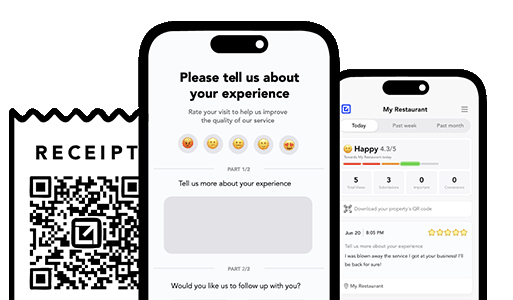
VisibleFeedback running on iphones

Turn Jobs Into Repeat Work

Email clients after every job. Catch issues early, recover unhappy clients fast, and drive repeat work with smart reminders.

No card needed, cancel any time

Related articles

How to Get a Customer to Change a Bad Review After You Fix the Problem

9/1/2026

A bad review isn't permanent. Here's the exact way to get a customer to update or remove a 1-star review after you make things right, without bribing or breaking the rules.

Customer Threatening a Bad Review for a Refund? Here's Exactly What to Do

8/31/2026

A customer says refund me or I'll leave a 1-star review. Here's how to tell a fair request from extortion, the exact replies to send, and when to hold the line.

Review Response Templates: What to Say to 5-Star, 3-Star, and 1-Star Reviews

8/27/2026

Most owners agonize over the 1-star and ignore the 5-star, which is backwards. Here are copy-paste review response templates for every rating, the rules that keep your replies from making things worse, and a way to catch the worst reviews before they ever post.

People also ask

How can I prevent negative reviews from hurting my business? You can’t stop every unhappy customer from sharing feedback, but you can intercept it before it goes public. Tools like VisibleFeedback allow customers to scan a QR code and leave feedback privately. If the feedback is negative, you’re alerted instantly so you can resolve the issue before it turns into a 1-star review.
Why are customer reviews so important for local SEO? Reviews are one of the top local ranking factors on Google. Businesses with consistent positive reviews rank higher in search results and attract more customers. By using VisibleFeedback to capture happy customer moments and guide them to Google or Yelp, you build a steady flow of authentic reviews that improve both your reputation and your local SEO.
What’s the best way to collect customer feedback in 2025? Traditional methods like comment cards and long surveys don’t work anymore, customers want convenience. The easiest way to collect real-time feedback in 2025 is by using QR codes and mobile-friendly forms. VisibleFeedback makes this simple, helping you get instant insights while turning satisfied customers into 5-star reviewers.
How can I get more positive reviews? The key to getting more positive reviews is asking at the right moment, when the customer is satisfied and the experience is still fresh. With tools like VisibleFeedback, you can use smart prompts, follow-up messages, and QR codes to make it easy and natural for happy customers to leave a review, while privately capturing negative feedback before it goes public. For a full breakdown of proven strategies, check out our guide on how to get more reviews.
What’s the fastest way to handle negative reviews? Respond quickly, stay professional, and try to resolve the issue privately if possible. Negative feedback is often a chance to turn frustration into loyalty, if you act fast. Tools like VisibleFeedback help by catching complaints before they go public. For a full playbook on how to handle bad reviews and protect your reputation, check out our guide on what to do when you get negative feedback.
Do private feedback tools really work? Yes, customers prefer private channels to share complaints. VisibleFeedback captures these insights and helps you turn unhappy customers into loyal ones.
Authored by Austin Spaeth

Austin Spaeth

Austin Spaeth is the founder of VisibleFeedback, a tool that helps service companies automate post-job follow-ups, catch issues early, and drive repeat work with smart reminders. With a background in software development and a focus on practical customer retention systems, Austin built VisibleFeedback to make it easy to email customers after every job, route problems to the right person, and keep relationships strong without awkward outreach. When he’s not building new features or writing playbooks for service businesses, he’s wrangling his six kids or sneaking in a beach day.

🚀 What's your goal? Get a plan ...

🚀 Start Here For Help

Whether you’re dealing with callbacks, unhappy customers, or low repeat work, we’ll help you tighten the follow up loop.

×

👋 Wait! Before You Go

Send your first follow up today! Catch issues early and drive repeat work.

No credit card required.