8/7/2025
Reviews
Smart Ways to Get More Reviews [Guide]
Practical, proven ways for any business to get more authentic reviews.

TLDR: Facebook reviews still exist, they are just called Recommendations now, a simple “yes, I recommend this business” with a short written note. You get more of them by turning the feature on in your Page settings, doing work worth talking about, and asking happy customers the same day with a direct link. Just as important, you put a private check-in between your customers and your public Page, so the frustrated ones reach you first and the happy ones become your best social proof. Below is how Facebook recommendations actually work, the setup steps most owners skip, the exact asks, and a private-first system that keeps complaints off your Page.
Plenty of owners have written off Facebook reviews. Big mistake. When someone hears about you from a friend, or spots your yard sign, or sees your van, one of the first things they do is look you up on Facebook. Your Page is where they check if you are real, active, and trusted. A row of recent recommendations under your business name does more to close that buyer than any ad you could run.
Facebook also feeds local discovery. Recommendations can surface in a friend’s feed, in local “does anyone know a good ___” posts, and in Facebook’s own local search. A recommendation is not just a rating sitting on a profile; it is a signal that can travel to the exact people who live near you and already trust the person doing the recommending. That is why getting more Facebook reviews is still one of the cheapest, highest-trust marketing moves a local business has.
The catch is that most businesses stopped asking, because the button they remember disappeared.
Yes, but the name and the format changed, and that change is exactly why so many Pages went quiet. Back in 2018, Facebook retired the old one-to-five star rating and replaced it with Recommendations. Instead of picking a number of stars, a customer answers a plain question, “Do you recommend this business?”, taps yes or no, and writes a short note about why.
For a local buyer, a Recommendation does the same job the old star review did, arguably better, because a real “yes, these folks were great, here’s what they did” reads more like a personal referral than a number. But for business owners, the switch caused three quiet problems:
Fix those three things and your recommendation count starts moving again.
Before you ask a single customer, make sure the feature is actually on and easy to find. Five minutes here saves you from sending people to a dead end.
/reviews/. Test it on your phone so you know exactly what the customer will see.Setup done, here is the part that actually grows the number.
The single biggest lever is timing. A customer who just watched you fix their problem is at peak goodwill. Wait a week and that feeling fades, the job blurs, and the ask feels like homework. Ask within a day of finishing the work and your yes rate climbs dramatically.
Every extra step costs you recommendations. Do not tell people to search for your Page; send the exact link that opens the recommend prompt. The fewer taps between “sure, I’ll do that” and a posted recommendation, the more you collect.
Blasting every customer with a public ask is how complaints end up on your Page. The smart play is to find out how someone feels first, then point the happy ones to Facebook and route the unhappy ones to you privately. That is the whole idea behind a review funnel, and it is the difference between a Page full of recommendations and a Page you are afraid to look at. More on the funnel in a second.
The businesses that win at this do not run a big review push once a year. They ask every happy customer, every week, forever. A steady trickle of fresh, recent recommendations beats a pile of old ones, because buyers care most about what happened lately.

Here is the part most “get more reviews” advice skips. The same public Page that shows off your recommendations will show off a complaint just as loudly. A recommendation that says “would not recommend, they no-showed twice” sits right under your business name, and unlike a Google review buried among many, it greets everyone who checks whether you are legit.
You cannot delete an honest critical recommendation. What you can do is make sure the unhappy customer reaches you before they reach Facebook. Most public complaints come from people who felt ignored, not people who are impossible to please. They had a problem, nobody asked, and the Page was the only place they felt heard. Take away the silence and you take away most of the reason to post.
That is what a simple post-job follow-up does. A short private check-in a day or two after the job, “was everything good, or is anything not quite right?”, gives a frustrated customer a private lane to tell you first. You fix it, and the recommendation that would have gone up never does. Tools like VisibleFeedback intercept dissatisfaction before it turns into a public complaint, routing an unhappy reply straight to the right person while the fix is still easy, instead of letting it surface on your Facebook Page or on Google. The same check-in surfaces your happy customers, who are exactly the ones to send to your recommendation link. VisibleFeedback was built to catch issues before they show up on Yelp, Google, or your Facebook Page, and to do it at a no-contract price built for a local business, not an enterprise.
This is not review gating, and it is worth being clear about the line. You are not hiding negative feedback or blocking anyone from posting; you are simply making sure you hear a problem first so you can fix it. Here is the honest version of that approach in asking for reviews without being shady, and the step-by-step for when something does go wrong in how to handle unhappy customers fast.
You do not have to choose one platform, and you should not. But knowing what each is good for tells you where to point your energy.
| Nextdoor | |||
|---|---|---|---|
| Format | Yes/no recommendation + note | 1 to 5 stars + text | Neighbor recommendation |
| What it really is | Social proof on your Page | Search visibility | Neighbor referrals |
| Audience | Friends and local followers | Everyone searching | Your exact service area |
| Best for | Trust when people look you up | Getting found at all | Word-of-mouth leads |
| Biggest risk | A public complaint under your name | Low review volume | A local public complaint |
Google is still where most buyers find and vet you, so keep stacking reviews there; here is the full method for getting more Google reviews for a service business. Facebook is where they confirm you are real and active once they have heard your name, and Nextdoor recommendations turn a happy customer into an active referrer. The same post-job check-in feeds all three.
Steal these, swap the names, keep them short and human.
Same-day text after a happy job:
Hey [Name], so glad the [job] went well. If you have 30 seconds, a quick recommendation on our Facebook Page would mean a lot to us. Here’s the direct link: [your /reviews/ link]. Thank you.
In person, when a customer says they’re thrilled:
That’s great to hear. Honestly, recommendations on Facebook help small shops like ours more than anything. If you’re on there, I’ll text you the link so it’s one tap.
Follow-up after a positive check-in reply:
Thanks [Name], that made my day. One small favor: would you mind saying that in a recommendation on our Facebook Page? Here’s the link, no worries if you’re too busy: [your /reviews/ link].
Private response the moment an unhappy reply comes in:
Thanks for telling me, [Name], and I’m sorry it’s not right. I’d much rather hear it from you than leave you unhappy. Can I come back [day] to make it right?
Public reply to a critical recommendation (as the Page):
Thank you for the honest feedback, [Name]. This isn’t the experience we want anyone to have. I’ve sent you a message so we can make it right.
Does Facebook still have reviews? Yes, they are just called Recommendations now. Instead of a one-to-five star rating, a customer answers “Do you recommend this business?”, taps yes or no, and writes a short note. For a buyer it does the same job as the old star review, and it is still public on your Page.
How do I turn on Facebook Recommendations? Open your Page settings, find the Templates and Tabs area, and make sure the Reviews or Recommendations tab is enabled and visible. If it is off, customers cannot leave one. It only takes a minute, and plenty of Pages have it off without the owner realizing it.
What is the direct link to leave a Facebook recommendation? It is usually your Page URL followed by /reviews/. Test it on your phone so you see exactly what customers see, then paste that link into your ask instead of telling people to search for your Page.
Can I delete a bad Facebook recommendation? Not an honest one. You can report a recommendation that violates Facebook’s policies, and you can reply publicly to show future readers you handle problems well, but you cannot remove genuine criticism. The reliable fix is prevention: a private check-in that catches the complaint before it ever goes public.
How many Facebook recommendations do I need? There is no magic number, but recency matters more than the total. A steady stream of recent recommendations tells a buyer you are active and trusted right now, which beats a big pile of years-old ones. Aim to add a few every month rather than chasing a one-time total.
Facebook reviews did not disappear, the ask just changed, and most local businesses never caught up. Turn Recommendations on so customers can actually leave one. Ask the same day, with a direct link, while the goodwill is fresh. And put a private channel between your customers and your public Page, so the frustrated ones reach you first and the happy ones become the social proof that closes your next buyer.
You can start today with nothing but a claimed Page and a habit of asking. If you would rather the check-in run itself after every job, catching problems before they hit your Page and pointing your happy customers straight to your recommendation link, start a free 14-day trial of VisibleFeedback, no credit card required. For the gentle, non-pushy way to ask across every platform, here is how service companies get more reviews without being pushy.
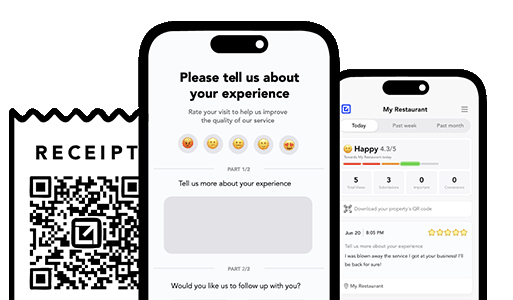
Email clients after every job. Catch issues early, recover unhappy clients fast, and drive repeat work with smart reminders.

Austin Spaeth is the founder of VisibleFeedback, a tool that helps service companies automate post-job follow-ups, catch issues early, and drive repeat work with smart reminders. With a background in software development and a focus on practical customer retention systems, Austin built VisibleFeedback to make it easy to email customers after every job, route problems to the right person, and keep relationships strong without awkward outreach. When he’s not building new features or writing playbooks for service businesses, he’s wrangling his six kids or sneaking in a beach day.
Whether you’re dealing with callbacks, unhappy customers, or low repeat work, we’ll help you tighten the follow up loop.
No credit card required.
