TLDR: A window tinting follow-up is a short, timed check-in you send after the install is done. It explains the milky haze and tiny water bubbles that are normal while the film cures, in the exact window when a customer is most likely to panic and assume you sold them a bad job. It catches the worried driver privately before a 1-star review, it points happy customers toward a public review, and it keeps you first in line for the second car, the spouse’s SUV, and the house windows. Below is the timing, the exact text and email templates, a private-first review funnel, and the repeat-work loop that keeps a tint bay booked.
Why the window tinting follow-up is your cheapest reputation insurance
Window tinting has a problem almost no other trade has: your best work looks its worst right after you finish it. You lay a flawless ceramic install, crisp edges, zero dust, perfect lines, and then the film spends the next few days to a few weeks curing, which to an untrained eye looks like haze, fog, and little water bubbles trapped under the film. That is why a strong window tinting follow-up is not a nicety. It is the thing that decides whether the normal curing a customer notices on the drive home reaches you as a quick reassuring text or reaches the public as a 1-star review.
Think about what actually happens after a clean install. The customer pays, pulls out of the bay, and gets on the road feeling great. Then the afternoon sun hits the back glass and they see a milky cloudiness and a scatter of tiny water pockets. To you, that is moisture evaporating out exactly like it should. To them, it looks like you glued on a defective sheet of plastic. They do not call, because they already decided. They post. A large share of a tint shop’s worst reviews come from installs that were completely sound, the film just had not finished curing and nobody explained it in a way that stuck. No amount of extra care at the squeegee fixes that. Only a check-in after does.
What a window tinting follow-up actually is (and what it is not)
It is not a long satisfaction survey nobody fills out. It is not a monthly newsletter about film warranties that dies in a promotions folder. And it is not a review link stapled to the receipt before the customer has watched the film cure through a single sunny afternoon.
A good window tinting follow-up is one short, warm message at two moments that each do a specific job:
the curing check-in, sent a day or two after the install, which sets expectations about the haze and water bubbles and gives a nervous customer an easy, private way to say “hey, something still looks off” so you can reassure them or book a redo before they post
the happy-customer follow-up, sent once the film has cleared and they love it, which asks for a review and plants the seed for the second car, the truck, and the house
That is the whole thing. In tint work the timing matters as much as the wording, because the danger window is specific. Film sheds trapped moisture and hazes over the first few days to a couple of weeks depending on the weather and how much sun the glass gets, which is exactly when the cloudiness and bubbles show up. Get in front of that window and the worry comes to you. Miss it and the customer decides on their own what a little haze means.
When should you send a window tinting follow-up?
Timing beats phrasing. Map a check-in to the moments that actually decide your reputation.
Right at pickup, in person and in writing: your care card and the first text. Tell them the film will look hazy and may show small water bubbles while it cures, that it will clear on its own, not to roll the windows down for the recommended number of days, and to skip harsh cleaners and ammonia. Setting expectations out loud prevents most of the panic, but say it in a text too, because nobody remembers a verbal rundown an hour later.
A day or two after the install: the most important one, and the one almost everyone skips. The customer has now driven in the sun and seen the haze. A short “totally normal, here’s when it clears, reply if anything still looks off” turns a quiet worry into a private reply instead of a review.
About two weeks out, once it’s clearly cured: the payoff check-in. If the film is crystal clear and they’re happy, this is when you ask for the review, and when you mention the other car or the house.
Seasonally and at milestones: a “summer’s coming, want the rest of the fleet or the house done before it heats up?” nudge, plus a reminder that quality film carries a lifetime warranty you stand behind. These rebook real revenue and keep you top of mind.
The private review funnel: catch the “it looks cloudy” before it goes public
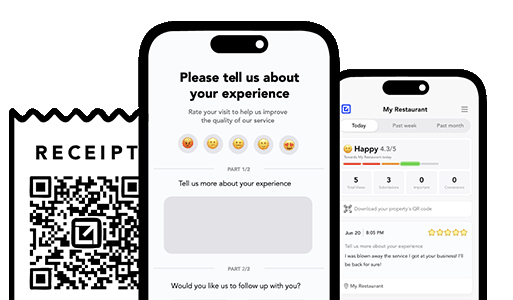
The core move in any good follow-up is simple. You ask people how it’s going before you ask them to post, and you route the two answers to two different places. Happy customers go to Google. Customers with a worry come straight to you. Tools like VisibleFeedback intercept that dissatisfaction before it turns into a review, which for a tint shop is the whole ballgame, because your bad reviews are usually just normal curing that nobody explained, plus the occasional real redo you would happily have handled.
The magic is in the routing. When a customer taps “something looks off,” that never turns into a review request, it turns into a reply from you within the hour. Most of the time you explain that the haze and the bubbles are the film curing and give them a date it should be clear by, and the customer who was a step away from a 2-star instead tells their coworker you were straight with them. When it’s a real issue, a contamination speck, a lifted edge, a light gap, or film that is still cloudy well past the curing window, you book the redo under warranty before it ever hits the internet. Same car, completely different outcome, decided entirely by whether you reached out first. If a tougher one surfaces, handle it like any recovery: fast and personal. Here is a 15-minute recovery process that works for any service business.
Copy-paste window tinting follow-up templates
Keep them short, human, and tied to a real moment. Steal these and change the voice to match yours.
Pickup / care note (text):
Hi [Name], this is [You] at [Shop]. Thanks for letting us tint the [vehicle]. Quick heads up while the film cures: it’s normal to see some haziness and small water bubbles for the first few days to a couple weeks, and they clear on their own. Please don’t roll the windows down for [X] days, and skip ammonia cleaners. Anything looks off after it clears, just text me here.
Curing check-in (text, 1 to 2 days later):
Hi [Name], how’s the new tint looking? If you’re seeing a little haze or a few tiny water bubbles, that’s the film curing and it’ll clear up, no worries. If anything still looks off, reply here and we’ll take care of it, it’s warrantied. If it’s looking sharp, that’s what we love to hear.
Happy-customer review ask (text, ~2 weeks):
Hi [Name], glad the tint cleared up nice and you’re loving it. If you have a sec, a quick Google review would mean a lot and helps other folks find a shop that does it right: [direct link]. And whenever you want the [other car / truck / house windows] done, we’ve got you.
Seasonal / fleet reminder (text):
Hi [Name], quick note from [Shop], summer heat is on the way. Want to get the [second vehicle / rest of the fleet / home or office windows] done before it bakes? Reply YES and I’ll grab you a slot before the schedule fills up.
Your repeat business is the second car, the house, and the referral
Here is the thing that makes tint work quietly great for repeat revenue. One happy customer almost never stops at one job. There’s the spouse’s SUV, the kid’s first car, the new truck, the classic in the garage. There’s the windshield strip, the ceramic upgrade, paint protection film. And the same customer who loved their car tint is the one who asks, “do you do houses?” Residential and commercial window film is a whole second business hiding inside your customer list, and heat and glare complaints at home are easy to turn into a quote.
That reframes the whole follow-up. Every customer you keep happy and every curing worry you answer fast is really a deposit in your future pipeline, because tint is visible, people notice a sharp blacked-out car, and your work rides around town on hundreds of vehicles as a rolling billboard. The question is whether your name comes up when someone asks who did it, and whether you’re the one who texts them before summer instead of letting the shop across town send the first offer.
The follow-up feeds this loop on both sides. It catches the curing worry so the customer stays a fan, and it gives you a natural reason to check back in and mention the other car or the house. That’s how a one-bay shop ends up tinting a whole friend group and half an office park from a single install. For more on turning single jobs into ongoing work, see turning one-time customers into repeat work without spam.
Doing it by hand vs automating it
You can absolutely start this with a texting app and a notes doc. The templates above work the day you copy them. The trouble shows up at volume, when you’re banging out several installs a day and the follow-up is the thing that slips.
By hand
Automated
Pickup care note
Easy to forget after a busy install
Fires automatically when the job is marked done
Curing check-in
Rarely happens, you’re onto the next car
Sends around day 1 to 2 without you touching it
Routing a “looks cloudy” worry
Buried in your personal texts
Flagged and sent to you instantly
Review ask
You forget which jobs cured clean
Triggered later, only to happy customers
Seasonal / fleet reminder
You never get around to it
Fires on schedule, rebooks the work
Weekly view of issues
None
Summary of what’s trending
The reason tint shops automate it is simple math. Once you’re doing several cars a day, remembering to send a care note after each one, check in a day later, route every “it looks hazy” reply to yourself before it goes public, ask only the happy customers for a review, and then circle back before summer for the fleet and the house becomes its own job, and it’s exactly the job that slips when the bay is slammed. VisibleFeedback runs it on autopilot: it sends the care and curing check-ins on your schedule, routes any worry straight to you before it goes public, points happy customers to a Google review, and fires the seasonal reminder so that revenue doesn’t drive to a competitor. VisibleFeedback was built to catch issues before they show up on Yelp or Google, and it starts at $65 a month with no contract, versus the $299 to $699 the big reputation platforms charge, which matters when you’re a one or two-bay shop, not a franchise.
Automate follow ups after every job
Catch issues early and drive repeat work with smart reminders.
Explain the curing haze and water bubbles at pickup, out loud and in a text
Tell them the number of days to wait before rolling the windows down
Warn off ammonia and abrasive cleaners
Send a curing check-in 1 to 2 days after the install
Invite the worry, so “it looks cloudy” comes to you instead of Google
Keep it to one tap: 1 looks great / 2 have a question / 3 please call me
Reassure the normal curing questions with a date it should be clear by
Book every real issue as a warrantied redo, never route it to a review
Ask for the review only after the film has cleared and they’re clearly happy
Send the Google review link directly, not “find us online”
Mention the second car, the truck, or the house windows when you ask
Send a seasonal nudge before summer heat and glare season
Do it for every install, not just when you remember
FAQ
What is a window tinting follow-up? It is a short message you send after an install: one at pickup with care tips, and one a day or two later checking how the tint looks. The curing check-in explains the normal haze and water bubbles and catches a worried customer privately so you can reassure them or book a warranty redo before it becomes a public review. A later message asks a happy customer for a review and opens the door to the second car and the house.
Why does new window tint look cloudy or bubbly, and should I tell customers? Yes, always. Freshly installed film traps a thin layer of moisture that evaporates out over the next few days to a couple of weeks, which looks like haziness and small water pockets and then clears on its own. Customers who aren’t told assume the install failed and post before it cures. Saying it clearly at pickup and again in a follow-up text prevents most of those reviews.
When should I send the follow-up? The curing check-in 1 to 2 days after the install matters most, because that’s when the customer has driven in the sun and seen the haze. Add a care note at pickup, then a review ask about two weeks out once the film is clearly cured, and seasonal reminders before summer. For a broader look at timing, see our guide on when to send follow-ups after a job.
How do tint shops get more Google reviews without being pushy? Only ask customers who already told you they’re happy, ask once, after the film has cured clear, and make it one tap with a direct link. That’s the whole trick. Here is the longer version on getting more Google reviews for a service business.
A customer says there are still bubbles after two weeks. Did we install it wrong? Maybe, maybe not, and the point is you want to find out privately. Tiny water pockets should clear within the curing window; if they’re gone, great, it was just curing. If bubbles, lifted edges, a light gap, or lingering haze are still there well past that window, that’s a real redo and quality film is warrantied, so book it fast. Either way, reaching out first keeps the customer on your side. If a review still slips through, respond calmly and factually. Here is how to respond to bad reviews without making it worse.
The bottom line
Your reputation as a tint shop isn’t decided when the customer pays. It’s decided over the next few days, while the film cures, the haze clears, and the customer decides for themselves whether a little cloudiness means you sold them junk. A short text at the right moment puts you back in that conversation: you explain the curing before it goes public, you turn the happy customers into the reviews that win your next booking, and you keep the second cars, the fleets, and the house jobs coming.
Start with the templates above and one habit: text every customer a day or two after their install. If you’d rather it run itself across every job and come back before summer on its own, start a free 14-day trial of VisibleFeedback, no credit card required.
Automate follow ups after every job
Catch issues early and drive repeat work with smart reminders.
How can I prevent negative reviews from hurting my business? You can’t stop every unhappy customer from sharing feedback, but you can intercept it before it goes public. Tools like VisibleFeedback allow customers to scan a QR code and leave feedback privately. If the feedback is negative, you’re alerted instantly so you can resolve the issue before it turns into a 1-star review.Why are customer reviews so important for local SEO? Reviews are one of the top local ranking factors on Google. Businesses with consistent positive reviews rank higher in search results and attract more customers. By using VisibleFeedback to capture happy customer moments and guide them to Google or Yelp, you build a steady flow of authentic reviews that improve both your reputation and your local SEO.What’s the best way to collect customer feedback in 2025? Traditional methods like comment cards and long surveys don’t work anymore, customers want convenience. The easiest way to collect real-time feedback in 2025 is by using QR codes and mobile-friendly forms. VisibleFeedback makes this simple, helping you get instant insights while turning satisfied customers into 5-star reviewers.
Austin Spaeth is the founder of VisibleFeedback, a tool that helps service companies automate post-job follow-ups, catch issues early, and drive repeat work with smart reminders. With a background in software development and a focus on practical customer retention systems, Austin built VisibleFeedback to make it easy to email customers after every job, route problems to the right person, and keep relationships strong without awkward outreach. When he’s not building new features or writing playbooks for service businesses, he’s wrangling his six kids or sneaking in a beach day.
🚀 What's your goal? Get a plan ...
🚀 Start Here For Help
Whether you’re dealing with callbacks, unhappy customers, or low repeat work, we’ll help you tighten the follow up loop.