8/7/2025
Reviews
Smart Ways to Get More Reviews [Guide]
Practical, proven ways for any business to get more authentic reviews.

TLDR: Apple Maps now shows its own native ratings and reviews, and you manage them through a free dashboard called Apple Business Connect. To get more Apple Maps reviews, claim your listing, fill the place card out fully, and ask happy iPhone customers the same day the job wraps. Put a private check-in between your customers and your public listing, so the frustrated ones reach you first and never post a low rating in the first place. Below is exactly how Apple Maps reviews work now, the setup steps most owners skip, and a private-first system that protects the rating you are building.
For years, Apple Maps was the platform local businesses could safely ignore. It pulled its ratings from Yelp and TripAdvisor, so there was nothing to manage and nothing to ask for. That is over. Apple Maps now has its own ratings and reviews, written and posted right inside the Maps app on the iPhone, and shown on the place card that customers see when they look you up.
That is a big deal for one simple reason: roughly half of US smartphones are iPhones, and iPhone owners skew toward higher household income. When one of them asks Siri for “a plumber near me,” taps a business in Apple Maps, or navigates to an address with CarPlay, they are looking at your Apple Maps listing, not your Google profile. If that listing is blank or thin while a competitor’s is filled out with photos and real reviews, you lose the job before the phone ever rings.
Learning how to get more Apple Maps reviews is really about not leaving half your local market staring at an empty listing. And because almost no local businesses have claimed their Apple listing yet, this is one of the rare marketing moves where a couple of hours of work puts you ahead of nearly everyone in your area.
Yes. This is the part that trips up most owners, because the old assumption (“Apple just uses Yelp”) is stuck in everyone’s head. Apple has been building out its own business tools, and the place card an iPhone user sees now supports native Apple Maps ratings and reviews, along with photos, hours, and other details you control.
You manage all of it through Apple Business Connect, a free dashboard Apple launched so businesses can own their own listing instead of relying on third parties. Think of it as Apple’s answer to a Google Business Profile. If you have never logged in, your listing is almost certainly running on whatever data Apple scraped together, which means wrong hours, a missing photo, or an old address are all live right now for anyone on an iPhone.
The takeaway: the reviews are real, the listing is yours to claim, and doing nothing is a choice that leaves a sloppy first impression in front of half your market.
Before you ask a single customer for a review, get the listing itself in shape. A filled-out place card makes every future review land on something that looks legitimate and cared for.
With the listing claimed and polished, here is what actually grows the number.
Timing is the biggest lever there is. A customer who just watched you solve their problem is at peak happiness. Wait a week and the feeling fades, the details blur, and the ask starts to feel like a chore. Ask within a day of finishing the work and far more people follow through.
You do not need anyone to guess their way through the Maps app. When you are wrapping up a job, it is easy to notice whether a customer is holding an iPhone, and iPhone users are exactly the ones who can leave an Apple Maps review. Point Android users to Google and iPhone users to Apple Maps, and you build both profiles at once instead of sending people to a platform they cannot use.
“Leave us a review sometime” gets ignored. A specific, friendly ask gets action. Tell the customer where to go and why it helps: “If you’re on an iPhone, would you mind leaving us a quick review in Apple Maps? It really helps other neighbors find us.” Clear beats clever every time.
The businesses that win at reviews do not run a big campaign once and stop. They ask every happy customer, every week, on both Apple and Google. A steady trickle of recent reviews beats a stale pile, because buyers care most about what happened lately. This is the same discipline behind getting more Google reviews for your service business; the platform changes, the habit does not.

Here is the trap. If your whole system is “ask everyone for a public review,” you are also inviting your unhappy customers to broadcast their frustration on your Apple Maps listing, where it sits under your name for every future buyer to read. One raw one-star review next to a handful of good ones drags down the average and, worse, plants doubt in the exact moment a new customer is deciding whether to call.
The fix is a review funnel: figure out how a customer feels before you point them anywhere public. Ask a simple private question after the job. Happy customers get pointed to Apple Maps or Google. Unhappy customers reach you privately, so you can fix the problem before it ever becomes a public rating. Most bad reviews do not come from people who are impossible to please; they come from people who felt ignored. A private-first check-in gives them the attention that keeps them off your listing.
This is exactly what feedback funnels are built to do, and it is the difference between a listing full of reviews and a listing you are afraid to open.
Doing this by hand after every single job is where good intentions go to die. You get busy, the follow-up slips, and the only people who remember to post are the ones who are angry. This is the gap tools like VisibleFeedback are built to close: it automatically texts or emails each customer after the job, catches the unhappy ones privately before they reach Apple Maps or Google, routes the issue to the right person for a fast fix, and points the happy ones to leave a public review. It was built to catch issues before they show up on Yelp, Google, or now Apple Maps, and to do it on autopilot so nothing slips.
You do not have to choose one platform. But it helps to know what each is for so you spend your asks wisely.
| Platform | Best for | Who you reach | Effort to claim |
|---|---|---|---|
| Apple Maps | iPhone users, Siri and CarPlay searches | ~50% of US phones, higher-income skew | Free via Apple Business Connect, low competition today |
| The largest share of local search overall | Everyone, especially Android and desktop | Free via Google Business Profile, high competition | |
| Yelp | Restaurants, some home services, review-heavy shoppers | Buyers who actively read reviews | Free, but strict review-solicitation rules |
The smart move for most local businesses: treat Google and Apple Maps as the two you actively build, since between them they cover nearly every phone in your service area. Yelp matters more in some verticals than others. If iPhone customers are a big part of your base, Apple Maps is the fastest-growing gap you can close right now. It is a close cousin to the point made in why salon reviews matter most on iOS: the platform your best customers actually carry deserves your attention.
Apple Maps now supports its own native ratings and reviews on the place card, managed through Apple Business Connect. It no longer depends solely on third-party sources the way it once did, which is why claiming and maintaining your listing matters.
Yes. Apple Business Connect is free to use. You claim your business, verify it, and manage your listing, photos, and reviews at no cost, similar to a Google Business Profile.
Customers leave reviews from the Maps app on an iPhone by finding your business, opening the place card, and using the ratings and reviews section. Because it is on the device they already carry, the ask is easy for iPhone users; you just need to point them there the same day.
You can report reviews that violate Apple’s guidelines through your listing, though the better protection is prevention. A private check-in that catches unhappy customers before they post keeps most negative ratings from ever appearing. For the ones that do slip through on any platform, the same calm, public response approach applies; see our guide on creating a review link and how to make the good path as easy as possible.
There is no magic number, but recency and steadiness matter more than a giant one-time pile. A handful of recent, genuine reviews, refreshed every month, does more for a new buyer’s confidence than a stack of old ones. Build the weekly asking habit and the count takes care of itself.
Apple Maps quietly became a real review platform, and half your local market is looking at a listing you have probably never touched. Claim it in Apple Business Connect, fill it out, and start asking happy iPhone customers the same day you finish the job. Then protect the rating you are building by catching unhappy customers privately, before their frustration turns into a public one-star. Do those two things consistently and you will be ahead of nearly every competitor in your area, because most of them still think Apple Maps runs on Yelp.
Start a free 14-day trial of VisibleFeedback, no credit card required.
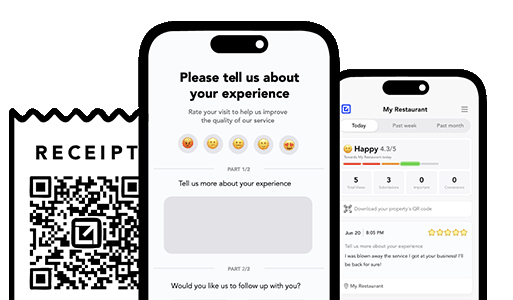
Email clients after every job. Catch issues early, recover unhappy clients fast, and drive repeat work with smart reminders.

Austin Spaeth is the founder of VisibleFeedback, a tool that helps service companies automate post-job follow-ups, catch issues early, and drive repeat work with smart reminders. With a background in software development and a focus on practical customer retention systems, Austin built VisibleFeedback to make it easy to email customers after every job, route problems to the right person, and keep relationships strong without awkward outreach. When he’s not building new features or writing playbooks for service businesses, he’s wrangling his six kids or sneaking in a beach day.
Whether you’re dealing with callbacks, unhappy customers, or low repeat work, we’ll help you tighten the follow up loop.
No credit card required.
