🚀 Start Here For Help

Whether you’re dealing with callbacks, unhappy customers, or low repeat work, we’ll help you tighten the follow up loop.

Turn Jobs Into Repeat Work

VisibleFeedback automatically texts or emails customers after every job.

  • Automated texts or emails post job
  • Catch issues before they go public
  • Reminders that drive repeat jobs
Send My First Follow Up
14 day trial, no credit card required

Recent Reviews Insights

8/28/2026
Reviews

How to Get More Angi Reviews for Your Home Service Business

Angi ranks contractors by review volume, recency, and rating, so a slow trickle of reviews quietly buries you. Here's how home service businesses earn more Angi reviews, keep them recent, and catch problems privately before they turn into a public one-star.

8/27/2026
Reviews

Review Response Templates: What to Say to 5-Star, 3-Star, and 1-Star Reviews

Most owners agonize over the 1-star and ignore the 5-star, which is backwards. Here are copy-paste review response templates for every rating, the rules that keep your replies from making things worse, and a way to catch the worst reviews before they ever post.

8/24/2026
Reviews

How to Get More Facebook Reviews and Recommendations for Your Local Business

Facebook quietly replaced star reviews with yes/no Recommendations years ago, and most local businesses never updated how they ask. Here's how to earn more Facebook recommendations, set the feature up right, and catch unhappy customers privately before they post to your Page.

8/23/2026
Reviews

Is It Legal to Text Customers for Reviews? SMS Compliance for Local Businesses

Yes, you can text customers for reviews, but only if you follow a few consent and opt-out rules. Here is the plain-English compliance guide for local service businesses.

8/20/2026
Reviews

How to Ask Patients for Reviews Without Violating HIPAA

Asking patients for reviews is allowed under HIPAA. Disclosing that someone is your patient, or any detail of their care, is where practices get fined. Here is how to build a review request and response process that stays compliant and still fills your listing with 5-star reviews.

8/19/2026
Reviews

How Many Google Reviews Do You Need? A Straight Answer for Local Businesses

There's no universal magic number of Google reviews, but there is a right number for your market. Here's how to figure out how many reviews you actually need to get chosen, plus the recency and rating benchmarks that matter just as much, and a simple system to get there without begging.

8/16/2026
Reviews

How to Get More Nextdoor Recommendations for Your Local Business

Nextdoor recommendations are the digital version of a neighbor over the fence saying 'call these guys.' Here's how local service businesses earn them, why one thread can send you three jobs, and how to catch problems privately before they land in a public neighborhood post.

8/14/2026
follow-ups

Flooring Installer Follow-Up: More Reviews, More Referrals, Fewer Callbacks

Flooring is a high-dollar, one-shot job where a squeak or a gap the homeowner notices a week later turns into a callback and a bad review. A simple flooring installer follow-up catches those small worries privately, turns happy homeowners into reviews, and keeps the referrals coming.

8/13/2026
follow-ups

Home Inspector Follow-Up: More Reviews, More Realtor Referrals, Fewer Disputes

Home inspectors live and die by two things: online reviews from buyers and steady referrals from agents. A simple home inspector follow-up system catches an anxious buyer privately before they leave a 1-star, turns happy clients into reviews, and keeps you top of mind with the realtors who feed your calendar.

8/4/2026
Reviews

Water Damage Restoration Follow-Up: More 5-Star Reviews, Fewer Complaints

Restoration jobs are stressful, multi-week, and insurance-tangled, which is exactly why a great crew still ends up with a mediocre rating. Here is a simple water damage restoration follow-up system that catches complaints privately during the job, earns more 5-star reviews, and turns plumbers, agents, and property managers into a steady referral stream.

7/27/2026
Reviews

How to Remove a Fake Google Review (and What to Do When You Can't)

A fake Google review from someone who was never your customer can drag down your rating and scare off real ones. Here is how to spot a fake review, report it so Google actually removes it, and protect your rating when the review stays up.

7/26/2026
Reviews

How to Create a Google Review Link (Step by Step, Plus a Free QR Code)

A direct Google review link drops a customer straight into the review box in one tap, which is the difference between a review that gets written and one that never does. Here is how to create your Google review link three different ways, turn it into a QR code, and actually get it used.

2/14/2026
Reviews

How to Get More Google Reviews for Your Service Business

Stop losing customers to competitors with better reviews. Learn the system service businesses use to get 10-20x more Google reviews without feeling pushy or annoying customers.

2/13/2026
Reviews

How to Respond to Bad Reviews: A Guide for Service Businesses

A bad review doesn't have to cost you customers. Here's exactly how to respond — with examples from HVAC, plumbing, electrical, and other service businesses.

2/12/2026
Electrician

How Electricians Can Prevent Bad Reviews Before They Happen

Most bad reviews for electricians come from the same 5 preventable problems. Here's how to identify and fix them before a frustrated homeowner opens Google.

Show more insights
How to Ask for Reviews Without Being Shady (And Without Review Gating)
© Photo by Luis Villasmil on Unsplash

How to Ask for Reviews Without Being Shady (And Without Review Gating)

TLDR: A lot of businesses avoid asking for reviews because they’re worried it looks desperate—or worse, shady. And they’re right to worry: many “review strategies” are just review gating with nicer wording. The legitimate approach is simpler: ask every customer for private feedback first (the same way you’d ask in person), use that feedback to fix problems quickly, and invite all customers—without filtering—to share a public review after the experience has had time to settle. That isn’t review gating; it’s basic service recovery and customer care. This article explains what review gating is, why it’s risky, and how to build a review request process that feels honest: timing rules, scripts, and a two-step loop that increases reviews without creating the ‘intercept bad reviews’ vibe. You’ll also see how VisibleFeedback supports a compliant approach by collecting private feedback, speeding up resolution, and helping you ask for reviews in a way that feels earned, not manipulative.


The Problem: “Review Tactics” Often Feel Gross for a Reason

Customers can smell manipulation.

They know when you’re doing the thing where:

  • happy people get a link to Google
  • unhappy people get pushed into a private form
  • and somehow the bad experiences never “make it” to public reviews

Even if you don’t mean it that way, the vibe matters. If your process feels like you’re trying to hide complaints, you’ll get distrust, backlash, and occasionally someone calling you out directly in a review.

The goal isn’t to “game the system.” The goal is to build a review request process that feels normal, fair, and consistent.


What Review Gating Actually Is (In Plain English)

Review gating is when you intentionally filter who gets asked to leave a public review based on whether they’re likely to leave a positive one.

Common examples:

  • “Rate us 1–5” → only 4–5 get the Google link
  • “Are you happy?” → Yes gets Google, No goes to a private form
  • “Tell us what we did wrong” → and you never ask them to review publicly

That’s the line you want to avoid if you want to be seen as legitimate.

You can still collect private feedback. You can still fix issues. You just can’t run a system whose purpose is to hide negative reviewers from public platforms.


The Legitimate Alternative: A Two-Step Review Process That Doesn’t Feel Shady

Here’s a clean approach that works for most service businesses:

1) Step one: ask for private feedback from everyone
2) Step two: later, invite everyone to leave a public review

The key difference:

  • You’re not deciding who gets invited to review.
  • You’re using feedback to improve service and recover issues quickly.
  • Everyone gets a review invite. Timing is what changes, not eligibility.

This sounds subtle, but it’s what keeps the process ethical and defensible.


Why Asking for Feedback First Is Normal (And Not “Interception”)

If you were running a business in a small town 30 years ago, you’d do this naturally:

  • “How did we do?”
  • “Anything we could’ve done better?”
  • “Was everything handled okay?”

That is not sinister. That is customer care.

The “intercept bad reviews” vibe happens when:

  • the feedback prompt is clearly designed to divert complaints away from public platforms
  • and the review link only appears for positive experiences

So the fix is: keep feedback as feedback, and keep review invitations consistent.


Timing Rules: Same Day vs Next Day vs Later

Timing is the easiest way to keep things legit while still being practical.

When to ask for feedback

Feedback should be fast, because fast feedback lets you fix issues while they’re still fixable.

  • emergency jobs: 1–3 hours after completion
  • routine services: next day (late morning to early afternoon)
  • installs: 2–4 days later (after settling time)
  • recurring service: next day after each visit

When to invite reviews

Review invites should come after the customer has had time to evaluate the outcome.

  • emergency jobs: next day (not immediately after payment)
  • routine service: 1–2 days after completion
  • installs: 5–10 days after completion
  • recurring: choose a cadence (e.g., after 2nd or 3rd visit, or after a milestone)

This reduces the chance you catch someone at peak irritation or price pain.


Scripts That Feel Human (Not Desperate)

Keep it short. One message. No begging.

Feedback request (SMS)

Hey [Name] — quick 2-second check: how did we do?
🙂 Great 😐 Okay 🙁 Not good

Review invite (SMS)

Thanks again for choosing [Business]. If you have a minute, would you mind leaving an honest Google review? It helps local businesses like ours a lot.
[Review Link]

Note the language: “honest.” That’s a credibility signal.

Review invite (email)

Subject: Quick favor? (Honest review)

Hi [Name],
Thanks again for choosing [Business]. If you have a minute, we’d appreciate an honest Google review. It helps future customers find us and helps us keep improving.

Here’s the link: [Review Link]

Thanks,
[Signature]


What to Avoid (This Is Where It Turns Shady)

Avoid these patterns:

  • “If you had a good experience, click here. If not, click here.” That’s the classic gating structure.

  • Asking for reviews immediately after collecting payment. You’re catching “price pain,” not satisfaction.

  • Offering incentives for reviews in ways that violate platform policies. Some platforms have strict rules here. Even if it “works,” it’s a risk.

  • Repeated begging. One clean ask beats three needy ones.

  • Making customers log in or fill out a long form. That tanks response rate and increases annoyance.


How to Handle Negative Feedback Without Looking Like You’re Hiding It

If someone tells you they’re unhappy, the legitimate move is:

  • respond fast
  • fix it
  • confirm it’s resolved
  • then later, invite a review like everyone else

Don’t do:

  • “Please don’t leave a review; contact us instead.” That’s the part that reads like panic and manipulation.

Do:

  • “Thanks for telling us. I’m going to take ownership of this and get it fixed today. I’ll follow up to confirm.”

If the customer later leaves a review mentioning the recovery, that can actually strengthen trust. People don’t expect perfection. They expect competence and ownership.


A Simple, Clean Process You Can Implement

Here’s a practical workflow:

1) Every job gets a feedback check (one-tap)
2) Any negative feedback triggers contact within 1 hour
3) Issues move through a clear internal status flow (New → Acknowledged → Contacted → Resolved)
4) Everyone gets a review invite later based on job type timing
5) Review invites are single-shot, not spam

This approach builds a reputation that feels earned.


Where VisibleFeedback Fits (Without the “Gating” Vibe)

The “shady” feeling usually comes from how the system is presented and how obviously it filters.

VisibleFeedback can support an ethical approach by:

  • collecting private feedback quickly so you can fix issues in the moment
  • helping you respond to negative experiences fast (ownership and recovery)
  • organizing outcomes so you can improve operations over time
  • sending review invites in a consistent, professional way that feels earned

The goal isn’t to hide unhappy customers. It’s to run a business that addresses problems fast and asks for reviews like a normal, confident company.


Bottom Line

If you want to ask for reviews without being shady:

  • stop trying to “optimize” reviews like a hack
  • collect feedback fast because that’s good service
  • invite reviews consistently because that’s fair
  • rely on timing and recovery, not filtering and tricks

Do that, and you’ll get more reviews, fewer bad ones, and zero “intercept bad reviews” energy.
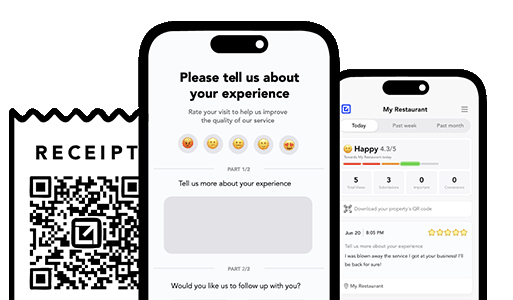
VisibleFeedback running on iphones

Turn Jobs Into Repeat Work

Email clients after every job. Catch issues early, recover unhappy clients fast, and drive repeat work with smart reminders.

No card needed, cancel any time

Related articles

Septic Service Follow-Up: More Reviews, Fewer Callbacks, and Recurring Pumping Revenue

8/26/2026

You pump the tank, check the baffles, and pull out, but the homeowner doesn't really judge the job until a few days later, when a drain gurgles or they spot a soft patch over the drainfield. Here's a simple septic service follow-up system that catches those worries privately, earns more 5-star reviews, and turns one pump-out into a customer who books you every three years.

Is It Legal to Text Customers for Reviews? SMS Compliance for Local Businesses

8/23/2026

Yes, you can text customers for reviews, but only if you follow a few consent and opt-out rules. Here is the plain-English compliance guide for local service businesses.

Chimney Sweep Follow-Up: More Reviews and Recurring Inspections

8/22/2026

You sweep the flue, cap the top, and pull out clean, but the homeowner doesn't judge the job until the first cold night they light a fire and smell smoke in the living room. Here's a simple chimney sweep follow-up system that catches those complaints privately, earns more 5-star reviews, and turns one cleaning into an every-fall inspection.

People also ask

How can I prevent negative reviews from hurting my business? You can’t stop every unhappy customer from sharing feedback, but you can intercept it before it goes public. Tools like VisibleFeedback allow customers to scan a QR code and leave feedback privately. If the feedback is negative, you’re alerted instantly so you can resolve the issue before it turns into a 1-star review.
Why are customer reviews so important for local SEO? Reviews are one of the top local ranking factors on Google. Businesses with consistent positive reviews rank higher in search results and attract more customers. By using VisibleFeedback to capture happy customer moments and guide them to Google or Yelp, you build a steady flow of authentic reviews that improve both your reputation and your local SEO.
What’s the best way to collect customer feedback in 2025? Traditional methods like comment cards and long surveys don’t work anymore, customers want convenience. The easiest way to collect real-time feedback in 2025 is by using QR codes and mobile-friendly forms. VisibleFeedback makes this simple, helping you get instant insights while turning satisfied customers into 5-star reviewers.
How can I get more positive reviews? The key to getting more positive reviews is asking at the right moment, when the customer is satisfied and the experience is still fresh. With tools like VisibleFeedback, you can use smart prompts, follow-up messages, and QR codes to make it easy and natural for happy customers to leave a review, while privately capturing negative feedback before it goes public. For a full breakdown of proven strategies, check out our guide on how to get more reviews.
What’s the fastest way to handle negative reviews? Respond quickly, stay professional, and try to resolve the issue privately if possible. Negative feedback is often a chance to turn frustration into loyalty, if you act fast. Tools like VisibleFeedback help by catching complaints before they go public. For a full playbook on how to handle bad reviews and protect your reputation, check out our guide on what to do when you get negative feedback.
Do private feedback tools really work? Yes, customers prefer private channels to share complaints. VisibleFeedback captures these insights and helps you turn unhappy customers into loyal ones.
Authored by Austin Spaeth

Austin Spaeth

Austin Spaeth is the founder of VisibleFeedback, a tool that helps service companies automate post-job follow-ups, catch issues early, and drive repeat work with smart reminders. With a background in software development and a focus on practical customer retention systems, Austin built VisibleFeedback to make it easy to email customers after every job, route problems to the right person, and keep relationships strong without awkward outreach. When he’s not building new features or writing playbooks for service businesses, he’s wrangling his six kids or sneaking in a beach day.

🚀 What's your goal? Get a plan ...

🚀 Start Here For Help

Whether you’re dealing with callbacks, unhappy customers, or low repeat work, we’ll help you tighten the follow up loop.

×

👋 Wait! Before You Go

Send your first follow up today! Catch issues early and drive repeat work.

No credit card required.