8/7/2025
Reviews
Smart Ways to Get More Reviews [Guide]
Practical, proven ways for any business to get more authentic reviews.

TLDR: Nextdoor recommendations are real neighbors vouching for you by name in local threads, and they are one of the strongest lead sources a local business has, because the referral comes from someone the buyer already trusts. You earn them by claiming your free business page, doing great work, and asking happy customers to recommend you the next time a neighbor asks. Just as important, you catch unhappy customers privately before their frustration turns into a public neighborhood post, which travels faster and hits closer to home than any Google review. Below is how Nextdoor actually works, the exact asks that get you recommended, the do’s and don’ts, and a private-first system that keeps complaints off the thread.
Ask a home service owner where their best customers come from and they will say Google, or maybe a yard sign. Then look at the actual leads and a surprising share trace back to a single sentence in a Nextdoor thread: “we used them last month, they were great, here’s their number.” A recommendation from a neighbor closes at a far higher rate than a cold search click, because the buyer is not weighing five strangers with star ratings. They are taking the word of someone who lives on their street.
That is the thing to understand about Nextdoor recommendations: Nextdoor is not a review platform, it is a recommendation engine. People do not open the app to rate the company that cleaned their gutters. They open it to ask their neighbors who to hire, and they act on the first trustworthy name that comes back. When someone posts “anyone know a good electrician near Maple Street?” and three neighbors reply with your business, you have effectively been handed pre-sold leads by people you never paid.
The under-worked part is that most local businesses do nothing to make this happen. They hope for it. Meanwhile a competitor who claimed their page and quietly asks happy customers to vouch for them shows up in every thread, and the hoping business shows up in none.
A recommendation on Nextdoor is a neighbor publicly naming your business, usually in reply to someone asking for a referral, or as a general “shout out” post. It shows up attached to your business page, and the count of recommendations you have collected is visible to anyone who looks you up. It is closer to a personal referral than to a star rating, and that is exactly why it converts so well.
Two things make it different from a Google or Yelp review, and both matter for how you approach it:
The flip side of hyper-local is that a complaint is hyper-local too, and we will get to why that is the part you cannot ignore.
You cannot get recommended if you do not exist on the platform. Nextdoor offers a free business page that lets neighbors find you, tag you, and leave recommendations. Claim it, fill in your service area, hours, and a real photo of your team or your work, and you are now eligible to show up when someone searches the trade. This costs nothing and takes fifteen minutes, and skipping it is why plenty of good companies are invisible on the one platform their neighbors trust most.
Recommendations start with the job, not the ask. But great work alone does not get posted; people are busy and forget. The businesses that rack up recommendations do one extra thing: they ask, at the right moment, in a way that feels natural.
The right moment is when a customer has just told you they are happy. Someone who says “this looks amazing, thank you” is warmed up and willing. That is when you plant the seed:
So glad you’re happy with it. A lot of our work comes from neighbors on Nextdoor. If someone in your area ever asks who to call for [your trade], we’d be grateful if you mentioned us.
Notice what that ask does. It does not demand a review right now. It plants your name so that weeks later, when a neighbor posts a question, your customer remembers to reply. You are not fishing for a rating, you are recruiting a future referrer.
When a customer is ready to recommend you actively, remove the friction. Tell them exactly where to go: your business page, or the neighborhood thread where someone is already asking. If you know a relevant “does anyone know a good ___” post is live, a quick heads-up to a happy customer nearby is completely fair game. You are not writing the recommendation for them, you are pointing them to the moment.

Here is the uncomfortable truth about Nextdoor. The same trust that makes a recommendation powerful makes a complaint devastating. A one-star Google review is a stranger’s opinion buried on a profile. A Nextdoor post that says “we hired them and it was a nightmare, avoid” is a neighbor warning the exact people you are trying to sell to, and it can sit at the top of a busy local feed for days while everyone piles on.
You cannot delete those posts. You can only prevent them, and prevention comes down to one idea: give the unhappy customer a private way to reach you before they reach for the app. Most people who post a public warning do it because they felt ignored. They had a problem, nobody asked, and the neighborhood thread was the only megaphone they had. Take away the silence and you take away most of the reason to go public.
That is what a simple post-job follow-up does. A short check-in a day or two after the work, “was everything good, or is anything not right?”, gives the frustrated customer a private lane to tell you first. You fix it, and the post that would have gone up never does. Tools like VisibleFeedback intercept dissatisfaction before it turns into a public complaint, routing an unhappy reply straight to you while the fix is still easy, instead of letting it surface in a neighborhood thread or on Google. The same check-in surfaces your happy customers, who are exactly the people to recruit as recommenders.
This is the same private-first logic behind asking for reviews without review gating: you are not hiding negative feedback, you are simply making sure you hear it first so you can fix it. For the deeper recovery playbook when something does go wrong, see how to handle unhappy customers fast.
You do not have to choose, and you should not. But it helps to know what each platform is actually good for so you can put your energy in the right place.
| Nextdoor | Yelp | ||
|---|---|---|---|
| What it really is | Neighbor referrals | Search visibility | Discovery + reviews |
| Audience | Your exact service area | Everyone searching | Broad, often out of area |
| Trust signal | A neighbor you know | Star average + volume | Star average + volume |
| Best for | Word-of-mouth leads | Getting found at all | Filling out your presence |
| Biggest risk | A local public complaint | Low review volume | Harsh, filtered reviews |
Google is still where most people go to find and vet a business, so keep stacking reviews there; here is the full method for getting more Google reviews for a service business. Nextdoor is the one that turns a happy customer into an active referrer, which no amount of star average can replicate.
Steal these, change the names, keep them short and human.
Plant the seed (say it in person when a customer is happy):
Really glad you’re happy with it. Honestly, a lot of our work comes from neighbors on Nextdoor. If anyone in your area ever asks who to call for [trade], I’d love it if you mentioned us.
Follow-up text after a happy check-in reply:
Thanks [Name], made my day. Quick favor: we get a lot of our jobs from Nextdoor recommendations. If you have a sec, would you mind recommending us on there? Happy to send the link. No worries if not.
Heads-up when a relevant thread is live:
Hey [Name], someone near you just posted on Nextdoor asking for a [trade]. If you were happy with our work, a quick reply from you would mean a lot. Totally fine if you’d rather not.
Private problem response (send the moment an unhappy reply comes in):
Thanks for telling me, [Name], and I’m sorry it’s not right. I want to fix this. Can I come back [day] to make it right? I’d much rather hear it from you than leave you unhappy.
Nextdoor is stricter than most platforms about businesses promoting themselves in neighbor conversations, and neighbors are quick to call out anything that smells like spam. Play it clean.
How do I get recommended on Nextdoor? Claim your free business page, do work worth talking about, and ask happy customers, at the moment they tell you they are satisfied, to recommend you by name the next time a neighbor asks. The recommendations that count come from real customers in their own words, not from you or your staff.
Are Nextdoor recommendations the same as reviews? Not quite. A review is a rating on a profile; a Nextdoor recommendation is a neighbor vouching for you, usually in reply to someone asking for a referral. That makes it more like a personal referral, which is why it tends to convert better than a cold search result.
Is a Nextdoor business page free? Yes. The basic business page and the ability to collect recommendations are free. Nextdoor sells paid ads on top of that, but you do not need to pay anything to claim your page and start earning recommendations.
What do I do about a bad post on Nextdoor? You cannot delete a neighbor’s post, so the goal is prevention: a private post-job check-in catches most complaints before they go public. If one does appear, reply once, calmly, publicly offer to make it right, then take it to a private message. A business that handles a problem well in front of the neighborhood can actually come out ahead.
Should I focus on Nextdoor instead of Google? No, use both. Google is where people find and vet you, so keep collecting reviews there. Nextdoor is where a happy customer becomes an active referrer. They do different jobs, and the same follow-up habit feeds both.
Nextdoor rewards the businesses that treat it like what it is: a digital front porch where neighbors ask each other who to trust. Claim your page so you show up. Do great work and ask your happy customers to vouch for you by name, so you are the answer when a neighbor asks. And put a private channel between your customers and the public thread, so the frustrated ones reach you first and the happy ones become your best marketing.
You can start today with nothing but a claimed page and a habit of asking. If you would rather the check-in run itself after every job, catching problems before they hit a neighborhood thread and pointing your happy customers toward recommending you, start a free 14-day trial of VisibleFeedback, no credit card required. For more ways to get found close to home, here are nine ways to get more local customers in the door.
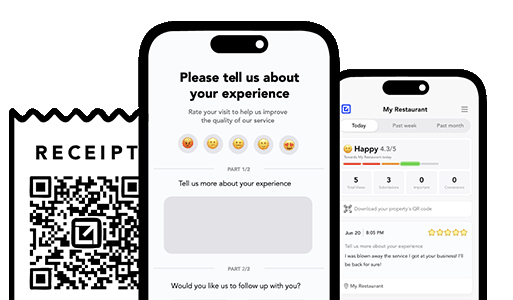
Email clients after every job. Catch issues early, recover unhappy clients fast, and drive repeat work with smart reminders.

Austin Spaeth is the founder of VisibleFeedback, a tool that helps service companies automate post-job follow-ups, catch issues early, and drive repeat work with smart reminders. With a background in software development and a focus on practical customer retention systems, Austin built VisibleFeedback to make it easy to email customers after every job, route problems to the right person, and keep relationships strong without awkward outreach. When he’s not building new features or writing playbooks for service businesses, he’s wrangling his six kids or sneaking in a beach day.
Whether you’re dealing with callbacks, unhappy customers, or low repeat work, we’ll help you tighten the follow up loop.
No credit card required.
