8/7/2025
Reviews
Smart Ways to Get More Reviews [Guide]
Practical, proven ways for any business to get more authentic reviews.

TLDR: A water damage restoration follow-up is a short check-in at each phase of the job, mitigation, drying, and rebuild, not one review ask at the very end. It catches a homeowner’s worry privately, before it becomes a 1-star review about “communication,” and it routes satisfied customers to leave a public review once the home is actually dry and rebuilt. Add referral reminders for the plumbers, insurance agents, and property managers who feed you work, and the same system that protects your reputation keeps your pipeline full. Below is the phase-by-phase timing, the exact messages, copy-paste templates, a private-first review funnel, and the referral loop that turns one flood into three jobs.
Restoration is one of the only trades where you can do genuinely excellent work and still walk away with a mediocre rating. You show up on the worst day of a customer’s year, when a pipe has burst or a storm has pushed water through the ceiling, and you spend the next two or three weeks drying, demoing, and rebuilding a space the family is still trying to live in. A water damage restoration follow-up is the short, repeated check-in that keeps you in the conversation across those weeks, so the anxiety in a homeowner’s chest never turns into a paragraph on Google.
Here is the uncomfortable truth about restoration reviews: the star rating almost never reflects your moisture readings or your rebuild quality. It reflects how the experience felt. And the experience feels chaotic to a scared homeowner even when your crew is running a textbook job. Roughly 90% of restoration customers have never lived through a loss before, so every noisy air mover, every day the drywall stays open, and every unanswered insurance question reads as “something is going wrong.” Left alone, that fear becomes a 1-star review titled “communication was a nightmare,” written about a job that was, technically, perfect.
The follow-up flips that. When you send a quick “here is where we are and here is what’s next” at each phase, you replace the homeowner’s imagination with facts, and you give them a private, low-stakes place to say “wait, I’m confused” or “I’m worried about the smell.” That is a complaint you get to solve while the truck is still in the driveway, instead of reading about it two weeks later next to a red star.

Most trades can get away with a single follow-up. Fix the faucet, text the next day, ask for a review. Restoration can’t, and this is where most owners lose ratings they earned. A restoration job is not one moment, it is a multi-week arc with three distinct phases, and a homeowner’s confidence rises or crashes at each one:
If your only touchpoint is a review request after the final walkthrough, you are asking for a rating after three weeks of unmanaged anxiety. By then the homeowner has already formed their story. A phase-based follow-up writes a better story in real time.
The single biggest mistake in restoration is blasting a “Leave us a Google review!” link to every customer the day the job closes. You are firing indiscriminately, which means the frustrated homeowner gets the same public megaphone as the happy one. A private-first funnel fixes the order of operations: you ask “how did we do?” privately, and only the people who signal they are happy see the public review link. Everyone else is quietly routed to you.
This is not review gating in the shady sense of hiding a link from unhappy people who ask for it. You are simply choosing who you proactively invite to review, and giving everyone an easy private path to raise a problem first. For more on doing this cleanly, see why negative reviews happen and how to intercept them.
Keep these short, human, and answerable with one thumb. Swap the brackets for your details.
Phase 1, after mitigation (same day the equipment goes in):
Hi [Name], [Company] here. The water is extracted and we’ve set drying equipment. The fans and dehumidifiers will run and stay loud for the next few days, that’s normal and it means it’s working. We’ll check readings [day]. Anything unclear or worrying you? Reply here anytime.
Phase 2, mid-drying (day 3 or 4):
Hi [Name], quick update. Today’s moisture readings are dropping and the job is on track to finish drying around [date]. Nothing you need to do. Is everything making sense on your end, or any questions about the insurance side? Reply 1 all good, 2 have a question.
Phase 3, rebuild handoff (walkthrough day):
Hi [Name], your restoration is complete and we’ve done a final walkthrough. Before we close it out: does everything look right, or is there anything you’d like us to touch up? Reply 2 and we’ll get it handled before we call it done.
Phase 4, review ask (2 to 3 days after handoff, only to “all good” customers):
Hi [Name], so glad we could get your home back to normal. If you’re comfortable, a quick review really helps other families know who to call in an emergency: [review link]. Thank you for trusting us.
Referral reminder (2 to 4 weeks later, to the customer and your partners):
Hi [Name], hope the house is feeling like home again. If a friend or neighbor ever gets hit with water or storm damage, we’d be honored if you passed our name along. We’re always a call away.
For more script structure across trades, see our post-job follow-up system for service companies and how to respond to bad reviews when one does slip through.
Here is the difference between running restoration blind and running it with a phase-based follow-up, side by side.
| Moment in the job | No follow-up system | Phase-based follow-up |
|---|---|---|
| During mitigation | Homeowner panics quietly, assumes the worst | Gets a “this noise is normal” text, calms down |
| Mid-drying | “Is anything happening?” doubt builds | Sees readings dropping, trusts the process |
| A real problem (smell, missed spot) | Surfaces weeks later in a public review | Surfaces privately same day, fixed on site |
| Handoff | One generic review blast to everyone | Punch-list caught, then only happy owners asked |
| After the job | You hear nothing, hope for the best | Referral reminders keep partners sending work |
| The rating you earn | Great work, average stars | Great work, great stars |
Restoration has a hard truth that cleaning and lawn care don’t: most homeowners will only need you once, and they hope never again. So your growth engine is not repeat visits from the same house, it is the referral network around each job. Every restoration ties you to people who send water damage work constantly:
The same follow-up habit that protects your reviews also feeds this network. When you send a homeowner a clean phase update, CC or forward a short version to the agent and the plumber who referred the job. You are showing your partners, in real time, that their client is in good hands. That is what earns the next referral, not a holiday card. A homeowner who felt informed and safe is also far more likely to name you when a neighbor’s basement floods. This is the same retention math behind our 15-minute customer recovery process: fast, human response is what people remember and repeat.
You can run all of this with a notes app and a texting thumb, and plenty of great restoration owners start exactly there. It works right up until you are juggling six jobs in different phases, and the check-ins that protect your rating are the first thing that slips when a new emergency call comes in. That is the gap VisibleFeedback was built to close. It automates the phase-based check-ins after each job, catches the worried replies and routes them straight to the right person before they turn into a public review, and only invites your satisfied customers to post on Google or Yelp. Tools like VisibleFeedback intercept dissatisfaction while the crew is still on site, and the weekly summary shows you which jobs, crews, and referral partners are actually driving your reputation.
The reason it fits restoration specifically: VisibleFeedback was built to catch issues before they show up on Yelp or Google, which is the whole ballgame in a trade where one “communication was a nightmare” review can outweigh a hundred perfect dry-outs. And it does it without the enterprise price tag. Most restoration reputation tools run $299 to $699 a month on an annual contract; VisibleFeedback starts at $65 a month with no contract, so it pays for itself the first time it stops one bad review.

When should a restoration company ask for a review? Not at the moment the paperwork closes, but 2 to 3 days after the final walkthrough, and only for customers who signaled during the job that they were satisfied. Asking mid-drying, while the home is still torn up, invites a rating on an unfinished, stressful experience. Asking after a private “all good” reply invites a rating on relief.
How do I get more reviews when most customers only need restoration once? Volume comes from three sources, not repeat visits: satisfied homeowners at the right moment, referral partners (plumbers, agents, property managers), and consistency. A phase-based follow-up increases the share of customers who finish the job feeling cared for, which is the pool you ask. See how to get more Google reviews for your service business for the mechanics.
What if a homeowner is upset about something out of my control, like the insurance payout? Acknowledge it, separate it, and stay on their side. “The claim timeline is frustrating and I wish I could speed it up. Here is exactly what I can control, and here is where we are on that.” Homeowners rarely leave a bad review over the insurance company when they feel their restoration crew was the one clear, honest voice in the process.
Is phase-based follow-up just more messages the customer will find annoying? No, because each message answers a question they already have. Silence during a two-week drying process is what feels like neglect. A short, useful update at each phase reads as attentiveness, not spam, as long as it is genuinely informative and easy to reply to.
Does this work for fire, mold, and storm restoration too? Yes. The phases differ, but the arc is the same: a scary start, a long uncertain middle, and a rebuild. Any long, high-anxiety job benefits from the same private-first, phase-based check-in structure.
Your crew is already doing the hard part. The follow-up is the cheap, boring habit that makes sure the rating matches the work. Start with the four texts above on your next job, watch how many worried replies you catch before they reach Google, and let the happy replies fill your review page. When the manual version starts slipping between emergencies, automate it.
Start a free 14-day trial of VisibleFeedback, no credit card required.
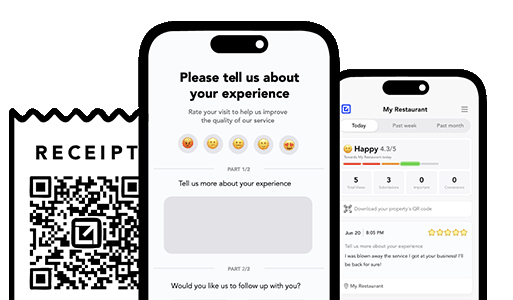
Email clients after every job. Catch issues early, recover unhappy clients fast, and drive repeat work with smart reminders.

Austin Spaeth is the founder of VisibleFeedback, a tool that helps service companies automate post-job follow-ups, catch issues early, and drive repeat work with smart reminders. With a background in software development and a focus on practical customer retention systems, Austin built VisibleFeedback to make it easy to email customers after every job, route problems to the right person, and keep relationships strong without awkward outreach. When he’s not building new features or writing playbooks for service businesses, he’s wrangling his six kids or sneaking in a beach day.
Whether you’re dealing with callbacks, unhappy customers, or low repeat work, we’ll help you tighten the follow up loop.
No credit card required.
