TLDR: A flooring installer follow-up is a short, timed check-in you send after the job is done. It catches a squeak, a gap, or a dust complaint privately, in the couple of weeks when a homeowner is still noticing every little thing, before a five-minute fix turns into a callback and a 1-star review. It points happy homeowners toward a public review, and it keeps you first in line for the next room and the neighbor’s referral. Below is the timing, the exact text and email templates, a private-first review funnel, and the referral loop that keeps a flooring crew booked.
Why the flooring installer follow-up is your cheapest reputation insurance
Flooring is different from most trades in one way that matters for your reviews: the homeowner looks at your work every single day, for years. A plumber’s fix is behind a wall. Your job is the first thing they see when they walk in the door, in every light, from every angle. So a strong flooring installer follow-up is not a nicety, it is the thing that decides whether the small stuff people notice later reaches you as a quick warranty callback or reaches the public as a review.
Think about what actually happens after a good install. You lay a flat, clean floor, pull the truck away, and move to the next job. To you, the work is done. To the homeowner, it is just beginning. The room dries out and a seam opens a hair. They hear a faint squeak by the island on day nine. They keep finding fine dust on top of the cabinets. None of these mean the job was bad. Every one of them, left unanswered, can convince a homeowner staring at an expensive new floor that they got taken. A large share of a flooring installer’s worst reviews come from installs that were completely fine, they just were not followed up on. No amount of extra care during the install fixes that. Only a check-in after does.
What a flooring installer follow-up actually is (and what it is not)
It is not a long satisfaction survey nobody fills out. It is not a monthly newsletter about floor care that dies in a promotions folder. And it is not a review link stapled to the invoice before the homeowner has lived on the floor for a single day.
A good flooring follow-up is one short, warm message at two moments that each do a specific job:
the settling-in follow-up, sent about a week after the install, which gives a homeowner an easy, private way to say “hey, I hear a squeak” so you can send someone out before it becomes a public complaint
the happy-customer follow-up, sent once the floor has clearly settled and they love it, which asks for a review and plants the seed for the next room and the neighbor’s referral
That is the whole thing. In flooring the timing matters as much as the wording, because the danger window is specific. Wood and the subfloor move as the room’s humidity settles over the first week or two, which is exactly when squeaks and gaps show up. Get in front of that window and small issues come to you. Miss it and the homeowner decides on their own what an opened seam means.
When should you send a flooring follow-up?
Timing beats phrasing. Map a check-in to the moments that actually decide your reputation.
The morning after install day: a quick care-and-thanks note. Remind them how to clean it, what’s normal as it settles, and that you’re a text away. This sets the expectation that you’re still around, which alone prevents a lot of panic.
About a week after the install: the most important one, and the one almost everyone skips. This is the settling-in window. A short “how’s the floor doing, any squeaks or gaps or spots that don’t feel right?” turns a quiet gripe into a warranty callback instead of a review.
A few weeks out, once it’s clearly settled: the payoff check-in. If they’re happy and everything’s tight, this is when you ask for the review, and when you mention the other rooms or the stairs.
Seasonally, once or twice a year: a light “how’s the floor holding up?” that keeps you in their phone for the next project and makes the referral easy when a neighbor asks who did it.
The private review funnel: catch the squeak before it goes public
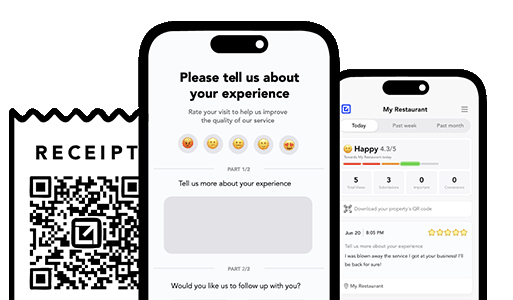
The core move in any good follow-up is simple. You ask people how it’s going before you ask them to post, and you route the two answers to two different places. Happy homeowners go to Google. Homeowners with a gripe come straight to you. Tools like VisibleFeedback intercept that dissatisfaction before it turns into a review, which for a flooring installer is the whole ballgame, because your bad reviews are usually just unaddressed small fixes.
The magic is in the routing. When a homeowner taps “I noticed something,” that never turns into a review request, it turns into a callback from you within the day. You send someone to face-nail the one loose board or trim a transition, and the homeowner who was a step away from a 2-star instead tells the neighbor you stand behind your work. Same squeak, completely different outcome, decided entirely by whether you reached out first. If a bigger problem surfaces, you handle it like any recovery: fast and personal. Here is a 15-minute recovery process that works for any service business.
Copy-paste flooring follow-up templates
Keep them short, human, and tied to a real moment. Steal these and change the voice to match yours.
Day-after care note (text):
Hi [Name], this is [You] with [Company]. Thanks again for having us do the floors, they turned out great. Quick heads up: it’s normal to hear a faint settling sound or see seams tighten up over the first week or two as the room’s humidity balances out. Sweep or dry-mop for now, and skip standing water. Anything at all seems off, just text me here.
Settling-in check-in (text, ~1 week):
Hi [Name], how’s the new floor settling in? Any squeaks, gaps, or spots that don’t feel right? If so, reply here and we’ll get someone out to take a look, it’s covered. If it’s looking great, that’s what we love to hear.
Happy-customer review ask (text, ~3 weeks):
Hi [Name], so glad you’re loving the floor. If you have a sec, a quick Google review would mean a lot and helps other homeowners find an installer who does it right: [direct link]. And whenever you’re ready to do the [bedrooms/stairs], we’ve got you.
Seasonal touch (text, twice a year):
Hi [Name], quick check-in, how’s the floor holding up? Any questions on care or thinking about another room? Always happy to help, and if a friend ever needs floors, we’d be grateful for the intro.
Your repeat business is the next room and the neighbor
Here is the thing that makes flooring different from a trade like HVAC. Nobody re-floors their whole house next year. So retention is not “get this customer back next season,” it is “get the next room, the stairs, the basement, and the three neighbors who walk in and ask who did it.” One good install can turn into four jobs if you stay in the picture, and disappear into a single transaction if you don’t.
That reframes the whole follow-up. Every homeowner you keep happy and every small fix you handle fast is really a deposit in your referral pipeline, because flooring is one of the most visible, most bragged-about upgrades a person makes. People show off a new floor. The question is whether your name comes up when they do.
The follow-up feeds this loop on both sides. It catches the small stuff so the homeowner stays a fan, and it gives you a natural reason to check back in and mention the next project. That is how a two-truck flooring crew ends up with a whole street of jobs from one good install. For more on turning single jobs into ongoing work, see turning one-time customers into repeat work without spam.
Doing it by hand vs automating it
You can absolutely start this with a texting app and a notes doc. The templates above work the day you copy them. The trouble shows up at volume.
By hand
Automated
Day-after care note
Easy to forget after a long install
Fires automatically when the job is marked done
Settling-in check-in
Rarely happens, you’re onto the next job
Sends around day 7 without you touching it
Routing a squeak complaint
Buried in your personal texts
Flagged and sent to you instantly
Review ask
You forget which jobs went smoothly
Triggered later, only to happy homeowners
Seasonal touch
Slips every time
Automatic, so no customer goes cold
Weekly view of issues
None
Summary of what’s trending
The reason installers automate it is simple math. Once you’re running two crews and finishing several jobs a week, remembering to send a care note the morning after each one, check in around day seven, route every squeak reply to yourself before it goes public, ask only the happy homeowners for a review, and touch base seasonally becomes its own job, and it’s exactly the job that slips when your install calendar is packed. VisibleFeedback runs it on autopilot: it sends the day-after and settling-in check-ins on your schedule, routes any complaint straight to you before it goes public, points happy homeowners to a Google review, and keeps the seasonal touches going out. VisibleFeedback was built to catch issues before they show up on Yelp or Google, and it starts at $65 a month with no contract, versus the $299 to $699 the big reputation platforms charge, which matters when you’re a two-truck flooring outfit, not a franchise.
Automate follow ups after every job
Catch issues early and drive repeat work with smart reminders.
Send a care-and-thanks note the morning after every install
Set expectations early: a little settling and seam tightening is normal
Check in around day 7, right in the squeak-and-gap window
Invite the small stuff, so gripes come to you instead of Google
Keep it to one tap: 1 love it / 2 noticed something / 3 please call me
Route every “noticed something” to a same-day or next-day callback, never to a review
Ask for the review only after the floor has settled and they’re clearly happy
Send the Google review link directly, not “find us online”
Mention the next room and the stairs when you ask
Touch base seasonally so the referral is easy when a neighbor asks
Do it for every install, not just when you remember
FAQ
What is a flooring installer follow-up? It is a short message you send after an install: one the morning after with care tips, and one about a week later asking how the floor is settling in. The settling-in message catches a squeak, gap, or dust complaint privately so you can send someone out before it becomes a public review. A later message asks a happy homeowner for a review and opens the door to the next room.
When should I send the follow-up? The settling-in text around day 7 matters most, because that’s when wood and the subfloor finish moving and small issues appear. Add a day-after care note, then a review ask a few weeks out once it’s clearly settled, and a seasonal touch after that. For a broader look at timing, see our guide on when to send follow-ups after a job.
How do flooring installers get more Google reviews without being pushy? Only ask homeowners who already told you they’re happy, ask once, after the floor has settled, and make it one tap with a direct link. That’s the whole trick. Here is the longer version on getting more Google reviews for a service business.
A customer says the floor squeaks or has a gap. Is that a bad install? Usually not. Some settling, minor seam movement, and the occasional loose board are normal as a room’s humidity balances after install, and most are a quick fix. The mistake is letting the homeowner sit with it and decide on their own. Reach out fast, send someone to look, and handle it as a warranty callback. If a review still slips through, respond calmly and factually. Here is how to respond to bad reviews without making it worse.
How does this help me get more referrals and repeat work? A new floor is one of the most visible upgrades a homeowner makes, so people show it off. Every small issue you catch privately keeps that homeowner a fan, and staying in touch gives you a natural reason to mention the next room and stay top of mind when a neighbor asks who did it. Since one install can turn into several jobs, that loop is your real growth engine.
The bottom line
Your reputation as a flooring installer is not decided the day you pull the truck away. It’s decided over the next two weeks, while a homeowner lives on that floor, notices every little thing, and decides for themselves whether a faint squeak means the job was cheap. A short text at the right moment puts you back in that room: you catch the small stuff before it goes public, you turn the happy homeowners into the reviews that win your next bid, and you keep the referrals and the next-room jobs coming.
Start with the templates above and one habit: text every customer about a week after their install. If you’d rather it run itself across every job, start a free 14-day trial of VisibleFeedback, no credit card required.
Share with
Turn Jobs Into Repeat Work
Email clients after every job. Catch issues early, recover unhappy clients fast, and drive repeat work with smart reminders.
How can I prevent negative reviews from hurting my business? You can’t stop every unhappy customer from sharing feedback, but you can intercept it before it goes public. Tools like VisibleFeedback allow customers to scan a QR code and leave feedback privately. If the feedback is negative, you’re alerted instantly so you can resolve the issue before it turns into a 1-star review.Why are customer reviews so important for local SEO? Reviews are one of the top local ranking factors on Google. Businesses with consistent positive reviews rank higher in search results and attract more customers. By using VisibleFeedback to capture happy customer moments and guide them to Google or Yelp, you build a steady flow of authentic reviews that improve both your reputation and your local SEO.What’s the best way to collect customer feedback in 2025? Traditional methods like comment cards and long surveys don’t work anymore, customers want convenience. The easiest way to collect real-time feedback in 2025 is by using QR codes and mobile-friendly forms. VisibleFeedback makes this simple, helping you get instant insights while turning satisfied customers into 5-star reviewers.
Austin Spaeth is the founder of VisibleFeedback, a tool that helps service companies automate post-job follow-ups, catch issues early, and drive repeat work with smart reminders. With a background in software development and a focus on practical customer retention systems, Austin built VisibleFeedback to make it easy to email customers after every job, route problems to the right person, and keep relationships strong without awkward outreach. When he’s not building new features or writing playbooks for service businesses, he’s wrangling his six kids or sneaking in a beach day.
🚀 What's your goal? Get a plan ...
🚀 Start Here For Help
Whether you’re dealing with callbacks, unhappy customers, or low repeat work, we’ll help you tighten the follow up loop.