🚀 Start Here For Help

Whether you’re dealing with callbacks, unhappy customers, or low repeat work, we’ll help you tighten the follow up loop.

Turn Jobs Into Repeat Work

VisibleFeedback automatically texts or emails customers after every job.

  • Automated texts or emails post job
  • Catch issues before they go public
  • Reminders that drive repeat jobs
Send My First Follow Up
14 day trial, no credit card required

Recent Reviews Insights

9/14/2026
Reviews

Automated Review Requests: How to Ask Every Customer Without Lifting a Finger

Most businesses that swear they ask for reviews only actually ask when they remember, which is almost never. Automated review requests fix that by sending the ask after every single job, at the right moment, in the same words. Here's how to set them up, when to send, the exact templates, and how to keep them from feeling like spam.

9/12/2026
follow-ups

Window & Door Replacement Follow-Up: More Reviews, Fewer Callbacks

Window and door replacement is a high-dollar job a homeowner feels every day and every windy night. A simple follow-up catches a draft, a sticky latch, or a condensation worry privately before it becomes a callback or a 1-star review, turns happy homeowners into reviews, and keeps the referrals coming from the whole street.

9/9/2026
follow-ups

Auto Glass & Windshield Follow-Up: Fewer Callbacks, More Reviews

Windshield work looks perfect the day you finish it, then a leak, a wind whistle, or an ADAS warning light shows up on the drive home and you find out from a 1-star review. Here's an auto glass follow-up system that catches the redo privately, earns more 5-star reviews, and turns one chip repair into fleet, dealer, and referral work.

9/3/2026
follow-ups

Foundation Repair & Waterproofing Follow-Up: More Reviews, Fewer Callbacks

Foundation repair and basement waterproofing are high-dollar, high-anxiety jobs where a homeowner watching for the next crack or the next wet spot decides your reputation weeks after the crew leaves. A simple foundation repair follow-up catches those worries privately, turns confident homeowners into reviews, and keeps the realtor and inspector referrals coming.

9/1/2026
Reviews

How to Get a Customer to Change a Bad Review After You Fix the Problem

A bad review isn't permanent. Here's the exact way to get a customer to update or remove a 1-star review after you make things right, without bribing or breaking the rules.

8/31/2026
Reviews

Customer Threatening a Bad Review for a Refund? Here's Exactly What to Do

A customer says refund me or I'll leave a 1-star review. Here's how to tell a fair request from extortion, the exact replies to send, and when to hold the line.

8/28/2026
Reviews

How to Get More Angi Reviews for Your Home Service Business

Angi ranks contractors by review volume, recency, and rating, so a slow trickle of reviews quietly buries you. Here's how home service businesses earn more Angi reviews, keep them recent, and catch problems privately before they turn into a public one-star.

8/27/2026
Reviews

Review Response Templates: What to Say to 5-Star, 3-Star, and 1-Star Reviews

Most owners agonize over the 1-star and ignore the 5-star, which is backwards. Here are copy-paste review response templates for every rating, the rules that keep your replies from making things worse, and a way to catch the worst reviews before they ever post.

8/24/2026
Reviews

How to Get More Facebook Reviews and Recommendations for Your Local Business

Facebook quietly replaced star reviews with yes/no Recommendations years ago, and most local businesses never updated how they ask. Here's how to earn more Facebook recommendations, set the feature up right, and catch unhappy customers privately before they post to your Page.

8/23/2026
Reviews

Is It Legal to Text Customers for Reviews? SMS Compliance for Local Businesses

Yes, you can text customers for reviews, but only if you follow a few consent and opt-out rules. Here is the plain-English compliance guide for local service businesses.

8/20/2026
Reviews

How to Ask Patients for Reviews Without Violating HIPAA

Asking patients for reviews is allowed under HIPAA. Disclosing that someone is your patient, or any detail of their care, is where practices get fined. Here is how to build a review request and response process that stays compliant and still fills your listing with 5-star reviews.

8/19/2026
Reviews

How Many Google Reviews Do You Need? A Straight Answer for Local Businesses

There's no universal magic number of Google reviews, but there is a right number for your market. Here's how to figure out how many reviews you actually need to get chosen, plus the recency and rating benchmarks that matter just as much, and a simple system to get there without begging.

8/16/2026
Reviews

How to Get More Nextdoor Recommendations for Your Local Business

Nextdoor recommendations are the digital version of a neighbor over the fence saying 'call these guys.' Here's how local service businesses earn them, why one thread can send you three jobs, and how to catch problems privately before they land in a public neighborhood post.

8/14/2026
follow-ups

Flooring Installer Follow-Up: More Reviews, More Referrals, Fewer Callbacks

Flooring is a high-dollar, one-shot job where a squeak or a gap the homeowner notices a week later turns into a callback and a bad review. A simple flooring installer follow-up catches those small worries privately, turns happy homeowners into reviews, and keeps the referrals coming.

8/13/2026
follow-ups

Home Inspector Follow-Up: More Reviews, More Realtor Referrals, Fewer Disputes

Home inspectors live and die by two things: online reviews from buyers and steady referrals from agents. A simple home inspector follow-up system catches an anxious buyer privately before they leave a 1-star, turns happy clients into reviews, and keeps you top of mind with the realtors who feed your calendar.

Show more insights
Why Service Companies Are Switching from Review Tools to Feedback-First Systems
© Photo by John Schnobrich on Unsplash

Why Service Companies Are Switching from Review Tools to Feedback-First Systems

Your tech finishes a job. The customer signs off. An automated message fires: “Leave us a review on Google!”

Sounds fine. Until you realize the customer had a problem they never mentioned. Maybe the tech tracked mud through the house. Maybe the repair did not hold. Maybe the price was higher than expected. They were not going to bring it up. They were just going to quietly find another company next time.

But your review tool did not know that. It pushed them toward Google anyway. And now instead of a private conversation you could have resolved in five minutes, you have a 2-star review that will sit on your profile for years.

This is not a hypothetical. It happens every week at service companies that rely on review generation tools without any mechanism to hear from unhappy customers first. (For a real-world example, see what homeowners actually Google after a plumber leaves — the worries start within hours.)

And it is the reason a growing number of service businesses are rethinking how they handle post-job communication entirely.

The Review Tool Model: What It Gets Right and What It Misses

Review tools do one thing well: they increase the volume of online reviews. After a job is completed, they automatically send the customer a link to leave a review on Google, Facebook, Yelp, or wherever you want to build your presence.

The better ones include a “review funnel” — a filter that detects when a customer might leave a negative review and diverts them away from public sites. This sounds smart, and it is better than nothing. But there is a fundamental problem with this approach.

The funnel happens at the wrong time.

By the time a customer is being asked to leave a review, the experience is over. If something went wrong, the customer has already formed their opinion. Diverting them away from Google does not fix the problem. It just prevents the public posting. The customer is still unhappy. They are still going to leave. You just will not know why.

Review tools are designed to maximize review volume. That is their metric, their selling point, and their reason for existing. And for a business whose only goal is getting more 5-star reviews, that model works.

But if your goal is keeping customers — actually retaining them, bringing them back for repeat work, and catching problems before they become cancellations — review volume is the wrong metric to optimize for.

What a Feedback-First System Does Differently

A feedback-first system flips the order of operations. Instead of asking “leave us a review,” it asks “how did the job go?”

That single change in sequencing creates three outcomes that review tools cannot replicate.

1. You Hear About Problems Before Google Does

When you ask a customer for feedback before pushing them toward a public review site, unhappy customers tell you what went wrong. Privately. In your inbox.

A plumber’s customer whose water heater install left a mess in the garage? They will tell you in a feedback message. They probably would not have called your office. But they would have left a 3-star review or — more likely — just never called you again.

Private feedback gives you the chance to fix the problem, save the relationship, and prevent the bad review entirely. Review tools skip this step. They go straight to the public ask.

2. Happy Customers Still Leave Reviews — At the Right Moment

When a customer gives positive feedback, that is the natural opening to ask for a public review. The customer just told you they are happy. They are in the right frame of mind. The ask feels organic, not transactional.

This approach typically generates fewer total reviews than a blast-everyone strategy. But the reviews it generates are overwhelmingly positive, because you have already filtered out the customers who had problems. Your review profile improves not by volume alone, but by quality.

3. You Build a Record of Every Customer Interaction

Feedback creates data. When every customer hears from you after every job, you start to see patterns. Which technicians consistently get positive feedback? Which service types generate complaints? Which customers are at risk of leaving?

Review tools give you a count of reviews. Feedback systems give you a map of your customer relationships.

The Cost of Getting It Wrong

Let’s put numbers on this.

A mid-size pest control company with 400 quarterly customers and a 25% annual churn rate loses 100 customers per year. At $400 per customer per year, that is $40,000 in lost revenue.

Now consider that many of those lost customers left because of a problem nobody asked about. The tech left the gate open. There was still pest activity after the treatment. The invoice was higher than the estimate. These are fixable problems — but only if you know about them.

If a feedback-first system catches even 10% of those problems and saves those relationships, that is 10 customers saved, $4,000 recovered in year one, and $12,000 over three years when you account for the repeat revenue those customers would have generated.

The same math applies to HVAC companies, plumbing businesses, cleaning services, and every other trade where repeat customers are the backbone of revenue.

When a Review Tool Makes Sense

Review tools are not bad products. They make sense in specific situations.

If you are a new business with fewer than 20 reviews on Google, review volume is your most urgent need. Customers trust businesses with more reviews, and getting from 8 reviews to 50 reviews will move the needle on new customer acquisition. A review tool optimized for volume can help you get there faster.

If your business is primarily one-time transactions — you rarely see the same customer twice — the feedback loop matters less. You are not trying to retain customers for repeat work. You just need reviews for social proof.

But if you run a service business where repeat customers drive your revenue — quarterly pest control, seasonal HVAC, recurring cleaning, ongoing plumbing relationships — review volume alone is not enough. You need the feedback step first.

What to Look For in a Feedback-First Tool

If you are evaluating alternatives to your current review tool, here is what matters.

Post-Job Follow-Up, Not Just Review Requests

The tool should contact your customer within 24 hours of every job and ask how it went. Not “leave us a review.” Just “how was the experience?” This is the step that catches problems.

A Real Inbox for Feedback

When customers respond, you need somewhere for that feedback to go. Not a generic email. A structured inbox where feedback is tracked, can be assigned to a team member, and has a resolution workflow. A one-star rating sitting in a CSV file helps nobody.

Review Routing Based on Sentiment

Customers who give positive feedback should be routed to Google or Facebook for a public review. Customers who report a problem should be routed to your team for resolution. This is similar to a “review funnel” but it happens earlier in the process — before the customer is thinking about public reviews at all.

Repeat-Service Reminders

Follow-up is half the equation. The other half is bringing customers back. A tool that sends feedback requests AND sends reminders for upcoming maintenance, seasonal tune-ups, or annual services keeps the entire customer lifecycle in one system.

Pricing That Does Not Punish Growth

Enterprise reputation tools run $200 to $400 per month or more. For a service company doing $500K to $2M in revenue, that is hard to justify. Look for tools purpose-built for service businesses in the $50 to $100 per month range that include both feedback and reminders without nickel-and-diming on SMS, users, or locations.

The Shift Is Happening

The reputation management industry was built on one premise: more reviews equals more business. And that premise is not wrong. But it is incomplete.

The service companies growing fastest right now are not the ones with the most reviews. They are the ones who know what their customers actually think, who catch problems before they escalate, and who stay in touch between jobs so the customer never has a reason to look elsewhere.

Review tools solve the visibility problem. Feedback-first systems solve the retention problem. And for most service businesses, retention is where the real money is.

A customer who comes back four times a year for ten years is worth far more than a single 5-star review. The companies that figure this out first will have an enormous advantage over the ones still optimizing for review count.

Key Takeaways

  • Review tools push every customer toward a public review, including unhappy ones. Feedback-first systems ask how the job went before making any public ask.
  • Problem detection — hearing about issues privately before they become bad reviews — is the single biggest gap in most review tools.
  • Happy customers still leave reviews in a feedback-first system, but at a natural moment after confirming they are satisfied.
  • The math on retention is compelling: saving even 10% of at-risk customers can recover thousands in annual revenue.
  • Look for a tool that combines post-job follow-up, a feedback inbox, smart review routing, and repeat-service reminders.
  • Enterprise reputation tools cost $200-400+/month. Purpose-built tools for service businesses start around $65/month and include both feedback and reminders.

If you are evaluating your options, VisibleFeedback was built specifically for this problem. It sends automated follow-ups after every job, routes feedback to a private inbox, directs happy customers to leave reviews, and sends reminders that bring customers back for repeat work. Standard plan starts at $65/month and includes everything described above. No contracts, cancel anytime.
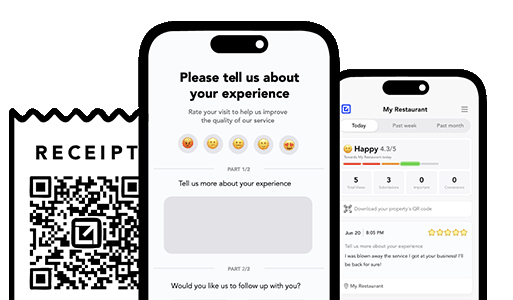
VisibleFeedback running on iphones

Turn Jobs Into Repeat Work

Email clients after every job. Catch issues early, recover unhappy clients fast, and drive repeat work with smart reminders.

No card needed, cancel any time

Related articles

Win-Back Campaigns: How to Re-Engage Lapsed Customers (Service Business Playbook)

9/11/2026

Most of your lost revenue never quits loudly. Customers just go quiet, book someone else, and you find out months later when the numbers slip. A win-back campaign is a short, honest sequence that catches lapsed customers before a competitor does. Here's the timing, the segments, and the copy-paste texts and emails that bring them back.

How to Get More Angi Reviews for Your Home Service Business

8/28/2026

Angi ranks contractors by review volume, recency, and rating, so a slow trickle of reviews quietly buries you. Here's how home service businesses earn more Angi reviews, keep them recent, and catch problems privately before they turn into a public one-star.

Google Business Profile Optimization: The 2026 Checklist for Local Service Businesses

8/25/2026

Your Google Business Profile is the storefront most local customers see first. This is the plain-English checklist for optimizing it: categories, photos, services, reviews, and the private-first habit that keeps your rating high while competitors bleed one-star complaints in public.

People also ask

How can I prevent negative reviews from hurting my business? You can’t stop every unhappy customer from sharing feedback, but you can intercept it before it goes public. Tools like VisibleFeedback allow customers to scan a QR code and leave feedback privately. If the feedback is negative, you’re alerted instantly so you can resolve the issue before it turns into a 1-star review.
Why are customer reviews so important for local SEO? Reviews are one of the top local ranking factors on Google. Businesses with consistent positive reviews rank higher in search results and attract more customers. By using VisibleFeedback to capture happy customer moments and guide them to Google or Yelp, you build a steady flow of authentic reviews that improve both your reputation and your local SEO.
What’s the best way to collect customer feedback in 2025? Traditional methods like comment cards and long surveys don’t work anymore, customers want convenience. The easiest way to collect real-time feedback in 2025 is by using QR codes and mobile-friendly forms. VisibleFeedback makes this simple, helping you get instant insights while turning satisfied customers into 5-star reviewers.
How can I get more positive reviews? The key to getting more positive reviews is asking at the right moment, when the customer is satisfied and the experience is still fresh. With tools like VisibleFeedback, you can use smart prompts, follow-up messages, and QR codes to make it easy and natural for happy customers to leave a review, while privately capturing negative feedback before it goes public. For a full breakdown of proven strategies, check out our guide on how to get more reviews.
What’s the fastest way to handle negative reviews? Respond quickly, stay professional, and try to resolve the issue privately if possible. Negative feedback is often a chance to turn frustration into loyalty, if you act fast. Tools like VisibleFeedback help by catching complaints before they go public. For a full playbook on how to handle bad reviews and protect your reputation, check out our guide on what to do when you get negative feedback.
Do private feedback tools really work? Yes, customers prefer private channels to share complaints. VisibleFeedback captures these insights and helps you turn unhappy customers into loyal ones.
Authored by Austin Spaeth

Austin Spaeth

Austin Spaeth is the founder of VisibleFeedback, a tool that helps service companies automate post-job follow-ups, catch issues early, and drive repeat work with smart reminders. With a background in software development and a focus on practical customer retention systems, Austin built VisibleFeedback to make it easy to email customers after every job, route problems to the right person, and keep relationships strong without awkward outreach. When he’s not building new features or writing playbooks for service businesses, he’s wrangling his six kids or sneaking in a beach day.

🚀 What's your goal? Get a plan ...

🚀 Start Here For Help

Whether you’re dealing with callbacks, unhappy customers, or low repeat work, we’ll help you tighten the follow up loop.

×

👋 Wait! Before You Go

Send your first follow up today! Catch issues early and drive repeat work.

No credit card required.