TLDR: An auto body shop follow-up is a short check-in you send three to five days after delivery, once the customer has driven the car in real daylight, on the highway, and through a cold morning, so you can catch a paint-match worry, a wind-noise rattle, a misaligned panel, or an insurance-billing confusion privately, before it turns into a 1-star review that scares off the next insurance referral. It also routes your confident customers to leave a public review while the relief of getting their car back is fresh. Add a recurring touch and a referral ask, and the same system that protects your reputation also protects the DRP relationships and word-of-mouth that fill your bays. Below is the timing, the exact messages, copy-paste templates, a private-first review funnel, and the insurance-work playbook that keeps small problems from going public.
Why the auto body shop follow-up is your best reputation insurance
Collision repair has a problem most trades don’t. Your customer arrived on the worst day of their month. They were in an accident, their car got hauled in on a flatbed, they’ve been fighting with an adjuster and living out of a rental, and now they’re anxious, tired, and primed to be let down. On delivery day the car is clean and shiny and they’re relieved, so everyone’s happy. The real verdict comes later, and by then you’re usually not in the room.
An auto body shop follow-up is the message that keeps you in the room. Here’s how it goes wrong without one. You do a clean repair, blend the paint two panels out, close the gaps, buff and detail it, and hand back the keys on a cloudy afternoon. Over the next week the customer parks in direct sun and thinks the repaired panel looks a hair off, or a door seal ticks on the highway, or the trunk sits a touch high, or they open the insurance paperwork and don’t understand why the rental got cut off two days early. The single most damaging collision-shop review isn’t “bad welds,” it’s “paint doesn’t match and they won’t call me back.” Left alone, a five-minute daylight comparison or a two-minute billing explanation becomes a public complaint, and in a business where a huge share of your work comes from insurance referrals and neighbors asking “who did your car,” one visible 1-star can cost you jobs for months.
There’s an emotional edge here that cuts both ways. A collision means stress, money, and often a little fear. That makes people post hard when something feels off, and it makes them genuinely grateful, the kind of gratitude that writes a glowing review, when you make a bad situation feel handled. Your follow-up decides which version you get.
When should you send the auto body follow-up?
Timing is the whole game here, and it’s different from most trades because of how repairs reveal themselves.
Send the main check-in three to five days after delivery, not the same day. On delivery day the customer hasn’t seen the car in bright sun, hasn’t hit highway speed, hasn’t parked it overnight and started it on a cold morning. A same-day “how’d we do” gets a reflexive “great, thanks” that tells you nothing. Give it a few days of real driving and daylight, and the reply actually surfaces the paint, panel, noise, and alignment issues while they’re still cheap and quiet to fix.
If the job involved anything that needs settling in, mechanical work, a recalibrated ADAS camera, a new suspension component, add a second touch around two weeks. That’s when a warning light that was going to come back tends to come back, and you’d much rather hear about it from a text than from a tow truck and a review.
For insurance jobs, there’s a second clock running: the billing. Deductibles, supplements, rental cutoffs, and total-loss disputes generate a lot of the anger that gets aimed at shops even when the repair was flawless. A short follow-up gives the customer a calm channel to ask “wait, why do I owe this” before that confusion hardens into a rant.
What to actually say: copy-paste templates
Keep it short, human, and easy to reply to from a phone. Here are templates you can lift and tweak.
The 4-day check-in (text)
Hi [First name], it’s [Name] at [Shop]. Now that you’ve had [vehicle] back a few days and driven it in daylight and on the highway, does everything look and sound right? Any wind noise, rattles, or anything that doesn’t sit perfectly? Just reply here, I want it right.
The insurance-billing clarity note (text or email)
Hi [First name], quick note now that your repair is done. If you have any questions about your deductible, the rental, or anything on the insurance side, reply here and I’ll walk you through it. No question is too small.
The two-week mechanical check (text, for structural or ADAS jobs)
Hi [First name], [Name] at [Shop] again. It’s been about two weeks since we finished [vehicle]. Any warning lights, pulling, or noises since you’ve been driving it regularly? If anything’s come up, let’s get it handled.
The review ask (only after a happy reply)
That’s great to hear, [First name], thank you. Reviews are how folks around here decide who to trust with their car after an accident. If you have 30 seconds, it would mean a lot: [review link]
Notice the order. You never ask for the review first. You ask how the car is doing, and only the customers who tell you it’s perfect get pointed to Google. That single sequencing choice is what separates a review funnel from a review gamble.
The private-first review funnel
The mistake most shops make is blasting a “leave us a review” link to everyone, including the guy who’s quietly annoyed about wind noise. You just handed him a megaphone. The fix is to let the follow-up reply sort people first, then send happy customers public and unhappy customers straight to you.
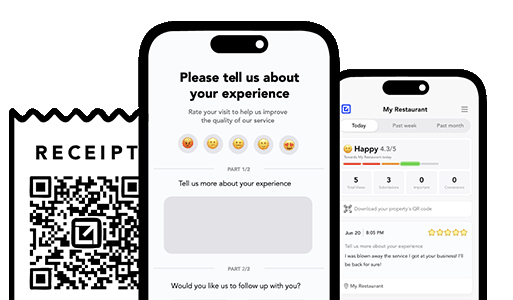
This is exactly where a tool earns its keep. Doing it by hand is fine for a slow week, but once you’re delivering ten or fifteen cars a week across two estimators, remembering to text each one on day four, route every “something’s off” reply to the right person before it festers, and ask only the happy customers for a review becomes its own job, the job that slips first when the shop is slammed. Tools like VisibleFeedback intercept dissatisfaction before it turns into a public review: it sends the check-ins on your schedule, flags any unhappy reply and routes it straight to you, and points the happy customers to Google automatically. VisibleFeedback was built to catch issues before they show up on Yelp or Google, and it starts at $65 a month with no contract, versus the $299 to $699 the big reputation platforms charge, which matters when you’re an independent shop and not a national MSO.
Automate follow ups after every job
Catch issues early and drive repeat work with smart reminders.
Fires automatically a few days after the job is marked delivered
Two-week mechanical/ADAS check
Rarely happens, you’re onto the next RO
Sends around the right window without you touching it
Routing a “paint looks off” reply
Buried in someone’s personal texts
Flagged and sent to the owner or manager instantly
Review ask
You forget which deliveries went smoothly
Triggered only after a happy reply
Insurance-billing questions
Customer stews, then vents on Google
Given a private channel to ask early
Weekly view of what’s trending
None
Summary of recurring issues by type
The reason shops automate it is simple math. A single comeback you catch privately, a door realignment, a spot-in on a panel, costs you an hour and keeps a 1-star off your page. Miss it, and that one visible review can quietly turn away insurance referrals and cash customers for months. The follow-up is cheap. The silence is expensive.
A quick auto body follow-up checklist
Mark the delivery date in whatever system you use, so the clock starts.
Send the check-in text three to five days after delivery, not same-day.
Ask about look, sound, and fit, not just “how’d we do.”
Add a two-week touch for structural, suspension, or ADAS work.
Give insurance customers a clear channel for deductible and rental questions.
Route any “something’s off” reply to a real person the same day.
Only ask happy customers for a public review, and hand them the direct link.
Keep a light seasonal or annual touch so you’re the shop they name next time.
Handling the comeback so it builds trust instead of breaking it
When a follow-up surfaces a real problem, speed and tone are everything. Thank them for telling you, get the car back in fast, and if it’s a daylight paint-match question, invite them to compare it in person under good light, a lot of “it doesn’t match” turns into “oh, that looks fine” the moment they see it next to the rest of the car. If it’s a genuine miss, own it and make it right without a fight. Collision customers came to you scared and stressed; a shop that jumps on a concern without excuses is a shop they’ll rave about and refer. The comeback you handle well often produces a better review than the job that went perfectly, because you proved what happens when something goes wrong.
For the rare case where a bad review lands before you got the chance to fix it, a calm, specific public response still matters. Our guide on how to respond to bad reviews walks through the wording that wins back trust and reassures the next reader.
Frequently asked questions
How soon after delivery should an auto body shop follow up? Three to five days works best. The customer needs time to drive the car in daylight, hit the highway, and start it on a cold morning before they can actually judge the repair. A same-day text gets a reflexive “great” that hides the paint, panel, and noise issues you want to catch while they’re still cheap to fix. Add a second touch around two weeks for structural or ADAS work.
Won’t asking for feedback just invite complaints? It invites them into your inbox instead of onto Google, which is exactly the goal. A quiet complaint you never hear becomes a public 1-star. The same complaint sent to you becomes a comeback you fix in an afternoon and a customer who’s now impressed. You’re not creating the dissatisfaction, you’re catching it before it goes public. This is the same idea behind our broader post-job follow-up and callback-reduction system.
How do I get more reviews without violating Google’s rules? Ask every happy customer, make it easy with a direct link, and never filter by dangling a discount or gift for a positive review. The move is timing and targeting: ask right after a customer tells you they’re thrilled, when the relief of getting their car back is fresh. Our guide on getting more Google reviews for a service business covers the details.
Does the insurance side really affect my reviews? More than most shops realize. A lot of anger aimed at body shops is actually about the rental running out, a supplement delaying things, or an unexpected deductible, not the repair itself. A follow-up that opens a calm channel for billing questions lets you defuse that before it turns into a public rant about your shop.
What if I’m a small shop without software? Start with a spreadsheet and your phone. Log delivery dates, text customers on day four, and keep the review link handy. The habit is what matters. When the volume makes it hard to keep up, that’s when a tool like VisibleFeedback pays for itself by running the whole loop automatically.
The bottom line
Your customers don’t judge a collision repair on delivery day. They judge it a week later, in the sun, on the highway, with the insurance paperwork open on the kitchen table, and if you’re not there for that conversation, Google is. An auto body shop follow-up puts you back in the room at the exact moment the verdict forms. It turns silent comebacks into quick fixes, confused billing into a two-minute answer, and happy customers into the reviews and referrals that keep your bays full. For a deeper library on this, see our auto repair shop follow-up guide and our ready-to-use SMS and email follow-up templates.
You already do the hard part, the repair. The follow-up just makes sure the right people hear about it.
Automate follow ups after every job
Catch issues early and drive repeat work with smart reminders.
How can I prevent negative reviews from hurting my business? You can’t stop every unhappy customer from sharing feedback, but you can intercept it before it goes public. Tools like VisibleFeedback allow customers to scan a QR code and leave feedback privately. If the feedback is negative, you’re alerted instantly so you can resolve the issue before it turns into a 1-star review.Why are customer reviews so important for local SEO? Reviews are one of the top local ranking factors on Google. Businesses with consistent positive reviews rank higher in search results and attract more customers. By using VisibleFeedback to capture happy customer moments and guide them to Google or Yelp, you build a steady flow of authentic reviews that improve both your reputation and your local SEO.What’s the best way to collect customer feedback in 2025? Traditional methods like comment cards and long surveys don’t work anymore, customers want convenience. The easiest way to collect real-time feedback in 2025 is by using QR codes and mobile-friendly forms. VisibleFeedback makes this simple, helping you get instant insights while turning satisfied customers into 5-star reviewers.
Austin Spaeth is the founder of VisibleFeedback, a tool that helps service companies automate post-job follow-ups, catch issues early, and drive repeat work with smart reminders. With a background in software development and a focus on practical customer retention systems, Austin built VisibleFeedback to make it easy to email customers after every job, route problems to the right person, and keep relationships strong without awkward outreach. When he’s not building new features or writing playbooks for service businesses, he’s wrangling his six kids or sneaking in a beach day.
🚀 What's your goal? Get a plan ...
🚀 Start Here For Help
Whether you’re dealing with callbacks, unhappy customers, or low repeat work, we’ll help you tighten the follow up loop.