Insurance Agency Follow-Up: More Reviews, Referrals, and Renewals
An insurance agency follow-up is not a renewal notice your carrier mails out. It is a short, timed check-in after you bind a policy, settle a claim, or run an annual review that catches a frustrated client before they vent online or shop your rate, turns a good experience into a review while the feeling is fresh, and keeps you top of mind for the referrals that fill a book. Get it right and your retention stops leaking at every renewal, because the clients you already have do the selling for you.
Here is the uncomfortable truth about this business. Clients rarely tell you they are unhappy. They just take a cheaper quote at renewal and quietly disappear, and the referral you could have earned never shows up anywhere you can see it. A good insurance agency follow-up system fixes both ends: it protects the trust you already built and it keeps the policyholders who are your best source of new business from drifting to the agency down the street.
Why your retention is decided when you are not looking
Most agents think the relationship is won at the sale, with the application signed and the policy bound. It is not. It is won or lost in two stretches you usually are not watching.
The first is the claim. A client files after a fender-bender, a kitchen fire, a tree on the roof, and suddenly the abstract thing they bought for years is real and stressful. If you are not checking in during that process, the client decides on their own how it is going, and your silence reads as “my agent sold me a policy and vanished the moment I needed them.” That one experience colors whether they renew, whether they refer, and whether they leave a review that follows you for years.
The second is the quiet stretch before renewal. Your client is not thinking about insurance for eleven months, then a renewal notice lands with a higher premium and no context. If the last time they heard from you was the day you bound the policy, that premium increase feels like a reason to shop. Keeping an existing policyholder costs a fraction of acquiring a new one, and most of an established agent’s growth comes from renewals and referrals, not cold leads, yet most agencies have no system for staying in front of the people who drive both.
What an insurance agency follow-up actually is (and what it is not)
It is not a long satisfaction survey. It is not an automated renewal notice that reads like a bill. And it is not a review link blasted out the second a policy binds, before the client has any experience worth reviewing.
A good follow-up is a few short, warm messages at the moments that each do a specific job:
the post-bind check-in, sent a few days after you write the policy, which confirms they understand what they bought and gives a confused client an easy, private way to raise a question before it festers
the claim check-in, sent during and right after a claim, which gives a stressed client a private channel to say “this is going sideways” so you can step in before frustration becomes a public review
the post-review ask, sent after a smooth claim or a clean annual review, which catches a client when they actually feel taken care of and turns that into a review
the pre-renewal touch, sent well before the renewal notice, which reminds a client why they chose you and heads off the reflex to shop
That is the whole system. In insurance the timing matters as much as the wording, because the two windows that decide your book, the claim and the run-up to renewal, are exactly the two most agencies ignore.
When should an insurance agency send follow-ups?
Timing beats phrasing. Map a check-in to the moments that actually move your retention and your reputation.
A few days after binding: confirm the coverage in plain language and invite questions. This is where you prevent the slow-burn “I don’t think I’m actually covered for that” resentment that surfaces at the worst possible moment.
During and right after a claim: the most important and the most skipped. A short “I know this is stressful, here’s what happens next, call me with anything” turns a 1am spiral into a two-line conversation with you instead of a review.
After the annual review: the natural review ask. You just spent time making sure they are covered correctly, so appreciation is high and the request feels earned.
Thirty to sixty days before renewal: the retention move. A quick, human note before the renewal notice lands reminds them of the relationship so a premium bump reads as a conversation, not a reason to leave.
The private feedback funnel: catch frustration before it goes public
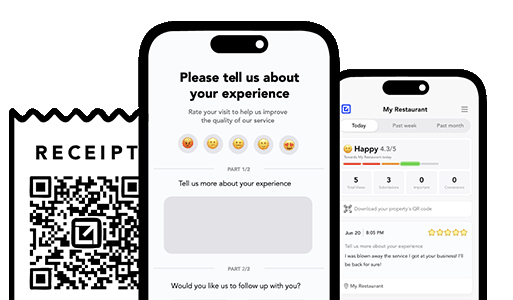
The core move in any good follow-up is simple. You ask people how it is going before you ask them to post, and you route the two answers to two different places. Happy clients go to Google. Frustrated clients come straight to you. Tools like VisibleFeedback intercept that dissatisfaction before it turns into a review, which for an agent carrying a claim or heading into renewal season is the whole ballgame, because your worst reviews and your lost renewals usually come from frustration you never heard about.
The magic is in the routing. When a client taps “I’m having trouble,” that never turns into a review request, it turns into a call from you within the hour. You get the adjuster moving, you explain the next step, and the client who was quietly deciding you were useless instead tells their neighbor you fought for them when it mattered. Same facts, opposite outcome, decided entirely by whether you reached out first. If a real problem surfaces, handle it like any recovery: fast and personal. Here is a 15-minute recovery process that works for any service business.
Copy-paste insurance follow-up templates
Keep them short, human, and tied to a real moment. Steal these and change the voice to match yours. Check your state and carrier rules on client texting first; here is a plain-language primer on whether texting customers for reviews is legal.
Post-bind check-in (text, a few days after binding):
Hi [Name], it’s [You] at [Agency]. Your [policy type] is active and the docs are in your inbox. One thing I want to make sure of: you know exactly what’s covered and what isn’t. Any questions at all, even small ones, just reply here. Glad to have you.
Claim check-in (text, during a claim):
Hi [Name], I saw your claim came in and I know this part is stressful. Here’s where things stand: [one line]. I’m keeping an eye on it from my end. If anything feels stuck or unclear, text me and I’ll jump in. We’ve got you.
Post-claim review ask (text, after a smooth claim):
Hi [Name], glad we got that behind you. If you felt taken care of through the claim, a quick Google review would mean a lot and helps other folks find an agent who actually picks up when it counts: [direct link]. Thank you!
Annual review wrap-up (text, after the review):
Hi [Name], thanks for the time today. Your coverage is right-sized for where you are now, and I flagged [one thing] for us to revisit. If the review was helpful, I’d be grateful for a quick review here: [direct link].
Pre-renewal touch (text, 30 to 60 days out):
Hi [Name], your renewal is coming up in [month]. Before the notice lands, I’d love to do a quick check that your coverage still fits, especially if anything’s changed this year. Want me to take a look and call you with options?
Here is what separates agencies with a growing book from agencies refilling a leaky one. The steady ones treat a bound policy as the start of a relationship, not the end of a sale. They know the next policy is often the same client adding a line, or that client’s sibling or coworker, and it arrives when they stay remembered and trusted. Your job between claims and renewals is to not be forgotten.
Recurring touches are what keep this loop turning. Not a wall of marketing, just a few genuine, well-timed messages a year: the post-bind confirmation, the pre-renewal check, a short note when a life event (a new car, a new baby, a move) likely changed their coverage needs. Each one is a quiet reminder that you exist and that you were good to deal with. That is where retention and referral reminders earn their keep, and it is exactly what turning one-time customers into repeat work without spam is about for any service business. For the ones who have already drifted, a focused win-back campaign for lapsed customers can pull some back.
Doing it by hand vs automating it
You can absolutely start this with your phone and a spreadsheet. The templates above work the day you copy them. The trouble shows up over time, because insurance follow-up is a marathon run across hundreds of policies with staggered renewal dates.
By hand
Automated
Post-bind check-in
Forgotten in the rush to the next sale
Fires a few days after each policy binds
Claim check-in
Only if you happen to notice the claim
Triggered when a claim opens, routed to you
Routing a frustrated reply
Buried in your personal texts
Flagged and sent to you instantly
Review ask after a smooth claim
You forget which claims just closed
Triggered at the right moment, happy clients only
Pre-renewal touch
Nearly impossible to track across a book
Automatic 30 to 60 days before each renewal
Weekly view of who’s unhappy
None
Summary of issues and trends
The reason agencies automate it is simple math. Tracking which policies just bound, which claims are open, which renewals are 45 days out, and which frustrated text needs a call back before it becomes a review or a lost account is its own full-time job, and it is exactly the job that slips when you are quoting, writing, and servicing all day. VisibleFeedback runs it on autopilot: it sends the post-bind and claim check-ins on your schedule, routes any frustrated reply straight to you before it goes public, points happy clients to a Google review, and keeps the renewal and life-event touches going out across your whole book. VisibleFeedback was built to catch issues before they show up on Yelp or Google, and it starts at $65 a month with no contract, versus the $299 to $699 the big reputation platforms charge, which matters a lot when you are an independent agency, not a national brand with a marketing department.
Automate follow ups after every job
Catch issues early and drive repeat work with smart reminders.
Check in a few days after binding to confirm coverage and invite questions
Check in during every claim, so stress comes to you instead of a review
Keep it to one tap: 1 all good / 2 have a question / 3 please call me
Route every “question” and “call me” to a same-day call, never to a review
Ask for the review after a smooth claim or a clean annual review, only from clients who felt taken care of
Send the Google review link directly, not “find us online”
Reach out 30 to 60 days before every renewal, before the notice lands
Touch base when a likely life event changed their coverage needs
Track which clients send you referrals, and thank them every time
Do it for every policyholder, not just the ones you happen to remember
FAQ
What is an insurance agency follow-up? It is a short set of messages you send across the policy lifecycle: a check-in after binding, a check-in during a claim, a review ask after a smooth claim or annual review, and a touch before renewal. The claim check-in catches a frustrated client privately before frustration becomes a review or a cancellation. The post-claim ask turns a happy client into a review. The pre-renewal touch keeps them from shopping your rate.
When should an insurance agent ask for a review? Right after a positive, concrete experience: a claim that went smoothly, or an annual review where you right-sized their coverage. That is when appreciation is highest and the ask feels earned. Ask once, keep it to one tap, and send the direct link. For the full timing logic, see when to send follow-ups after a job.
How do insurance agents get more Google reviews without being pushy? Only ask clients who have already told you they’re happy, ask once at the right moment, and make it one tap with a direct link. Checking in privately first means the people you ask are the people glad to post. Here is the longer version on getting more Google reviews for a service business.
What should I do if a client is upset during a claim? Call them, fast and personally, and tell them exactly what is happening and what you are already doing about it. Most claim frustration is about feeling ignored, not the payout itself. Handling it live usually prevents the bad review and often earns a better one. If one does slip through, respond calmly and factually; here is how to respond to bad reviews without making it worse.
How does follow-up improve renewals and referrals? Renewals and referrals both come from being remembered and trusted. Every frustrated client you catch during a claim protects your book, and every genuine touch through the year keeps you from fading out before the renewal notice arrives. Since most of an established agent’s growth comes from keeping clients and earning their referrals, that loop is your real growth engine, not cold lead buys.
The bottom line
Your reputation as an insurance agent is not decided at the sale. It is decided during the claim, when a stressed client is quietly deciding whether you disappeared when they needed you, and in the weeks before renewal, when you are either top of mind or just a higher premium on a notice. A few short messages at the right moments put you back in both places: you catch the frustrated clients before they go public or shop, you turn the well-served ones into the reviews that win your next quote, and you keep the policyholders who feed your book glad they picked you.
Start with the templates above and one habit: check in during every claim. If you would rather it run itself across every policy and every renewal date, start a free 14-day trial of VisibleFeedback, no credit card required.
Share with
Turn Jobs Into Repeat Work
Email clients after every job. Catch issues early, recover unhappy clients fast, and drive repeat work with smart reminders.
How can I prevent negative reviews from hurting my business? You can’t stop every unhappy customer from sharing feedback, but you can intercept it before it goes public. Tools like VisibleFeedback allow customers to scan a QR code and leave feedback privately. If the feedback is negative, you’re alerted instantly so you can resolve the issue before it turns into a 1-star review.Why are customer reviews so important for local SEO? Reviews are one of the top local ranking factors on Google. Businesses with consistent positive reviews rank higher in search results and attract more customers. By using VisibleFeedback to capture happy customer moments and guide them to Google or Yelp, you build a steady flow of authentic reviews that improve both your reputation and your local SEO.What’s the best way to collect customer feedback in 2025? Traditional methods like comment cards and long surveys don’t work anymore, customers want convenience. The easiest way to collect real-time feedback in 2025 is by using QR codes and mobile-friendly forms. VisibleFeedback makes this simple, helping you get instant insights while turning satisfied customers into 5-star reviewers.
Austin Spaeth is the founder of VisibleFeedback, a tool that helps service companies automate post-job follow-ups, catch issues early, and drive repeat work with smart reminders. With a background in software development and a focus on practical customer retention systems, Austin built VisibleFeedback to make it easy to email customers after every job, route problems to the right person, and keep relationships strong without awkward outreach. When he’s not building new features or writing playbooks for service businesses, he’s wrangling his six kids or sneaking in a beach day.
🚀 What's your goal? Get a plan ...
🚀 Start Here For Help
Whether you’re dealing with callbacks, unhappy customers, or low repeat work, we’ll help you tighten the follow up loop.