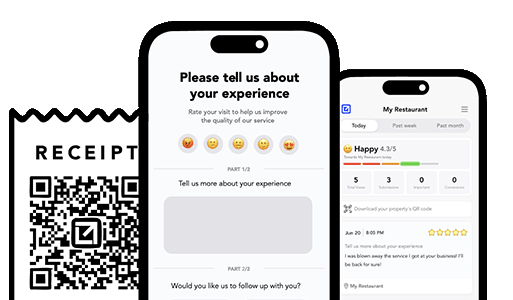
TLDR: A nail salon follow-up is a short, well-timed message you send a day or two after the appointment, not a survey and not a promo blast. It catches the small problems that only show up after the client leaves your chair, a nail that lifted at the corner, a tip that caught and snapped, a shape she second-guessed in her own light, a bit of redness around a cuticle, before she decides the work was sloppy and either posts about it or quietly books somewhere else. The trick with nails is that the set looks flawless the moment you finish, and the real test runs over the next two to three weeks of daily life. Below is the timing, the exact texts, copy-paste templates, a private-first review funnel, and the fill and rebooking reminders that turn one appointment into a client for years.
Why a nail salon follow-up is your cheapest marketing
Nobody trusts their hands to a stranger on a whim. They search “nail salon near me,” scroll the photos, and then read the reviews, hard, because they’ve all had a bad set at some point and they don’t want another. That means every appointment you do is really two jobs: do beautiful work, and protect the rating that brings in the next client. A nail salon follow-up is how you do the second job on purpose instead of leaving it to luck.
Here’s the part that makes nail work different from almost every other service. Your work gets stress-tested the second the client stands up. She grabs her keys, digs for her card, texts in the car, does the dishes that night, and types all day at work. Gel can lift, a tip can catch and snap, dip can chip, a shape she loved in your light can look too long or too square in hers. A large share of the bad reviews nail salons get, and an even larger share of the clients who silently disappear, come down to a small, fixable problem in the first few days that the client never told you about. She didn’t call because switching salons is effortless and complaining feels awkward. She just moved on, and maybe left three stars on the way out.
What a nail salon follow-up actually is (and what it is not)
It is not a survey. It is not a generic “thanks for choosing us” email that lands in a promotions folder. And it is not a blast pushing your polish-change special.
A good nail salon follow-up is one short, human message, sent at the right moment, that does two jobs at once:
gives an annoyed client an easy, private way to flag a problem so you can get her back in for a quick free fix before she posts or switches, instead of after
gives a happy client a one-tap nudge toward a public review, once she’s been wearing the set a couple of days and still loves it
That’s the whole thing. The wording matters less than the timing and the discipline of sending it after every appointment, not just the ones you felt great about. The clients who leave the painful reviews, or who just vanish, are almost never the ones who texted you first.
When should you send the nail salon follow-up?
Timing beats phrasing. With nails, problems show up fast and loyalty is decided fast, so you check in while a small issue is still fixable, and you ask for the review once she’s had a day or two to fall in love with the set.
Day one to two, the holding-up check-in: the most important message you send. This is when a lifted corner or a caught tip shows up, and when a client is deciding whether the set was worth it. A quick “how’s it holding up, anything lifting or catching?” heads off the silent switch you’d never see coming.
Right after a “they look amazing” reply, or at the two to three day mark, the review ask: this is the moment. She’s worn it out, gotten compliments, and loves it. Ask then, with a direct link, and your review rate jumps.
Inside your fix window, the stand-behind-the-work nudge: most good salons fix lifting or a lost nail free within a set number of days. A light message (“anything need a touch-up? it’s on us within the week”) catches small issues and signals you stand behind the work.
At the two to three week mark, the fill reminder: the gel fill, the new set, the “ready to freshen up?” nudge timed to her service. This is the revenue reminder, and it’s the half most salons leave to memory.
The classic mistake is treating the last coat of top gel as the finish line. The client walks out thrilled, you reset for the next appointment, and the only time you hear from her again is if something went wrong and she chose a new salon over a quick text to you.
Automate follow ups after every job
Catch issues early and drive repeat work with smart reminders.
Keep them short, human, and easy to reply to. These work as texts, DMs, or short emails. Swap in your salon name, the tech’s name, and the service.
Day one to two (the holding-up check-in):
Hi [Name], it’s [Tech] at [Salon]. Just checking your set is holding up great. If anything’s lifting, catching, or not sitting right, text me and come back in, we’ll fix it on us within the week. Loved doing your nails!
Review ask (after a day or two, once she’s happy):
So glad you’re loving them, [Name]! If you’ve got a sec, a quick review really helps other people find us when they’re looking for a nail salon they can trust: [direct link]. Thank you so much!
Fix-window nudge:
Hi [Name], checking in now that you’ve worn [the set] a few days. Any nail lifting or catching? Touch-ups are free within the week, just reply and I’ll get you a quick slot.
Fill or rebooking reminder (at two to three weeks):
Hi [Name], you’re about due for a fill on [the set]. Want me to grab you a spot this week before we fill up? Reply with a day that works and it’s yours.
The private-first review funnel
The reason this works isn’t that you’re gaming reviews. You’re not filtering anyone or hiding complaints, which would run afoul of the FTC’s rules on fake and suppressed reviews anyway. You’re giving every client a private channel first, and only pointing her to a public review after she’s told you she loves the set. Unhappy clients get a fast free fix. Happy clients get a one-tap link. Everyone gets heard, and nobody is surprised into posting a complaint she never gave you a chance to solve.
Make the review one tap. Send the direct link, not “search for us on Google.” A Google review QR code at the front desk works too for clients who’d rather scan on the way out. If you want to go deeper, here’s how to get more Google reviews for your service business without begging, and when a tough one does slip through, how to respond to bad reviews so your reply reassures the next dozen people deciding whether to book with you.
With a follow-up vs without one
Same tech, same products, same quality work. The difference is whether you stay in the conversation after she leaves the chair.
Moment
Without a follow-up
With a follow-up
Client walks out
Looks perfect, done
Looks perfect, but you plan to check back
A nail lifts on day three
She assumes sloppy work
You offered a free fix, she comes back in
A tip catches and snaps
“Chipped in days,” posts it
She texts you, you slot her in same week
The set holds beautifully
Happy, but never writes a review
Happy, asked, leaves a 5-star
She’s due for a fill
She forgets, or tries a new place
Your reminder lands, she rebooks
An unhappy client
A surprise low star and a quiet switch
A private text you can actually fix
Turn one appointment into repeat bookings
Reviews protect the rating that brings new clients to your chairs. Repeat bookings are what keep those chairs full between the walk-ins. Nail work has one of the best built-in retention cycles of any trade, because a good set wears off on a predictable schedule and the client needs you again in two to three weeks, every time, whether you remind her or not.
The fill cycle is a gift most salons waste. Gel, acrylic, and dip all need a fill or a new set on a clock. A reminder timed to her service turns “I’ll call when I get around to it” into a booked slot before she drifts to a salon with an opening.
Switching is easy, so loyalty is earned every visit. There’s a nail salon on every corner. The one that texts to make sure the set held up, and that remembers when she’s due, is the one she stops shopping around on.
Referrals travel on her hands. People literally show off your work and get asked “where’d you get your nails done?” constantly. A client thrilled with a set is a walking billboard. Ask for the referral while she’s still getting compliments.
Free fixes build loyalty. Standing behind the work with a free fix inside your window turns a small annoyance into proof you care, and that client rebooks with you instead of the salon down the street.
The mistake is leaving all of that to memory on a busy week. You mean to text the client who’s due for a fill, and then a wall of back-to-back appointments swallows the day. One well-timed reminder can be worth more than the appointment that earned it, because a client who rebooks every three weeks for years is real money, not one set. This is where the follow-up and the reminder become one system: the same channel that caught a lifted nail on day two can bring that client back for her next fill. Tools like VisibleFeedback intercept dissatisfaction before it turns into churn, and send those fill and referral reminders automatically, so nobody at the front desk is setting phone alarms for every client who’s due. There’s more on the mechanics in customer retention strategies that actually work and in salon retention strategies that actually work.
A simple response workflow so follow-ups don’t create chaos
If you send check-ins, you have to handle the replies fast, or you’ve built a machine for reminding people about the thing that annoyed them. In a nail salon the routing is simple, but it has to be same-day, because an unhappy client with easy options doesn’t wait around.
Statuses: New, Acknowledged, Handled, Confirmed
Rule one: anything about lifting, a lost nail, a chip, or a shape she wants adjusted routes straight to the tech who did it, with a same-day “come back in, the fix is on us” reply and a slot offered
Rule two: anything that sounds like a health sign (redness and swelling around a cuticle, pain, a greenish nail, an itchy rash that could be an allergic reaction to a product) gets a prompt, caring reply to come in so you can look, and to see a doctor if it’s spreading or painful, because that protects the client and you
Rule three: booking, deposit, pricing, or gift-card questions route to the front desk or manager
Rule four: confirm after you’ve handled it, so the client hears “glad that’s sorted, see you soon” from you before she decides whether to post or switch
You can absolutely run this by hand with a notes app and the salon phone, and you should start today if that’s all you have. It works because the habit works, not because the tool is fancy.
The reason busy salons automate it is volume and timing. When your techs are booked back to back and closing a dozen or more sets a day, remembering to text each client the next morning, only ask the happy ones for a review, route a lifted nail to the right tech same-day, and circle back at two to three weeks for the fill becomes its own full-time job. It’s also the first thing that slips when the salon is slammed, which is exactly when you can least afford to lose a client. VisibleFeedback runs it on autopilot: it sends the day-after check-in on your schedule, routes any problem straight to the right tech before it becomes a bad review or a silent switch, points happy clients to your Google link, and fires the fill and rebooking reminders automatically. VisibleFeedback was built to catch issues before they show up on Yelp or Google. It starts at $65 a month with no contract, versus the $299 to $699 the big reputation platforms charge, which matters when you’re one salon and not a national chain.
A quick nail salon follow-up checklist
Text every client the day after their appointment, every time
Ask the real question: is anything lifting, catching, or not sitting right?
Offer the free fix inside your window, proactively
Route lifting and chips to the tech same-day, bookings to the front desk
Send any health-sign reply to “come in, and see a doctor if it’s spreading”
Ask only happy clients for a review, once they’ve worn the set a day or two
Send the direct Google review link, not “search for us”
Keep a review QR code at the front desk for walk-out scans
Ask for a referral while she’s still getting compliments
Set a fill reminder for the two to three week mark, by service
FAQ
What is a nail salon follow-up? It’s a short message you send a day or two after the appointment, when any problem with the set shows up and when a client is deciding whether she’ll come back. It catches a lifted nail, a chip, or second thoughts privately, offers a free fix, or routes a happy client to leave a review. Paired with fill reminders, it protects your rating and keeps clients rebooking.
When should I send it? Day one to two for the holding-up check-in, which is right when lifting or a caught tip shows up. Ask for a review once she’s worn the set a day or two and loves it, and only from happy clients. Send the fix nudge inside your free-fix window, and the fill reminder at the two to three week mark.
Won’t clients find the texts annoying? Not if you keep them short, caring, and infrequent. One check-in and a well-timed fill reminder read as a salon that cares whether the set held up, not spam. What annoys people is a ten-question survey. What costs you is silence during the exact few days a client with a tiny problem decides whether to come back or try the place down the street.
How do nail salons get more Google reviews without sounding pushy? Only ask clients who already told you they love the set, ask once, right after they say it, and make it one tap with a direct link or a QR code at the desk. That’s the whole trick. Here’s the longer version on getting more Google reviews.
What if a client messages about redness, pain, or a greenish nail? Take it seriously. Invite her in so you can look, and tell her to see a doctor if it’s painful or spreading, because it could be an infection or a reaction to a product. A proactive check-in is actually safer for everyone, because it gives the client an obvious place to raise a real concern early instead of waiting. It protects her, and it protects you.
The bottom line
Your nail salon’s reputation isn’t decided in the chair, when the set looks perfect and your client is admiring it in the light. It’s decided over the next few days, out in the world, when a nail lifts or a tip catches and she quietly decides whether that’s worth a text to you or a tap on a different salon’s “book now.” A short, caring message puts you back in that moment: you turn a silent switch into a free fix, you turn the happy majority into the reviews that fill your books, and you bring everyone back on schedule for the next fill.
Start with the templates above and one habit: text every client the day after. If you’d rather it run itself for every appointment, start a free 14-day trial of VisibleFeedback, no credit card required.
Automate follow ups after every job
Catch issues early and drive repeat work with smart reminders.
How can I prevent negative reviews from hurting my business? You can’t stop every unhappy customer from sharing feedback, but you can intercept it before it goes public. Tools like VisibleFeedback allow customers to scan a QR code and leave feedback privately. If the feedback is negative, you’re alerted instantly so you can resolve the issue before it turns into a 1-star review.Why are customer reviews so important for local SEO? Reviews are one of the top local ranking factors on Google. Businesses with consistent positive reviews rank higher in search results and attract more customers. By using VisibleFeedback to capture happy customer moments and guide them to Google or Yelp, you build a steady flow of authentic reviews that improve both your reputation and your local SEO.What’s the best way to collect customer feedback in 2025? Traditional methods like comment cards and long surveys don’t work anymore, customers want convenience. The easiest way to collect real-time feedback in 2025 is by using QR codes and mobile-friendly forms. VisibleFeedback makes this simple, helping you get instant insights while turning satisfied customers into 5-star reviewers.How does feedback help improve retention? Feedback reveals what keeps customers loyal and what drives them away. VisibleFeedback helps you act on insights before customers churn.What’s the link between customer experience and retention? Positive experiences lead to repeat business. Using tools like VisibleFeedback ensures you consistently deliver great experiences by resolving issues early.Why should businesses prioritize retention over acquisition? Retaining customers is cheaper and more profitable than finding new ones. VisibleFeedback helps strengthen retention by keeping customers satisfied.
Austin Spaeth is the founder of VisibleFeedback, a tool that helps service companies automate post-job follow-ups, catch issues early, and drive repeat work with smart reminders. With a background in software development and a focus on practical customer retention systems, Austin built VisibleFeedback to make it easy to email customers after every job, route problems to the right person, and keep relationships strong without awkward outreach. When he’s not building new features or writing playbooks for service businesses, he’s wrangling his six kids or sneaking in a beach day.
🚀 What's your goal? Get a plan ...
🚀 Start Here For Help
Whether you’re dealing with callbacks, unhappy customers, or low repeat work, we’ll help you tighten the follow up loop.