TLDR: A moving company follow-up is a short check-in you send a day or two after the move, once the customer has started unpacking and can actually see what showed up and what didn’t. It surfaces a scratched piece, a box in the wrong room, or a claim question privately, before it becomes a 1-star review, and it routes your happy customers to leave a public review while the relief of a finished move is still fresh. Add a referral ask and a reminder for the next move in their circle, and the same system that settles small claims quietly also books your next season. Below is the timing, the exact messages, copy-paste templates, a private-first review funnel, and the referral loop that turns one move into several.
Why the moving company follow-up is your best review insurance
Moving has a timing problem that quietly costs you twice: a bad review and a claim that blows up bigger than it had to. On moving day, the job looks perfect. The last box is off the truck, the customer signs, you shake hands, and everyone is relieved it’s over. That is exactly the moment the trap is set, because the problems in a moving job almost never show up on moving day. They show up over the next two days of unpacking.
A moving company follow-up is the message that keeps you in the conversation during that gap. The customer is exhausted on move day and hasn’t opened a single carton. Then the real inspection starts: a scuff on the dresser that nobody noticed under the moving blanket, a box of kitchen gear that ended up in the garage instead of the kitchen, a lamp that they’re sure didn’t make it off the truck, a question about how the valuation coverage works on a cracked picture frame. The single most common frustrated moving review is not “they did terrible work,” it is “something got damaged and I couldn’t get anyone to call me back.” Left alone, a fixable scratch and a misplaced carton harden into a public star and a formal claim, because by the time the customer notices at 9pm, your crew is home and the only outlet they have is Google.
That gap between “truck pulls away” and “fully unpacked” is where your reputation is actually decided. You already did the hard part, the heavy lifting and the long day. The follow-up is the cheap insurance that keeps all that work from being judged on the one thing that went sideways at 9pm with nobody to call.
When should a moving company send the follow-up?
Send it the day after the move, or at the latest two days out. You want a window where the customer has started unpacking enough to notice problems, but not so late that frustration has already calcified into a review. A same-evening text often lands before anyone has opened a box, so it feels like a formality and catches nothing. A week later is too late, because the scratch has been staring at them for five days and they’ve already decided how they feel.
For a few common job types, the timing shifts a little:
Local same-day moves: text the next morning. By then the kitchen and bedroom are mostly unpacked and any obvious damage or missing carton has surfaced.
Long-distance or multi-day deliveries: text the day after final delivery, and note that the inventory count matters here. Long hauls are where a missing box or a reweigh question is most likely.
Full-service pack-and-move: give it two days. You packed it, so you own more of the unpacking, and more items means more chances for a “where did this go” question.
Storage-in-transit: follow up the day after the final delivery out of storage, not when it first went in, since that’s when the customer finally sees everything again.
If you only ever remember one rule, make it this: the follow-up goes out the morning after, while the customer still has the energy to tell you what’s wrong instead of telling the internet. For a deeper look at timing across job types, see when to send follow-ups after a job.
The private-first review funnel for movers
Here is the part that keeps your rating climbing instead of sinking: you do not send every customer straight to Google. You ask them privately first, and you let their answer decide where they go next.
This is not review gating, and it is not hiding bad feedback. Everyone gets the same honest question. The difference is that the unhappy customer gets a real human and a fast fix instead of a “leave us a review” link, and the happy customer gets a nudge they were glad to act on. You are not suppressing the negative, you are resolving it before it becomes a review, which is exactly what a damage claim deserves anyway. If you want the nuance on doing this cleanly, we covered it in ask for reviews without review gating.
Copy-paste moving company follow-up templates
Steal these and change the names. Keep them short, sound like a person, and always give the unhappy customer a direct line, not a form.
Day-after check-in (text):
Hi [Name], it’s [Your Name] with [Company]. Hope the first night in the new place went alright. Now that you’re unpacking, is everything where it should be, or did anything turn up damaged or missing so we can make it right? Just reply here.
If they reply “all good”:
So glad to hear it, moving day is no joke and you earned the rest. If you have 30 seconds, a quick review really helps a small local crew like ours: [review link]. Thank you for trusting us with your move.
If they reply with a problem:
I’m sorry, let’s fix that. [For damage: Can you text me a photo and I’ll start a claim and get you a resolution this week.][For a missing box: Can you check the garage, closets, and any rooms you haven't opened? If it doesn't turn up, I'll pull our inventory sheet and track it today.] You’ve got my direct number, so reach me here anytime.
Email version (longer moves or when you have no cell):
Subject: How did the move into [new address] go?
Hi [Name],
Now that you’ve had a day or two to start unpacking, I wanted to check in. Did everything arrive the way it should, or is there anything damaged, missing, or in the wrong room we need to sort out? Reply straight to this email or call me at [number] and I’ll handle it personally.
If the move went smoothly, I’d be grateful for a quick review, it genuinely helps us: [review link].
Thanks again for choosing [Company]. [Your Name]
Referral and repeat ask (one week later, happy customers only):
Hi [Name], hope you’re getting settled. Most of our work comes from word of mouth, so if a friend or coworker has a move coming up, we’d be honored if you passed us along: [referral link]. And whenever your next move rolls around, we keep your inventory on file to make it easier.
What good follow-up timing looks like versus winging it
Moment
Without a follow-up
With a day-after follow-up
Scratched dresser found at 9pm
Customer stews, posts a 1-star that night
Customer texts you a photo, you open a claim and reply same day
“Missing” box of kitchen gear
Public review: “they lost our stuff”
You prompt a second look, it turns up in the garage
Happy customer, move went great
Says nothing, you get no review
Replies “all good,” you send the review link, you get a 5-star
Valuation or claim question
Confusion turns into anger and a bad review
You answer it directly before it escalates
Friend asks them for a mover rec
They’ve half-forgotten your name
Your referral text is still in their phone
The pattern is the same every row: the follow-up moves the conversation from a public rating back to a private message you can actually do something about.
The moving company follow-up checklist
Run this on every job and the rest takes care of itself:
Log every customer’s cell and email at booking, not at the truck.
Send the check-in the morning after the move (two days for full-service or long-distance).
Ask one honest question: is everything right, or did anything turn up damaged or missing?
Route “something’s wrong” straight to the owner or a claims lead, with a same-day reply.
For missing items, prompt a second look before you treat it as lost, then pull the inventory sheet.
Send happy customers a direct review link while the relief is fresh.
Follow up a week later with a referral link and a note that you keep their inventory on file.
Respond to every public review, good or bad, in your own voice.
How to handle the damage claim before it becomes a review
Most moving reviews that start with a scratch are not really about the scratch. They are about the silence after it. A customer who finds a gouge and gets a same-day “send me a photo, I’m on it” almost never posts a 1-star, because you’ve shown up. A customer who finds the same gouge and gets voicemail for three days posts the 1-star out of pure frustration.
So when the follow-up surfaces a problem, speed beats perfection. Acknowledge it fast, take the photo, tell them exactly what happens next and when. You can sort out the valuation coverage and the dollar figure afterward. The thing that saves the review is the human reply in the first hour. This is the same fifteen-minute recovery habit that works across every service trade, and we broke it down step by step in how to handle unhappy customers fast.
Where VisibleFeedback fits
Everything above works with a notes app and a phone, and plenty of small crews run it by hand. The trouble is moving season. When you’re doing eight jobs a week, the day-after text is the first thing to slip, and it slips on exactly the busy weeks when a missed scratch is most likely to go public. That’s the gap automated post-job follow-up software is built to close.
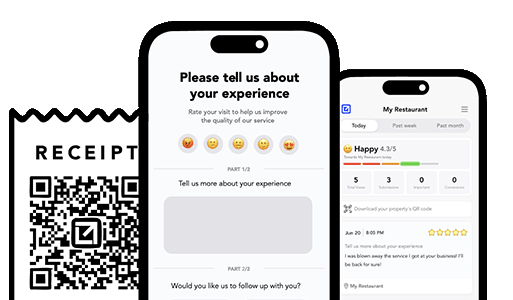
Tools like VisibleFeedback send the check-in automatically after every move, so it goes out whether or not anyone on the crew remembers. When a customer flags damage or a missing box, you get an instant alert and the issue routes to the right person, so a claim gets a human reply in minutes instead of days. VisibleFeedback was built to catch issues before they show up on Yelp or Google, by intercepting the unhappy reply privately and steering the happy ones to a public review. It handles the branded messaging, the recurring referral and reminder nudges that bring the next move back, and the weekly summary that tells you which crews are generating the complaints. And it’s affordable and no-contract, from $65 a month, instead of the $299 to $699 the big reputation platforms charge, which matters when your margins already ride on fuel and labor.
Automate follow ups after every job
Catch issues early and drive repeat work with smart reminders.
How soon after a move should I ask for a review? Ask the day after the move, bundled into your check-in, and only after the customer confirms everything went well. Asking on moving day is too early, since they haven’t unpacked, and asking a week later means the happy glow has faded. The happy-customer reply to your day-after text is the perfect moment.
What if a customer says something got damaged? Treat it as a gift, because they came to you instead of Google. Reply within the hour, ask for a photo, and tell them exactly what happens next and by when. Open the claim, then work out the valuation details afterward. The fast human response is what keeps a fixable scratch from turning into a public 1-star.
Does following up really reduce bad reviews, or just move them? It moves the unhappy ones off the public page and into a private message you can resolve, which is the point. A claim settled by text in two days rarely becomes a review at all. Meanwhile you collect more 5-star reviews from the happy customers who would otherwise have said nothing, so your overall rating climbs.
How do I get more referrals from a move? Movers run on word of mouth, so make referring you effortless. A week after a successful move, send a short thank-you with a referral link, and mention you keep their inventory on file for next time. People move again, and they always know someone who’s about to. For lapsed past customers, a win-back campaign can pull them back before their next move.
Is this just for big van lines? No, it’s most valuable for small and mid-size crews. A single bad review hits a local mover harder than a national brand, and small crews are the ones most likely to skip the follow-up during peak season. A simple day-after text levels the field.
The bottom line
The work that decides your reputation as a mover happens after the truck pulls away, during the two days of unpacking when the customer finally sees what showed up and what didn’t. A short, honest follow-up in that window catches the scratch and the missing carton privately, settles them before they become public, and points your happy customers at the review they were glad to leave. Same message, two outcomes: fewer damage disputes, and a steadier stream of 5-star reviews and referrals.
Start with the day-after text on your very next job. If you’d rather it go out on its own every time, even in the middle of a brutal moving week, start a free 14-day trial of VisibleFeedback, no credit card required.
Share with
Turn Jobs Into Repeat Work
Email clients after every job. Catch issues early, recover unhappy clients fast, and drive repeat work with smart reminders.
How can I prevent negative reviews from hurting my business? You can’t stop every unhappy customer from sharing feedback, but you can intercept it before it goes public. Tools like VisibleFeedback allow customers to scan a QR code and leave feedback privately. If the feedback is negative, you’re alerted instantly so you can resolve the issue before it turns into a 1-star review.Why are customer reviews so important for local SEO? Reviews are one of the top local ranking factors on Google. Businesses with consistent positive reviews rank higher in search results and attract more customers. By using VisibleFeedback to capture happy customer moments and guide them to Google or Yelp, you build a steady flow of authentic reviews that improve both your reputation and your local SEO.What’s the best way to collect customer feedback in 2025? Traditional methods like comment cards and long surveys don’t work anymore, customers want convenience. The easiest way to collect real-time feedback in 2025 is by using QR codes and mobile-friendly forms. VisibleFeedback makes this simple, helping you get instant insights while turning satisfied customers into 5-star reviewers.How does feedback help improve retention? Feedback reveals what keeps customers loyal and what drives them away. VisibleFeedback helps you act on insights before customers churn.What’s the link between customer experience and retention? Positive experiences lead to repeat business. Using tools like VisibleFeedback ensures you consistently deliver great experiences by resolving issues early.Why should businesses prioritize retention over acquisition? Retaining customers is cheaper and more profitable than finding new ones. VisibleFeedback helps strengthen retention by keeping customers satisfied.
Austin Spaeth is the founder of VisibleFeedback, a tool that helps service companies automate post-job follow-ups, catch issues early, and drive repeat work with smart reminders. With a background in software development and a focus on practical customer retention systems, Austin built VisibleFeedback to make it easy to email customers after every job, route problems to the right person, and keep relationships strong without awkward outreach. When he’s not building new features or writing playbooks for service businesses, he’s wrangling his six kids or sneaking in a beach day.
🚀 What's your goal? Get a plan ...
🚀 Start Here For Help
Whether you’re dealing with callbacks, unhappy customers, or low repeat work, we’ll help you tighten the follow up loop.