TLDR: A win-back campaign is a short, timed sequence of messages you send to customers who have stopped booking, built to reopen the relationship rather than bribe it back with a discount. First you define what “lapsed” means for your repeat cycle, because a cleaning client who’s been quiet six weeks and an HVAC customer 14 months past a tune-up are very different problems. Then you segment by how cold they’ve gone, send two or three messages that lead with a genuine check-in, route any surfaced complaint to a private fix before it becomes a public review, and only reach for an offer with the truly cold. Because you already paid to acquire these people once, a win-back campaign is close to the cheapest revenue you can find. Below is the timing, the segments, the SVG playbook, and copy-paste SMS and email templates.
What is a win-back campaign?
A win-back campaign is a small, deliberate set of messages aimed at customers who used to book and stopped. That’s it. It is not a mass promo to your whole list, and it is not a single “we miss you” email fired off once a year. It targets a specific group (people past their normal repeat cycle) with a specific goal (reopen the relationship and get one more booking).
Here’s why it matters more than it looks. Acquiring a new customer costs roughly five to seven times more than keeping one you already have, and a lapsed customer is somewhere in between: they already know your name, already trust your work, and already have your info. You’ve done the expensive part. A win-back campaign just reminds them you exist before someone else earns the habit.
The trap most owners fall into is treating “quiet” as “fine.” It isn’t. Studies of local and subscription businesses regularly find that 20% to 40% of repeat customers lapse each year, and the vast majority never say why. They don’t complain, they don’t cancel, they just drift. If you only react to people who complain, you’re managing the loudest 5% and ignoring the silent majority walking out the back door.
How do you know a customer has actually lapsed?
You can’t win back a customer you haven’t noticed leaving, so the first job is defining “lapsed” for your business. The rule of thumb: a customer is lapsed once they’re meaningfully past their normal repeat cycle, usually about 1.5 to 2 times the gap you’d expect between visits. Guess too short and you’ll pester people who were about to book anyway. Guess too long and they’ve already replaced you.
Here’s a starting table. Adjust it to your own data, because your best guide is the actual average gap between visits in your books.
Business type
Typical repeat cycle
Treat as lapsed after
Recurring cleaning
2 to 4 weeks
6 to 8 weeks
Salon / barber
4 to 6 weeks
10 to 12 weeks
Pest control
quarterly
about 5 months
Auto repair / oil change
3 to 5 months
about 8 months
HVAC tune-up
every 6 months
12 to 14 months
Dental / recall visit
6 months
about 9 months
Lawn / landscaping
seasonal
one full season skipped
If you run recurring or membership work, this is easier: a missed renewal or a skipped scheduled visit is your trigger. For more on building that rhythm in the first place, see the reminder revenue playbook.
Why do customers go quiet without telling you?
Before you write a single message, it helps to know what you’re actually recovering from. Lapsed customers almost never leave for one dramatic reason. It’s usually one of these:
A small unspoken issue. Something bugged them a little (a rushed visit, a callback, a price surprise) and they didn’t think it was worth a fight. They just quietly booked someone else next time. This is the group a win-back message recovers most often, because the problem is small and fixable once you hear it.
Life moved. They forgot, got busy, lost your number, changed their routine. No hard feelings, they just need a nudge and a way to rebook in one tap.
A competitor got there first. Someone else texted, ran an ad, or knocked on the door at the moment yours was due. Habit is powerful, and whoever shows up at the right time often wins it.
They’re gone for good. They moved, closed, or genuinely don’t need you anymore. You can’t win these back, and trying too hard just burns goodwill. The goal is to find them fast so you stop spending on them.
The reason this matters: most of these customers will never tell you which bucket they’re in unless you make it easy and private to say so. That’s the whole game. A good win-back message doesn’t just ask for a booking, it opens a low-pressure door to hear “actually, last time the tech was late,” so you can fix it instead of losing them for a reason you could have solved in two minutes. More on this pattern in why customers leave bad feedback and how to stop it.
The win-back sequence that actually works
Keep it to two or three messages spread over a couple of weeks. One message is easy to miss; five feels like harassment. The order matters more than the wording: lead with a human check-in, then a helpful nudge, and only reach for an incentive at the end, and only for the customers who’ve gone truly cold.
The golden rule: lead with the relationship, not the discount. If your first move is always a coupon, you train people to cancel and wait for the next deal. Worse, a discount says “please come back” from a position of weakness. A check-in says “we noticed you, and we care whether your last job held up” from a position of confidence. Save the offer for step three, and only for customers who ignored the first two.
Automate follow ups after every job
Catch issues early and drive repeat work with smart reminders.
Here’s a full sequence you can adapt to your voice. Swap the brackets and the reply keywords for whatever your texting setup uses. If you want a broader library, see our customer follow-up templates for SMS and email.
Step 1, the check-in (SMS, day 0 of lapse):
Hi [Name], it’s [Your Name] at [Company]. It’s been a bit since we [serviced your system / were out to the house]. Just wanted to check, is everything still working the way it should? Happy to help if not.
Step 1, the check-in (email version):
Subject: Quick check-in from [Company]
Hi [Name], we noticed it’s been a while since your last [service], and we wanted to make sure everything’s still holding up. If anything hasn’t been quite right, just reply and let us know. And if you’re due for your next [tune-up / cleaning / visit], we’d love to get you back on the schedule. Either way, thanks for being a customer.
Step 2, the easy nudge (SMS, ~day 7):
Hi [Name], just a heads up you’re about due for your [seasonal tune-up / recurring cleaning]. Want me to grab a spot for you this [week/month]? Reply YES and I’ll send a couple of times.
Step 3, the final honest ask (SMS, ~day 14, cold customers only):
Hi [Name], I don’t want to keep bugging you, so this is the last note from me. We’d genuinely love to have you back, and to make it easy I’ve got [a small thank-you / $X off] your next [service] if you book by [date]. And if you’ve moved on, no hard feelings at all. Just reply STOP and I’ll leave you be.
A few rules that keep these working:
Make rebooking one tap. Every extra step loses people. A link or a “reply YES” beats “call the office during business hours.”
Personalize the specifics. Reference the actual service and, if you can, the last date. Generic blasts read as spam; “your AC tune-up from last spring” reads as a real business that remembers them.
Honor the exit. If someone’s truly done, an easy STOP protects your reputation far more than one more message ever would.
Segment before you send
Sending the same message to everyone is how good campaigns go flat. A customer who lapsed three weeks ago and one who vanished a year ago need different tones. Split your list into a few simple buckets.
Segment
How long quiet
The play
Tone
Recently quiet
1 to 2 cycles past due
Gentle reminder, no offer
Warm, low-key
Truly lapsed
3 to 6 months
Full sequence, check-in first
Curious, helpful
Long gone
6+ months
One honest message, small offer, then rest
Respectful, no pressure
High value
Any, but big spender
Personal call or note from the owner
Personal, human
That last row is worth its own habit. Your top 20% of customers usually drive well over half your revenue, so a lapsed regular who used to spend real money deserves a personal call or a note in your handwriting, not an automated text. Match the effort to the value.
How VisibleFeedback automates the win-back loop
Doing all of this by hand works, and plenty of owners run win-back off a spreadsheet and a phone. But it falls apart the moment you get busy, which is exactly when customers slip. The pieces that are easy to drop are the ones that matter most: noticing who lapsed, sending the sequence on time, and catching the complaint hiding inside a reply before it becomes a public review.
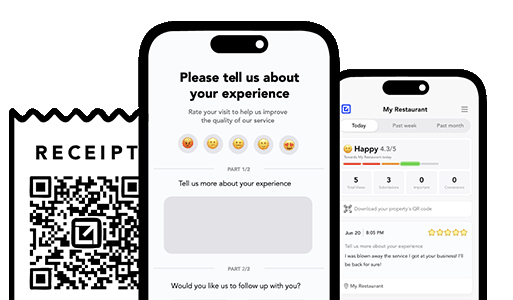
That’s the gap VisibleFeedback was built to close. It sends automated post-job follow-ups and recurring reminders so the win-back moment never depends on you remembering, and because it leads with a private check-in, tools like VisibleFeedback intercept dissatisfaction before it turns into churn or a one-star review. When a lapsed customer replies “actually, last visit wasn’t great,” that message routes straight to the right person for a fast fix, privately, instead of showing up on Yelp or Google weeks later. Happy replies get nudged toward a public review. And at from $65/month with no contract, it costs a fraction of the $299 to $699/month platforms that bundle the same idea into software you’ll never fully use.
How do you measure whether a win-back campaign is working?
Don’t overthink the reporting, but do track three numbers so you know it’s worth doing again:
Reactivation rate: of the lapsed customers you messaged, what percent booked again within 60 days. Anything in the high single digits to low teens is a solid start for cold outreach, and warmer segments should beat that.
Revenue recovered: reactivations times your average job value. Compare it to the near-zero cost of the messages. This is usually where owners realize they’ve been leaving money on the table.
Cost per reactivation: even a small incentive stays cheap next to acquiring a stranger. As long as recovered revenue clears the offers you gave, the math works.
Watch the trend, not any single week. A win-back campaign you run every quarter compounds, because you’re constantly catching people in that reopenable window instead of after the habit has moved on.
Win-back campaign FAQ
How often should I run a win-back campaign? Continuously in the background if you can automate it, so customers get caught the moment they cross your lapse line. If you’re doing it by hand, a focused pass once a quarter works well. Just don’t wait for a slow month, by then the window’s mostly closed.
Should every win-back message include a discount? No. Lead with a genuine check-in and save any offer for the final message to your coldest segment. Discount-first campaigns train customers to lapse on purpose and wait for the deal, which quietly erodes your margins over time.
What if they reply with a complaint instead of a booking? That’s a win, not a problem. You just surfaced a fixable issue privately instead of losing them silently or reading about it in a review. Fix it fast, follow up to confirm they’re happy, then they often become more loyal than before. See more on this in customer retention strategies that actually work.
Is texting lapsed customers even allowed? If they’re existing customers who gave you their number for service, a relevant check-in with a clear opt-out is generally on solid ground, but keep every message easy to stop and honor it instantly. When in doubt, keep it service-related and light on promotion.
How is this different from a normal follow-up? A standard follow-up goes out right after a job. A win-back campaign targets people who already drifted, so it’s less “how did we do” and more “we noticed you’ve been away and we’d love to help again.” For the timing side of regular follow-ups, see when to send follow-ups after a job, and for turning one job into an ongoing relationship, reminder campaigns that don’t annoy people.
The bottom line
Your lapsed customers are the warmest leads you’ll ever have. You already earned their trust and paid to acquire them once, and most of them didn’t leave angry, they just drifted while you were busy. A short, honest win-back sequence, sent at the right moment and led by a real check-in instead of a coupon, quietly recovers a slice of revenue you’d otherwise never see. Define your lapse windows, segment your list, send two or three human messages, and fix the problems that surface before they turn public. Then do it again next quarter.
Automate follow ups after every job
Catch issues early and drive repeat work with smart reminders.
How can I prevent negative reviews from hurting my business? You can’t stop every unhappy customer from sharing feedback, but you can intercept it before it goes public. Tools like VisibleFeedback allow customers to scan a QR code and leave feedback privately. If the feedback is negative, you’re alerted instantly so you can resolve the issue before it turns into a 1-star review.Why are customer reviews so important for local SEO? Reviews are one of the top local ranking factors on Google. Businesses with consistent positive reviews rank higher in search results and attract more customers. By using VisibleFeedback to capture happy customer moments and guide them to Google or Yelp, you build a steady flow of authentic reviews that improve both your reputation and your local SEO.What’s the best way to collect customer feedback in 2025? Traditional methods like comment cards and long surveys don’t work anymore, customers want convenience. The easiest way to collect real-time feedback in 2025 is by using QR codes and mobile-friendly forms. VisibleFeedback makes this simple, helping you get instant insights while turning satisfied customers into 5-star reviewers.How does feedback help improve retention? Feedback reveals what keeps customers loyal and what drives them away. VisibleFeedback helps you act on insights before customers churn.What’s the link between customer experience and retention? Positive experiences lead to repeat business. Using tools like VisibleFeedback ensures you consistently deliver great experiences by resolving issues early.Why should businesses prioritize retention over acquisition? Retaining customers is cheaper and more profitable than finding new ones. VisibleFeedback helps strengthen retention by keeping customers satisfied.
Austin Spaeth is the founder of VisibleFeedback, a tool that helps service companies automate post-job follow-ups, catch issues early, and drive repeat work with smart reminders. With a background in software development and a focus on practical customer retention systems, Austin built VisibleFeedback to make it easy to email customers after every job, route problems to the right person, and keep relationships strong without awkward outreach. When he’s not building new features or writing playbooks for service businesses, he’s wrangling his six kids or sneaking in a beach day.
🚀 What's your goal? Get a plan ...
🚀 Start Here For Help
Whether you’re dealing with callbacks, unhappy customers, or low repeat work, we’ll help you tighten the follow up loop.