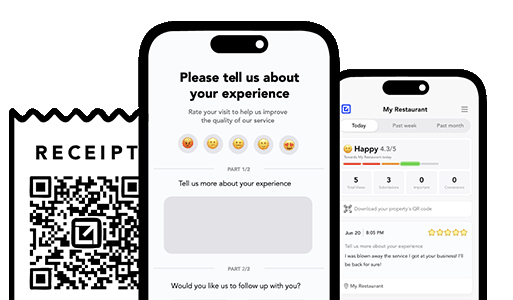
TLDR: A property management follow-up is a short check-in you send right after a maintenance work order closes, again in the first week after move-in, and once more before a lease ends. It catches a still-broken repair or a frustrated resident privately, before it becomes a one-star review on Google or Apartments.com, and it routes your happy tenants and owners toward leaving a public review while the good experience is fresh. Add a renewal reminder before the resident starts apartment hunting and a quarterly check-in with the owners who hired you, and the same system that protects your reputation also keeps your units full and your management contracts signed. Below is the timing, the exact messages for tenants and owners, copy-paste templates, a private-first review funnel, and the retention math that makes it worth the effort.
Why the property management follow-up is your best reputation insurance
Property management has a reputation problem most trades don’t share: you get judged twice, by two different audiences, on things that happen when you are not in the room. Tenants judge you on how fast a repair gets fixed and whether anyone answers the phone. Owners judge you on whether the property performs and whether you keep them informed. Both write reviews. Both can walk.
A property management follow-up is the message that keeps you in the conversation during the quiet days when opinions harden. A tenant puts in a work order, a tech closes it, and everyone moves on. But the tenant is still watching: is the leak actually gone, did the water stain in the ceiling stop growing, is the AC really cooling, did the door lock get fixed or just jiggled. When the answer is no and nobody checks, that tenant does not call you back a second time. They post. A slow or botched maintenance response is the single most common reason tenants leave one-star reviews, and property management reviews are brutal because the writer already feels stuck: they live there, they pay you every month, and a public review feels like the only leverage they have.
The stakes compound because your reviews sit exactly where prospects look. A renter reads your Google rating and your Apartments.com score before they ever tour a unit, and an owner reads your reviews before they hand you their building. One unaddressed “still broken, nobody called” review costs you the next dozen leads who were comparing you to the management company down the street.
What a property management follow-up actually is (and what it is not)
It is not a fifteen-question tenant satisfaction survey. It is not a “thanks for being a valued resident” newsletter that lands in a promotions folder. And it is not you calling three times to chase late rent.
A good property management follow-up is one short, plain message, sent at the right moment, that does two jobs at once:
gives a tenant whose repair did not hold, or who feels ignored, a private, easy way to flag it so you can fix it before they post
gives a happy tenant or owner a nudge toward a public review, right while the fast repair or the smooth month is fresh on their mind
That is the whole thing. The wording barely matters. What matters is the timing and the discipline of sending it after every closed work order and before every lease end, not just when you happen to remember. The units you feel good about are usually fine. The surprise reviews come from the tickets your software already marked complete.
When should you send the property management follow-up?
Timing beats phrasing, and property management gives you a handful of natural moments. You do not need all of them on day one, but each one closes a common gap where reviews and move-outs are born.
The moment a maintenance work order closes: the most important one. Short and specific: is the repair actually working now? This is the message that turns a future one-star into a same-day callback.
The first week after move-in: new residents notice everything, and a small fix now buys you a year of goodwill. It also sets the tone that you actually respond.
A mid-lease pulse, once or twice a year: a quiet “how’s everything going in the unit?” surfaces the slow-burn frustrations that never became a work order but will show up at renewal time.
60 to 90 days before the lease ends: the renewal check. This is where the money is. You want to know who is wobbling while you can still save them, before they have toured three other places.
A quarterly check-in with owners: owners fire property managers over feeling out of the loop far more than over any single repair. A short update keeps the contract and earns the review that wins you the next building.
Send the maintenance follow-up the same day the ticket closes, while the tech’s work is fresh and fixable. Skip it and the tenant lives with a half-fixed problem, decides you cut corners, and posts about it before you know a thing. For more on nailing the timing across any job, here is when to send follow-ups after a job.
Automate follow ups after every job
Catch issues early and drive repeat work with smart reminders.
Keep them short and human. Here is a copy-paste set you can adapt to your company’s voice. Swap the reply keywords for whatever your texting setup uses, and always send the tenant’s name and the property, never a faceless blast.
When
Audience
Channel
Message
Work order just closed
Tenant
Text
Hi [Name], it’s [Company]. Our tech marked your repair at [Address] complete today. Is everything fully working now? Reply 1 all set, 2 still not right, 3 please call me. We’d rather come back than have you live with it.
First week after move-in
Tenant
Text
Hi [Name], welcome to [Property]. Now that you’ve settled in a few days, is anything not working the way it should, a fixture, an appliance, a lock? Just reply here and we’ll take care of it.
Mid-lease pulse
Tenant
Email
Hi [Name], quick check-in from [Company]. How is everything in the unit these days? If there’s anything nagging you, big or small, reply and let us know. We’d rather hear it from you than not at all.
After an “all set” reply
Tenant
Text
So glad it’s fully working, [Name]. Quick favor: would you mind leaving us a short review? It genuinely helps other renters find a management company that actually shows up. Here’s the direct link: [review link]. Thank you!
60 to 90 days before lease end
Tenant
Text
Hi [Name], your lease at [Address] is up on [Date]. We’d love to have you stay. Reply RENEW and we’ll send your renewal terms, or reply CALL if you’d like to talk through anything first.
Quarterly owner update
Owner
Email
Hi [Name], your quarterly update on [Property]: occupancy, rent collected, work orders handled, and anything coming up. Anything you’d like us to prioritize this quarter? Always glad to hop on a call.
After a referral
Tenant/Owner
Text
[Name], thank you for sending [Referred Name] our way. It means a lot, and we’ll take good care of them.
The maintenance follow-up is the one that protects you. The review ask is the one that grows you. The renewal reminder is the one that keeps your units full. You need all three, but if you only ever do one, do the maintenance follow-up.
The private-first review funnel
The reason this works is not that you are gaming reviews. You are not filtering anyone or hiding complaints. You are giving every tenant and owner a private channel first, and simply asking for a public review only after they have told you they are happy. Unhappy residents get a callback. Happy residents get a link. Everyone gets heard, which is the whole point of asking for reviews the right way, without review gating.
Renewals and owners: the retention math most managers ignore
Reviews protect your reputation. Renewals and owner contracts pay your bills. And property management has two retention loops running at once, tenants and owners, so a follow-up habit compounds faster here than in almost any other business.
The renewal loop. A filled unit is not the win, a renewed lease is. Turning a single unit can cost anywhere from $1,000 to $5,000 once you add the make-ready, the lost rent during vacancy, the leasing effort, and the concessions to fill it, and every one of those is a month or more you are not earning. A resident who feels heard renews. A resident who sat with a half-fixed problem for six months starts touring other places the day the renewal notice arrives. The mid-lease pulse and the 60-to-90-day renewal check are how you find the wobblers while you can still save them.
The owner loop. Your management contract is your real subscription revenue, and owners churn over communication, not repairs. An owner who gets a clear quarterly update and never has to wonder what is happening at their property stays for years and refers other landlords. An owner who only hears from you when something breaks is already interviewing your replacement. A short, steady check-in is the cheapest retention you will ever buy.
Reviews from both sides. Happy tenants write the reviews that fill your units. Happy owners write the reviews and referrals that grow your door count. Ask each at the moment they are most satisfied: the tenant right after a fast repair, the owner right after a smooth quarter or a quick lease-up.
Referrals in clusters. Renters know renters, and small landlords know other small landlords. A happy resident refers a coworker looking for a place; a happy owner refers the investor down the street with three more doors. Both come easily if you ask while the good experience is fresh.
The mistake is leaving all of that to memory. You mean to check in before the lease ends and to send the owner an update, and then this month’s turnovers, work orders, and rent chasing swallow the week. A single well-timed renewal reminder can be worth more than a month of new leads, because it saves a turn instead of paying for one. This is where the follow-up and the reminder become one system: the same channel that caught a still-leaking sink can nudge a happy tenant to renew or an owner to refer. Tools like VisibleFeedback intercept dissatisfaction before it turns into churn, and send those renewal and owner reminders automatically, so you are not the one setting calendar alarms for every lease end and every quarterly update. There is more on the mechanics in the reminder revenue playbook and in turning one-time customers into repeat work without spam.
A simple response workflow so follow-ups don’t create chaos
If you send check-ins, you have to handle the replies fast, or you have just built a machine for reminding tenants about the problem they were about to let slide. Keep it to five states and two rules.
Statuses: New -> Acknowledged -> Assigned -> Fixed -> Confirmed
Rule one: every “2 still not right” or “3 please call me” reply gets an owner on your team and a callback the same day, not the end of the week
Rule two: confirm after the fix, so the tenant hears “handled” from you before they ever decide whether to post
That is the whole system. On a business where one “still broken, nobody called” review can scare off the next dozen renters comparing you online, a same-day callback is the best time you will spend all week. For the recovery script itself, see how to handle unhappy customers fast, and for keeping the routing clean when you manage a lot of doors, issue tracking for small service teams maps almost one to one.
Where VisibleFeedback fits
You can absolutely run this by hand with a spreadsheet and a texting app, and you should start today if that is all you have. It works because the habit works, not because the tool is fancy.
The reason property managers automate it is timing and volume. When you are running hundreds of doors, remembering to text each tenant the moment their work order closes, again in their first week, and once more before renewal, only asking the happy ones for a review, routing every “still broken” reply to someone who will actually call back, and sending owners a steady quarterly update becomes its own full-time job, and it is exactly the job that slips when you are buried in turnovers. VisibleFeedback runs it on autopilot: it sends the post-work-order check-in and the renewal reminder on your schedule, routes any “still not right” reply straight to your team before it goes public, points happy tenants and owners to a review, and fires the renewal and owner-update reminders automatically. VisibleFeedback was built to catch issues before they show up on Yelp or Google. It starts at $65 a month with no contract, versus the $299 to $699 the big reputation platforms charge, which matters when you are managing units on a management fee, not running a national franchise.
A quick property management follow-up checklist
Send a check-in the moment every maintenance work order closes: 1 all set / 2 still not right / 3 please call me
Route “still not right” replies to a same-day callback, never to a review site
Send a first-week move-in check so new residents start with goodwill
Run a mid-lease pulse once or twice a year to surface slow-burn frustration
Ask only happy tenants and owners for a review, after they confirm things are working
Send the review link directly, not “find us on Google”
Start the renewal conversation 60 to 90 days before the lease ends
Send owners a short quarterly update, before they wonder what’s happening
Thank and ask for a referral while the good experience is still fresh
Do it every ticket and every lease, not just when you remember
FAQ
What is a property management follow-up? It is a short message you send the moment a maintenance work order closes, again after move-in, and before a lease ends, to check whether the repair actually held and how the resident is doing. It catches still-broken repairs and quiet frustration privately, so you can fix them before they become public reviews, and it routes happy tenants and owners toward leaving a review. Paired with renewal reminders and owner check-ins, it also keeps your units full and your contracts signed.
When should I send the follow-up text? Send the maintenance check-in the same day the work order closes, while the fix is fresh and reversible. Send a move-in check in the first week, a mid-lease pulse once or twice a year, and start the renewal conversation 60 to 90 days before the lease ends. Ask for a review only after the resident tells you everything is working.
Won’t tenants find the texts annoying? Not if you keep them short and infrequent. A quick note when a repair closes, an occasional check-in, and one renewal reminder reads as a management company that actually pays attention, not spam. What annoys people is a fifteen-question survey or getting chased three times. What annoys them far more is a repair that never got fixed and a company that never called back.
How do property managers get more reviews without sounding pushy? Only ask the tenants and owners who already told you things are working, ask once, and make it one tap with a direct link. That is the whole trick. Here is the longer version on getting more Google reviews.
How does this help me get more business, not just protect my rating? Three ways. The maintenance check-in catches the still-broken repair before it becomes a review that scares off future renters and owners. The renewal reminders save turns, which is real money since a single turnover can cost $1,000 to $5,000. And the review and referral asks turn happy tenants into full units and happy owners into more doors under management.
The bottom line
Your property management company’s reputation is not decided when a work order closes or when a lease gets signed. It is decided in the quiet days after, when a tenant decides whether the leak is really fixed and whether they want to renew, and when an owner decides whether you are worth keeping. A short message puts you back in that moment: you catch the still-broken repairs before they go public, you turn the happy residents and owners into the reviews that win the next lease and the next building, and you bring tenants back to the table before they start apartment hunting.
Start with the templates above and one habit: message every tenant the moment their work order closes. If you would rather it run itself on every ticket and every lease, start a free 14-day trial of VisibleFeedback, no credit card required.
Automate follow ups after every job
Catch issues early and drive repeat work with smart reminders.
How can I prevent negative reviews from hurting my business? You can’t stop every unhappy customer from sharing feedback, but you can intercept it before it goes public. Tools like VisibleFeedback allow customers to scan a QR code and leave feedback privately. If the feedback is negative, you’re alerted instantly so you can resolve the issue before it turns into a 1-star review.Why are customer reviews so important for local SEO? Reviews are one of the top local ranking factors on Google. Businesses with consistent positive reviews rank higher in search results and attract more customers. By using VisibleFeedback to capture happy customer moments and guide them to Google or Yelp, you build a steady flow of authentic reviews that improve both your reputation and your local SEO.What’s the best way to collect customer feedback in 2025? Traditional methods like comment cards and long surveys don’t work anymore, customers want convenience. The easiest way to collect real-time feedback in 2025 is by using QR codes and mobile-friendly forms. VisibleFeedback makes this simple, helping you get instant insights while turning satisfied customers into 5-star reviewers.How does feedback help improve retention? Feedback reveals what keeps customers loyal and what drives them away. VisibleFeedback helps you act on insights before customers churn.What’s the link between customer experience and retention? Positive experiences lead to repeat business. Using tools like VisibleFeedback ensures you consistently deliver great experiences by resolving issues early.Why should businesses prioritize retention over acquisition? Retaining customers is cheaper and more profitable than finding new ones. VisibleFeedback helps strengthen retention by keeping customers satisfied.
Austin Spaeth is the founder of VisibleFeedback, a tool that helps service companies automate post-job follow-ups, catch issues early, and drive repeat work with smart reminders. With a background in software development and a focus on practical customer retention systems, Austin built VisibleFeedback to make it easy to email customers after every job, route problems to the right person, and keep relationships strong without awkward outreach. When he’s not building new features or writing playbooks for service businesses, he’s wrangling his six kids or sneaking in a beach day.
🚀 What's your goal? Get a plan ...
🚀 Start Here For Help
Whether you’re dealing with callbacks, unhappy customers, or low repeat work, we’ll help you tighten the follow up loop.