TLDR: A remodeling contractor follow-up is a short, scheduled check-in at each phase of a renovation, from demo to the final walkthrough, that catches a worried or frustrated homeowner privately before it becomes a public review or a payment dispute. It also routes your happy clients toward a Google review and a referral. Below is the phase-by-phase timing, the exact messages, copy-paste templates, a punch-list process that ends in a signed-off “we’re done,” and a private-first review funnel.
Why a remodeling contractor follow-up is your cheapest reputation insurance
Most home services are done in a day. A remodel is not. A kitchen or bath job runs for weeks, tears up the busiest room in the house, and costs a family five figures they saved for years to spend. That length is the whole problem. The most common reason a beautiful remodel turns into a bad review is not the craftsmanship, it is the silence between phases and a punch list that limps along after the invoice is paid.
A remodeling contractor follow-up is what keeps you in the conversation across all those weeks. Picture the homeowner two weeks into a kitchen tear-out. They are washing dishes in the bathtub, the delivery of the countertop slipped, and the crew that was here every morning has not shown up in three days because they are waiting on the fabricator. Nobody told them why. In that homeowner’s head, “we’re waiting on your counters” quietly becomes “they took my deposit and disappeared,” and that story writes itself straight onto Google.
A remodel is one of the most review-driven, trust-fragile purchases a household makes. People pick their contractor largely on star rating and referrals, and one 1-star from a job that was actually well built can cost you the next three prospects who were reading your reviews. A two-line text at each phase costs you nothing and protects the most expensive thing you own, which is your name in a small market where everybody talks.
What a remodeling follow-up actually is (and what it is not)
It is not a 20-question satisfaction survey nobody fills out. It is not a monthly “check out our recent projects” newsletter that dies in a promotions folder. And it is not three review requests fired off the day you pull the last piece of blue tape, before the homeowner has decided how they feel.
A good remodeling follow-up is one short, human message at each key phase that does two jobs at once:
gives a worried or frustrated homeowner a private, easy way to tell you something feels off, so you can explain a delay or catch a real problem before it hardens into a review
gives a satisfied homeowner a natural nudge toward a public review and a referral, at the moment the room is finished and they love it
That is the whole thing. On a job this long, the timing and the discipline of sending one at every phase matter far more than clever wording. The middle is where reputations are lost. The finished room is where they are won.
When should you send a remodeling follow-up?
Timing beats phrasing, and a remodel has several moments that matter. Map a check-in to each phase, because each one has its own way of going sideways.
Phase
When
What the check-in does
Demo complete
End of day 1
Sets the tone, confirms the plan and the dust, tells them what tomorrow looks like
Rough-in + inspection passed
After framing/MEP inspection
Reassures them the hidden work is right, before it’s covered up
Delay you saw coming
The moment you know
Gets ahead of the story so a slip reads as honesty, not disappearing
Substantial completion
Walkthrough day
Invites the punch list on purpose, in private, before they post it
Punch list cleared
Every item signed off
The natural, earned moment to ask for a review
30 to 60 days later
After they’ve lived in it
Catches settling issues and warranty items early, keeps the door open for the next project
The two everybody skips are the delay heads-up and the substantial-completion walkthrough. Those are the exact phases where a good job quietly turns into a bad review, so those are the two to nail first.
Copy-paste remodeling follow-up templates
Keep them short, name the specific project, and make it effortless to reply. Text works best for the quick ones; email is fine for the walkthrough recap and warranty note.
Demo day, end of day 1 (SMS):
Hi [Name], demo on the [kitchen] wrapped up today and the crew’s back at 7:30 tomorrow to start rough-in. You’ll see some dust and a portable this week, all normal. Anything look off or worry you? Reply here anytime, it comes straight to me. [Your name]
Rough-in / inspection passed (SMS):
Good news [Name], the framing and rough plumbing/electric passed inspection today, so we’re clear to close up walls. This is the stuff you won’t see later but it’s the part that matters most. Questions before we drywall? Just reply.
Delay heads-up (SMS), send the minute you know:
Heads up [Name]: the [quartz counter] slipped to [date] on the fabricator’s end, so we’re about [2 days] behind on that piece. Everything else keeps moving. I wanted you to hear it from me, not wonder where we went. Call or text me with any concerns.
Substantial completion / walkthrough (Email):
Subject: [Kitchen] walkthrough, let’s make your punch list
Hi [Name], the [kitchen] is at substantial completion and I’d like to walk it with you so we build the punch list together. Please note anything, big or small, a nick, a missing outlet cover, a door that needs adjusting. Every item goes on the list with an owner and a date, and we don’t call the job done until you sign off on it. When works this week?
Review request, only after the punch list is signed off (SMS):
[Name], really enjoyed working on your [kitchen] and I’m glad you love how it turned out. If you have two minutes, an honest Google review helps our small crew more than you’d guess: [Review Link]. Thank you.
30 to 60 day check-in (SMS):
Hi [Name], you’ve had a month to live in the new [kitchen], how’s it wearing? Anything settling, sticking, or that you’d want us to look at under warranty? Happy to swing by. And if you know anyone planning a project, we’d love the intro.
Ask any remodeler about their worst reviews and payment fights, and most of them trace to the same place: the punch list. The homeowner sees a missing outlet cover and a door that rubs, assumes the whole job is going to drag, and holds the final check hostage. You see a few tiny items and assume everyone knows you’ll circle back. Nobody wrote it down, nobody owns it, and the gap turns into a standoff.
Fix it with a process, not good intentions:
Build the list together at the walkthrough. Invite the nitpicks on purpose. A list you made together feels like partnership; a list they made alone after you left feels like a complaint.
Give every item one owner and a due date. “Trim carpenter, Thursday” beats “someone will grab it.” An item with no name is an item nobody does.
Confirm each fix as it’s done, ideally with a photo, so progress is visible instead of assumed.
Get an explicit sign-off when the last item clears. “Everything on your list is done, are you good to call this complete?” That single yes is what protects your final payment and your review.
Turn a finished remodel into reviews and referrals
The room a homeowner loves is your best marketing, but only if you ask at the right moment and make it easy. Two rules keep this clean and off the wrong side of Google’s and Yelp’s policies:
Ask everyone, don’t screen. Sending the review request only to people you think are happy is review gating, and it can get your reviews filtered or your profile flagged. Instead, send the same completion check-in to every client. The happy ones head to your public review link; the ones with a punch-list item reach you privately first. You’re not filtering who can review, you’re giving unhappy clients a faster private path before they get there. For the full walkthrough on doing this the right way, see how to get more Google reviews for your service business.
Make the referral ask specific. “Know anyone thinking about a kitchen or bath this year? I’d love an intro” beats a vague “tell your friends.” Remodels spread by word of mouth in a neighborhood, and a client who just hosted a dinner in their new kitchen is your best salesperson.
The same private-first channel that saves your review score is also what defuses a punch-list standoff before it becomes a 1-star. If you want the step-by-step for the tense conversations, our 15-minute unhappy-customer recovery process lays it out.
Where automation comes in
You can absolutely run all of this with a shared spreadsheet and a texting app, and plenty of good crews do. The trouble is that a remodel has five or six touchpoints spread across weeks, and the one that gets forgotten during a busy stretch is almost always the delay heads-up or the walkthrough check-in, the two that matter most. Follow-up is a discipline problem, and discipline is exactly what breaks when you’re framing one job and quoting three others.
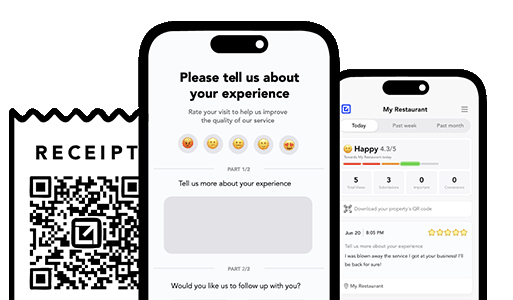
That is the gap tools like VisibleFeedback are built to close. It sends the phase-based texts and emails on schedule under your business name, and when a homeowner replies that something is off, it routes that message to the right person, your project manager, your lead carpenter, or you, with a status you can track until it’s resolved. Instead of hoping a worried client calls you before they post, you catch the frustration privately and fix it first. VisibleFeedback was built to catch issues before they show up on Yelp or Google, and to send the happy clients toward a public review at the same time.
It also keeps the retention loop turning after the job. A remodeling client is a homeowner with more projects in them, a bath after the kitchen, a deck next spring, so a light seasonal reminder or an annual check-in keeps you top of mind without pestering. And because it runs from $65 a month with no contract, it fits a small crew’s budget rather than the $299 to $699 a month the big reputation platforms charge. If reducing warranty callbacks is your main goal, our guide to a post-job follow-up system that reduces callbacks pairs well with this one.
Automate follow ups after every job
Catch issues early and drive repeat work with smart reminders.
How soon after a remodel should I ask for a review? After the punch list is signed off, not before. Asking while there are open items is asking to get cooked publicly. Once the last piece of tape is down and the homeowner has confirmed they’re happy, that same day or the next is ideal, while the finished room still feels new.
What if a homeowner is upset about a delay that wasn’t my fault? Own the communication even when you can’t own the delay. A supplier backorder isn’t your fault, but the homeowner hearing about it from the crew instead of from you is. Send the heads-up the minute you know, explain what slipped and by how long, and confirm everything else is still moving. A delay you got ahead of reads as honesty; a delay they discovered reads as disappearing.
Isn’t a follow-up text annoying on top of all the in-person contact? Not if it’s short, specific, and useful. One or two lines that name their project and invite a reply is reassurance, not spam. The annoying version is a generic marketing blast. The welcome version is “rough-in passed inspection, we’re clear to close walls, any questions before we do?”
Can’t I just do this by memory since I’m on site every day? You can until you’re running three jobs at once, and then the phase that gets skipped is the delay heads-up or the walkthrough, which are the two that prevent your worst reviews. Automating the schedule is what keeps the discipline from breaking on your busiest weeks.
Does this work for general contractors and design-build firms, not just kitchen and bath? Yes. The phases shift with the scope, but the structure holds for any multi-week renovation: a check-in at each milestone, a delay heads-up when needed, a walkthrough that builds the punch list together, a sign-off, and a review ask once the client is genuinely happy.
The bottom line
Remodeling reviews are about homeowner confidence, not craftsmanship. You already do the work well. What turns a great job into a great review is being present in the weeks between the deposit and the final walkthrough, getting ahead of the delays, and running a punch list that ends in a clear “we’re done.” Do that and you’ll get fewer disputes over the final check, fewer anxiety-driven reviews, and more referrals from clients who felt looked after the whole way through.
Set the phase check-ins up once, keep the punch list honest, and let the finished rooms sell the next job. If you’d rather not track it all by hand, start a free 14-day trial of VisibleFeedback, no credit card required.
Share with
Turn Jobs Into Repeat Work
Email clients after every job. Catch issues early, recover unhappy clients fast, and drive repeat work with smart reminders.
How can I prevent negative reviews from hurting my business? You can’t stop every unhappy customer from sharing feedback, but you can intercept it before it goes public. Tools like VisibleFeedback allow customers to scan a QR code and leave feedback privately. If the feedback is negative, you’re alerted instantly so you can resolve the issue before it turns into a 1-star review.Why are customer reviews so important for local SEO? Reviews are one of the top local ranking factors on Google. Businesses with consistent positive reviews rank higher in search results and attract more customers. By using VisibleFeedback to capture happy customer moments and guide them to Google or Yelp, you build a steady flow of authentic reviews that improve both your reputation and your local SEO.What’s the best way to collect customer feedback in 2025? Traditional methods like comment cards and long surveys don’t work anymore, customers want convenience. The easiest way to collect real-time feedback in 2025 is by using QR codes and mobile-friendly forms. VisibleFeedback makes this simple, helping you get instant insights while turning satisfied customers into 5-star reviewers.
Austin Spaeth is the founder of VisibleFeedback, a tool that helps service companies automate post-job follow-ups, catch issues early, and drive repeat work with smart reminders. With a background in software development and a focus on practical customer retention systems, Austin built VisibleFeedback to make it easy to email customers after every job, route problems to the right person, and keep relationships strong without awkward outreach. When he’s not building new features or writing playbooks for service businesses, he’s wrangling his six kids or sneaking in a beach day.
🚀 What's your goal? Get a plan ...
🚀 Start Here For Help
Whether you’re dealing with callbacks, unhappy customers, or low repeat work, we’ll help you tighten the follow up loop.