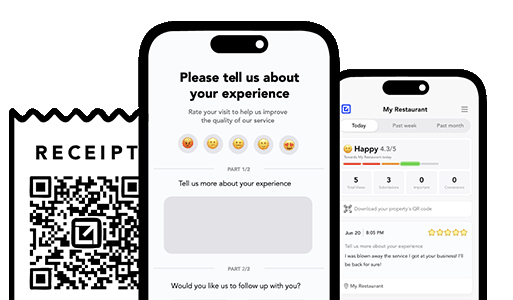
TLDR: A massage therapy follow-up is a short, timed check-in you send after a session. It catches the “was the pressure right?” and “why am I sore?” worry privately, in the day or two when a client’s real verdict forms, before normal post-massage soreness turns into a bad review. It points the clients who felt great toward a public review, and it prompts the rebooking that keeps your calendar full. Below is the timing, the exact text and email templates, a private-first review funnel, and the rebooking loop that keeps a table booked.
Why the massage therapy follow-up is your cheapest marketing
Here is the strange thing about massage work: the session almost always ends well. The client is relaxed, a little floaty, grateful. You walk them to the front, they say it was great, and you both believe it. So most therapists assume the job is done and move to the next appointment. But a client’s real verdict on a massage does not form on the table. It forms the next morning, when the relaxation has worn off, a little soreness has set in, and they are deciding, alone, whether that session was worth the money and worth coming back for. A strong massage therapy follow-up is the thing that reaches them in exactly that window.
Think about what actually happens after a good deep-tissue session. You worked a knotted shoulder hard because that is what the body needed, and it felt like relief in the moment. The next day the client wakes up sore, which is completely normal, the soft-tissue equivalent of a good workout. But nobody told them that. So they quietly decide the pressure was “too rough,” or that the massage “didn’t help, it made it worse.” Or the flip side: they came in for low-back pain, you spent time on their neck and traps because they were locked up too, and they leave thinking you never really addressed the thing they booked for. None of these are bad massages. Every one of them, left unspoken, can turn into a one-star review or a client who simply books with someone else next time. A large share of a massage therapist’s lost clients and worst reviews come from sessions that were genuinely good work, they just were not followed up on. No amount of extra skill on the table fixes that. Only a check-in after does.
What a massage therapy follow-up actually is (and what it is not)
It is not a long satisfaction survey nobody fills out on their phone. It is not a monthly newsletter about fascia that dies in a promotions folder. And it is not a review link shoved at a client the second they hand you their card, before they have even felt how they sleep that night.
A good massage follow-up is one short, warm message at a couple of moments that each do a specific job:
the next-day check-in, sent the morning after the session, which gives a client an easy, private way to say “I’m pretty sore” or “my neck still feels tight” so you can reassure them or note it, before it becomes a public complaint
the rebooking nudge, folded into that same message or sent when they are due, which offers the next appointment while they still remember how good the last one felt
the review ask, sent to the clients who told you they feel great, which turns your best sessions into the search-ranking reviews that bring in new clients
That is the whole thing. In massage the timing matters as much as the wording, because the danger window is short and specific. Post-massage soreness peaks in the first 24 to 48 hours, which is the exact stretch when a happy client can quietly turn into an unhappy one. Get in front of that window and the worries come to you. Miss it and the client decides, alone, what a sore shoulder means.
When should you send a massage therapy follow-up?
Timing beats phrasing. Map a check-in to the moments that actually decide whether they come back.
The morning after the session: the most important one, and the one almost everyone skips. Post-massage soreness is peaking and the verdict is forming. A short “how are you feeling today, any soreness or anything to adjust next time?” turns a quiet worry into a two-line reassurance instead of a review.
When they are due to rebook: for most clients that is every three to four weeks, sooner for people managing pain or training hard. A gentle “you’re about due, want me to hold your usual time?” catches them before the gap stretches into months.
A day or two later, for the happy ones: once a client has told you they feel great, that is the moment to ask for a review, once, with a direct link.
After a lapse, if they drift: a light “it’s been a while, your body would probably thank you, want to come in?” wins back more clients than any discount blast.
The private review funnel: catch the worry before it goes public
The core move in any good follow-up is simple. You ask people how they feel before you ask them to post, and you route the two answers to two different places. Clients who feel great go to Google. Clients with a worry come straight to you. Tools like VisibleFeedback intercept that dissatisfaction before it turns into a review, which for a massage therapist is the whole ballgame, because your bad reviews are usually just unspoken confusion about normal soreness or a spot you would happily focus on next time.
The magic is in the routing. When a client replies “I’m pretty sore, was that normal?”, that never turns into a review request, it turns into a warm, quick answer from you. Often it is a two-line reassurance: “That’s totally normal after the work we did on those traps, it’s like a good workout, drink water and it’ll ease by tomorrow. I’ll go a touch lighter there next time if you’d like.” Sometimes it is a note in their file to adjust pressure or spend more time on the low back. Either way, the client who was a step away from a one-star instead feels heard and books again. Same soreness, completely different outcome, decided entirely by whether you reached out first. If something bigger surfaces, you handle it like any recovery: fast and personal. Here is a 15-minute recovery process that works for any service business.
Copy-paste massage therapy follow-up templates
Keep them short, human, and tied to a real moment. Steal these and change the voice to match yours.
Next-day check-in (text, morning after):
Hi [Name], it’s [You] at [Studio]. Hope you slept well after your session. How are you feeling today, any soreness or tightness? A little soreness is normal after the work we did, but tell me here if anything feels off and I’ll note it for next time.
Check-in plus rebooking (text, morning after):
Hi [Name], it’s [You] at [Studio]. How are you feeling today? If you’re a bit sore, that’s normal and it should ease by tomorrow. Whenever you’re ready, want me to hold your usual spot in about 3 weeks so that shoulder doesn’t lock back up? Just reply here.
Rebooking nudge (text, when they’re due):
Hi [Name], you’re about due for your next session, and your body would probably thank you. I’ve got [day/time] and [day/time] open this week, want me to grab one for you?
Review ask (text, a day or two after, happy clients only):
Hi [Name], so glad you’re feeling good. If you have a sec, a quick Google review would mean the world, it’s how new clients find a therapist they can trust: [direct link]. Thank you, see you next time.
Win-back (text, after a lapse):
Hi [Name], it’s been a little while since your last session, hope you’ve been well. If the tension’s been creeping back, I’d love to get you on the table. Here’s my booking link whenever you’re ready: [link].
Your growth is the rebooking, not the single session
Here is what makes massage different from a one-time trade like foundation repair or roofing. Your income is not the session in front of you, it is the rhythm: the client who comes back every three or four weeks, month after month, for years. One loyal regular is worth more than a dozen one-time walk-ins. So the follow-up is not just reputation insurance, it is the single most direct lever you have on revenue, because it does the two things that keep a client on a rhythm: it answers the doubt that would have ended the relationship, and it asks for the next appointment while the good feeling is still fresh.
The follow-up feeds this loop on both sides. It catches the worry so the client stays a fan, and it gives you a natural, non-pushy reason to offer the next appointment. A client who hears “your body would thank you, want your usual time?” the morning after a great session rebooks at a far higher rate than one you leave to remember you on their own. For more on turning single visits into ongoing work, see turning one-time customers into repeat work without spam.
Doing it by hand vs automating it
You can absolutely start this with your phone and your booking notes. The templates above work the day you copy them. The trouble shows up at volume. Once you are doing five or six clients a day, remembering to text each one the next morning, track who is due to rebook, ask only the happy ones for a review, and win back the people who drifted becomes its own job, and it is exactly the job that slips on your busiest weeks.
By hand
Automated
Next-day check-in
Easy to forget after a full book of clients
Fires the morning after each session automatically
Rebooking nudge
Slips when you’re heads-down on the table
Sends when a client is due, without you tracking it
Routing a soreness worry
Buried in your personal texts
Flagged and sent to you instantly
Review ask
You forget which clients raved
Triggered only to clients who said they feel great
Win-back after a lapse
Rarely happens
Sends automatically after a set gap
Weekly view of issues
None
Summary of what’s trending
The reason therapists and studio owners automate it is simple math. Every client you keep on a rhythm is worth hundreds or thousands of dollars a year, and every worry you answer before it goes public protects the reviews that bring in the next new client. VisibleFeedback runs it on autopilot: it sends the next-day check-in on your schedule, routes any soreness or pressure worry straight to you before it goes public, points the happy clients to a Google review, and keeps the rebooking and win-back nudges going out. VisibleFeedback was built to catch issues before they show up on Yelp or Google, and it starts at $65 a month with no contract, versus the $299 to $699 the big reputation platforms charge, which matters when you are a solo LMT or a small studio, not a national chain.
Automate follow ups after every job
Catch issues early and drive repeat work with smart reminders.
Set expectations early: some next-day soreness is normal, like a good workout
Invite the worries, so they come to you instead of Google
Keep it to one tap: 1 feeling great / 2 a little sore, is that normal / 3 please adjust next time
Route every “sore” or “please adjust” reply to a warm same-day answer, never to a review
Note pressure and focus-area preferences in the client’s file for next time
Offer the next appointment while the good feeling is fresh
Ask for the review only from clients who told you they feel great
Send the Google review link directly, not “find us online”
Win back clients who lapse with a light, no-pressure nudge
Do it for every client, not just when you remember
FAQ
What is a massage therapy follow-up? It is a short message you send after a session, usually the morning after, asking how the client is feeling and whether they have any soreness or anything to adjust next time. It catches a normal-soreness or pressure worry privately so you can reassure or note it before it becomes a public review, and it is where you offer the next appointment. A separate message asks the clients who feel great for a review.
When should I send the follow-up? The morning-after check-in matters most, because post-massage soreness peaks in the first 24 to 48 hours, which is exactly when a happy client can quietly turn unhappy. Then a rebooking nudge when they are due, usually every three to four weeks, and a review ask a day or two after for clients who told you they feel great. For a broader look at timing, see our guide on when to send follow-ups after a job.
How do massage therapists get more Google reviews without being pushy? Only ask clients who already told you they feel great, ask once, a day or two after the session, and make it one tap with a direct link. That is the whole trick. Here is the longer version on getting more Google reviews for a service business.
A client says they were sore the next day. Did I go too deep? Usually not. Post-massage soreness, especially after deep-tissue or trigger-point work, is normal and short-lived, more like the ache after a good workout than an injury. The mistake is letting the client sit with it and decide on their own that the pressure was wrong. Reach out fast, explain that it is normal, offer water and rest, and note in their file to adjust pressure next time if they want. If a review still slips through, respond calmly and professionally. Here is how to respond to bad reviews without making it worse.
How does this help me rebook more clients? The follow-up lands right when a client still remembers how good they felt, which is the highest-intent moment to offer the next appointment. Folding a gentle “want me to hold your usual time?” into the next-day check-in rebooks clients at a far higher rate than hoping they call on their own, and it keeps them on the three-to-four-week rhythm that makes a massage practice profitable. See turning one-time customers into repeat work without spam.
The bottom line
Your reputation and your income as a massage therapist are not decided on the table, where almost every session ends well. They are decided the next morning, while a client feels a little sore and quietly decides whether that massage was worth it and whether to come back. A short text at the right moment reaches them in that window: you catch the worry before it goes public, you turn the clients who feel great into the reviews that win your next new client, and you book the next appointment before they drift.
Start with the templates above and one habit: text every client the morning after their session, and offer the next appointment while the good feeling is fresh. If you’d rather it run itself across every client, start a free 14-day trial of VisibleFeedback, no credit card required.
Share with
Turn Jobs Into Repeat Work
Email clients after every job. Catch issues early, recover unhappy clients fast, and drive repeat work with smart reminders.
How can I prevent negative reviews from hurting my business? You can’t stop every unhappy customer from sharing feedback, but you can intercept it before it goes public. Tools like VisibleFeedback allow customers to scan a QR code and leave feedback privately. If the feedback is negative, you’re alerted instantly so you can resolve the issue before it turns into a 1-star review.Why are customer reviews so important for local SEO? Reviews are one of the top local ranking factors on Google. Businesses with consistent positive reviews rank higher in search results and attract more customers. By using VisibleFeedback to capture happy customer moments and guide them to Google or Yelp, you build a steady flow of authentic reviews that improve both your reputation and your local SEO.What’s the best way to collect customer feedback in 2025? Traditional methods like comment cards and long surveys don’t work anymore, customers want convenience. The easiest way to collect real-time feedback in 2025 is by using QR codes and mobile-friendly forms. VisibleFeedback makes this simple, helping you get instant insights while turning satisfied customers into 5-star reviewers.
Austin Spaeth is the founder of VisibleFeedback, a tool that helps service companies automate post-job follow-ups, catch issues early, and drive repeat work with smart reminders. With a background in software development and a focus on practical customer retention systems, Austin built VisibleFeedback to make it easy to email customers after every job, route problems to the right person, and keep relationships strong without awkward outreach. When he’s not building new features or writing playbooks for service businesses, he’s wrangling his six kids or sneaking in a beach day.
🚀 What's your goal? Get a plan ...
🚀 Start Here For Help
Whether you’re dealing with callbacks, unhappy customers, or low repeat work, we’ll help you tighten the follow up loop.