TLDR: An irrigation follow-up is a short check-in you send a few days after each service, once the system has run a full cycle or two. It catches a dry zone, an overspray, or a controller problem privately before the customer posts about a brown lawn, and it routes your happy customers to leave a public review. Add reminders for spring startups and fall winterization and the same system that protects your reputation also reruns your route every season. Below is the timing, the exact messages, copy-paste templates, a private-first review funnel, and the reminders that turn one-time repair calls into customers you see twice a year.
Why the irrigation follow-up is your cheapest callback insurance
Sprinkler work has a timing problem no other trade quite shares. You test the zones, everything sprays, the customer sees water in the air and is happy, and you drive off. The trouble is that the real verdict does not land for another two or three days, when the system has run on its own schedule at 5am and either kept the whole lawn green or left a corner going brown. You are long gone by the time the customer learns whether the job worked.
That gap is where callbacks and bad reviews are born. A head you missed clogs, a zone that looked fine had a wiring fault, a spray pattern was blocking on a fence, the rain sensor was set wrong. None of it is visible while you are standing there. The customer discovers it alone, days later, staring at a dry patch, and with nobody to ask, the story they tell themselves is simple: the sprinkler guy did a bad job.
An irrigation follow-up is the 30 seconds that puts you back in that story. It is a short message, sent after the system has had a chance to run, that says in effect “the sprinklers are back up, is every zone watering right, and if not, tell me before you tell Google.” A residential irrigation customer is worth $300 to $600 a year in startups, blow-outs, and repairs, and far more over the decade they might stay, so one unaddressed dry-patch complaint does not cost you a return trip. It costs you the account plus every neighbor that customer would have referred. On a route, that math is brutal, and it is exactly why this small habit pays for itself faster than any ad you can buy.
What an irrigation follow-up actually is (and what it is not)
It is not a survey. It is not a ten-question satisfaction form nobody fills out. It is not another “how did we do?” email that lands in spam.
An irrigation follow-up is one short, human message with one easy reply. The whole point is to make it effortless for the customer to tell you the truth: the system is running great, or a zone is dry, or the water bill spiked and they think something is stuck on. You want that information while the fix is still a quick return trip and while the customer still thinks of you as their sprinkler company, not as a name attached to a brown lawn.
Done right, it does two jobs at once:
It catches the unhappy customer privately. A dry zone reply comes to you, not to the internet. You fix it, and the customer remembers that you fixed it.
It surfaces the happy customer at the exact moment to ask for a review. Someone who just told you “everything’s perfect, thanks” is warmed up. That is when you ask.
When should you send the irrigation follow-up?
Timing is the one thing sprinkler follow-ups get wrong, because the instinct from other trades is to text the same day. Do not. If you text the same afternoon, the customer has not seen the system run on its own yet, so “all good” is a guess, not a verdict.
Wait until the system has completed at least one or two full automatic cycles. For most residential jobs that is two to three days after the service. That is long enough for a missed zone or a controller glitch to reveal itself, and short enough that the job is still fresh and you look attentive rather than absent.
The review ask is a separate, later message. Send it the day after a customer replies that everything is working, and only to those customers. Never bundle “is it working?” and “leave us a review?” into one text. Answer the first honestly before you earn the right to ask the second.
Automate follow ups after every job
Catch issues early and drive repeat work with smart reminders.
Here is the whole engine, and it is deliberately boring:
Hi Dana, it’s Mike with Green Valley Irrigation. Your system has had a few days to run now. Is every zone watering right, or are there any dry or soggy spots? Reply 1 all good, 2 something’s off, 3 please call me.
Three things make it work:
It is specific to sprinklers. “Dry or soggy spots” tells the customer exactly what to look for and signals that you know where the problems hide. A generic “how did we do?” gets ignored.
It is one tap to answer. People will press a number in a parked car. They will not write a paragraph.
It sorts the replies for you. A “2” or “3” is a callback you get to handle privately. A “1” is a review waiting to happen.
That is it. No app to download, no login, no survey link. The friction is the enemy, and this has almost none.
What to do with each reply
A “2” or “3” is not a complaint, it is a save. Call or text back the same day, get the details, and schedule a quick return trip if you cannot solve it over the phone. Most sprinkler issues after a service are five-minute fixes: a nozzle swap, a head raised out of the turf, a program corrected, a wire nut redone. The customer who watched you come back and make it right will trust you more than the customer who never had a problem. That is the paradox of good recovery, and it is why a private channel beats a public one every time. For the deeper playbook, see handling unhappy customers fast.
A “1” is a review you have not asked for yet. Do not waste it. The next day, send the review ask with a direct link.
Irrigation company with a follow-up vs. one without
Moment
No follow-up
With follow-up
Zone goes dry 3 days later
Customer stews, assumes bad work
Customer replies “2”, you fix it in a return trip
A happy customer
Never asked, never reviews
Asked the next day, leaves a 5-star
Fall approaches
Customer forgets to winterize, or calls a competitor
Reminder books the blow-out automatically
A bad review appears
You find out from Google
You already fixed it privately last week
Route next spring
You re-market from scratch
Startup reminders rebook the route for you
Same trucks, same techs, same quality of work. The only difference is whether you left a door open for the customer to talk to you before they talked to the internet.
Copy-paste irrigation follow-up templates
Steal these and change the names. Keep them short.
Post-startup check-in (send 2 to 3 days after):
Hi [Name], it’s [Your Name] with [Company]. Your sprinklers have had a few days to run. Every zone watering right, or any dry or soggy spots? Reply 1 all good, 2 something’s off, 3 please call me.
Post-repair check-in (send 2 to 3 days after):
Hi [Name], [Your Name] with [Company]. Wanted to make sure the [zone / valve / controller] fix is holding up now that it’s run a few cycles. All good, or still seeing an issue? Reply 1 all good, 2 still an issue.
Review ask (send the day after a happy reply):
Thanks [Name], glad the system’s dialed in. If you have 20 seconds, a quick review really helps a small local crew like ours. Here’s the direct link: [review link]. Thank you.
Problem response (send right after a “2” or “3”):
Thanks for flagging it, [Name]. I want that zone right. Can I swing by [day] to take a look? Won’t take long, and there’s no charge to make sure the work holds.
Spring startup reminder (send late winter / early spring):
Hi [Name], it’s [Company]. Time to wake the sprinklers up for the season. Want me to schedule your spring startup? Reply YES and I’ll grab a slot before the calendar fills.
Fall winterization reminder (send early fall):
Hi [Name], [Company] here. First hard freeze isn’t far off and an un-blown system can crack pipes over winter. Want to get your blow-out on the schedule? Reply YES and I’ll lock in a time.
Turning happy customers into actual 5-star reviews
The reason most irrigation companies have great work and thin review counts is not the work. It is that they ask everyone or no one. Ask everyone and you eventually beg a frustrated customer for a review and hand them the megaphone. Ask no one and your best customers never think to post.
The follow-up fixes this by sorting first. You only ever send the review link to customers who already told you the system is perfect. That one habit does three things:
It raises your star average, because you are asking your happiest people.
It raises your review volume, because you are asking consistently instead of when you remember.
It keeps you clear of review-gating trouble, because you are not filtering out negative reviews, you are simply choosing who to invite and inviting them to a public site of their choice.
Seasonal reminders: the retention half most irrigation companies skip
Here is where irrigation has an edge most trades would kill for: your work is on a calendar. Every system needs a spring startup and a fall blow-out, every single year, forever. That is two guaranteed touchpoints per customer per year, and most companies leave them to the customer’s memory.
Do not. The customer who forgets to schedule a startup calls whoever shows up in the search results in March, and it might not be you. The customer who forgets the blow-out gets a cracked backflow over winter and blames you for not warning them. Recurring reminders turn both of those risks into booked jobs. Set a spring reminder for late winter and a fall reminder for early autumn, and your route rebooks itself instead of starting from zero every season. It is the same logic that keeps landscaping crews busy across seasons.
A simple response workflow so follow-ups don’t create chaos
The fear owners have is that opening this channel means drowning in texts. It does not, if you route them. The rule is simple:
“All good” replies go to a review ask, batched once a day. No urgency.
“Something’s off” replies go straight to whoever schedules return trips, the same day.
“Please call me” replies go to you or your lead tech, immediately.
That is three lanes, and 80 percent of replies are the easy first lane. For a small crew, this is a five-minute-a-day habit, not a new job. If you run more than a couple of trucks, that sorting is exactly the part worth automating so nothing slips. For more on keeping issues from falling through, see when to send follow-ups after a job.
Where VisibleFeedback fits
You can absolutely run this by hand with a notes app and a texting app, and you should start today if that is all you have. It works because the habit works, not because the tool is fancy.
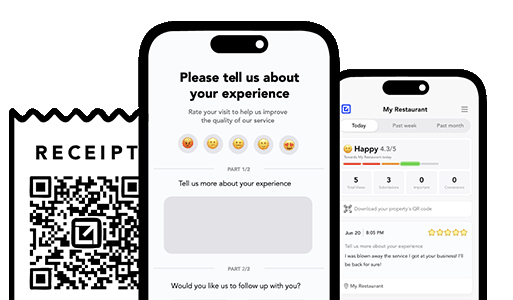
The reason irrigation companies automate it is volume and timing. Once you are running dozens of startups a week in spring and racing the first freeze in fall, remembering to text each customer two days after their job, only asking the happy ones for a review, and tracking who is due for a startup or a blow-out becomes its own full-time job. Tools like VisibleFeedback intercept dissatisfaction before it turns into a public review: it sends the post-service check-in on the right delay, routes any “something’s off” reply straight to you before it hits Google or Yelp, points happy customers to a review, and fires the spring startup and fall winterization reminders on schedule. It was built to catch issues before they show up on Google, and it starts at $65 a month with no contract, versus the $299 to $699 the big reputation platforms charge, which matters when you are running a couple of trucks and not a franchise.
A quick irrigation follow-up checklist
Send a check-in 2 to 3 days after every startup or repair, once the system has run
Keep it to one tap: 1 all good / 2 something’s off / 3 please call me
Route “off” replies to a private fix and a return trip, never to a review
Ask only happy customers for a review, the next day
Send the review link directly, not “find us on Google”
Set a spring startup reminder for late winter
Set a fall winterization reminder for early autumn
Do it every job, not just when you remember
FAQ
What is an irrigation follow-up? It is a short message you send a few days after a sprinkler startup or repair to check whether every zone is watering correctly. It catches problems privately so you can fix them before they become public reviews or callbacks, and it routes happy customers toward leaving a review. Paired with spring and fall reminders, it also keeps recurring seasonal work on the books.
When should I send the follow-up text? Two to three days after the service, once the system has run at least one or two full automatic cycles. That is long enough for a missed zone or a controller issue to show itself, and early enough that the job is still fresh. Send the review request the next day, and only to customers who told you everything is working.
Won’t customers find the texts annoying? Not if you keep them short and infrequent. One quick check-in after a job and two seasonal reminders a year reads as attentive service, not spam. What annoys people is a ten-question survey or three review asks in a week.
How do I get more reviews without sounding pushy? Only ask the customers who already told you they are happy, ask once, and make it one tap with a direct link. That is the whole trick. The follow-up is what tells you who to ask.
How does this help me keep customers? Two ways. The check-in catches the dry-zone complaint before it turns into a review or a lost account, and the reminders turn one-time repair calls into customers you service every spring and fall instead of leaving it to their memory. For the recurring-revenue logic, see how pool services keep every account with the same playbook.
The bottom line
Your irrigation reputation is not decided while you are standing in the yard watching the zones spray. It is decided two or three days later, when the system runs on its own and the customer discovers whether the corner stayed green, in a conversation they are having with themselves about whether you were worth it. A single short text puts you back in that conversation: you catch the frustrated customers before they go public, you turn the happy ones into the reviews that bring the next job, and you rebook every spring startup and fall blow-out with reminders that do the selling for you.
Start with the templates above and one habit: message every customer a few days after every job. If you would rather it run itself on every job and every season, start a free 14-day trial of VisibleFeedback, no credit card required.
Automate follow ups after every job
Catch issues early and drive repeat work with smart reminders.
How can I prevent negative reviews from hurting my business? You can’t stop every unhappy customer from sharing feedback, but you can intercept it before it goes public. Tools like VisibleFeedback allow customers to scan a QR code and leave feedback privately. If the feedback is negative, you’re alerted instantly so you can resolve the issue before it turns into a 1-star review.Why are customer reviews so important for local SEO? Reviews are one of the top local ranking factors on Google. Businesses with consistent positive reviews rank higher in search results and attract more customers. By using VisibleFeedback to capture happy customer moments and guide them to Google or Yelp, you build a steady flow of authentic reviews that improve both your reputation and your local SEO.What’s the best way to collect customer feedback in 2025? Traditional methods like comment cards and long surveys don’t work anymore, customers want convenience. The easiest way to collect real-time feedback in 2025 is by using QR codes and mobile-friendly forms. VisibleFeedback makes this simple, helping you get instant insights while turning satisfied customers into 5-star reviewers.How does feedback help improve retention? Feedback reveals what keeps customers loyal and what drives them away. VisibleFeedback helps you act on insights before customers churn.What’s the link between customer experience and retention? Positive experiences lead to repeat business. Using tools like VisibleFeedback ensures you consistently deliver great experiences by resolving issues early.Why should businesses prioritize retention over acquisition? Retaining customers is cheaper and more profitable than finding new ones. VisibleFeedback helps strengthen retention by keeping customers satisfied.
Austin Spaeth is the founder of VisibleFeedback, a tool that helps service companies automate post-job follow-ups, catch issues early, and drive repeat work with smart reminders. With a background in software development and a focus on practical customer retention systems, Austin built VisibleFeedback to make it easy to email customers after every job, route problems to the right person, and keep relationships strong without awkward outreach. When he’s not building new features or writing playbooks for service businesses, he’s wrangling his six kids or sneaking in a beach day.
🚀 What's your goal? Get a plan ...
🚀 Start Here For Help
Whether you’re dealing with callbacks, unhappy customers, or low repeat work, we’ll help you tighten the follow up loop.