TLDR: A towing follow-up is a short check-in you send an hour or two after the tow or roadside call, once the customer is off the road and their vehicle is delivered. It catches a pricing question or a vehicle-damage complaint privately, before it becomes a 1-star review, and it routes your relieved customers to leave a public review while the memory of you solving their problem is fresh. Add roadside-membership and B2B account reminders (dealers, body shops, fleets, property managers, motor clubs) and the same system that answers “felt gouged” before it goes public also fills your dispatch board. Below is the timing, the exact messages, copy-paste templates, a private-first review funnel, and the repeat-work loop that turns one tow into years of steady calls.
Why the towing follow-up is your best trust insurance
Towing and roadside carries a reputation problem that almost no other trade does, and most of it is not your fault. The category gets judged by its worst actors: the non-consent tows that spring a $500 impound fee on a scared driver, the operators who show up at a fender bender and turn a rough day into a nightmare. Cities and state legislatures have spent years writing rules just for this industry. The result is that when you, an honest local operator, roll up to someone stranded on a shoulder or standing over a dead battery in a parking lot, your customer is already stressed and already braced to be ripped off before you say a word. That is the emotional starting line you race from on every single call.
A towing follow-up is the short message that turns that suspicion into trust after the fact. Here is the trap in the trade: your customer is having a bad day, sometimes it is midnight, sometimes there are kids in the back and a car that will not start, and money is the last thing they wanted to spend. You quote fairly, you do clean work, you deliver the vehicle, you leave. Then the adrenaline wears off, they look at the invoice again on the couch, and the recovery fee or the mileage charge they agreed to on the shoulder suddenly feels like a gouge in hindsight. The two most common frustrated towing reviews are not “the work was bad,” they are “I felt gouged” and “the driver damaged my car.” Left alone, either one hardens into a public star and confirms every stranger’s worst fear about the whole category. The follow-up is your one chance to answer it privately, before it becomes the review that steers the next ten stranded drivers to a competitor.
What a towing follow-up actually is (and what it is not)
It is not a survey. It is not a “thanks for choosing us” email that lands in a promotions folder. And it is not your driver calling twice to make sure the card went through, which only makes a suspicious customer more suspicious.
A good towing follow-up is one short, plain message, sent at the right moment, that does two jobs at once:
gives a customer with an invoice question or a damage worry a private, easy way to raise it, so you can explain or inspect it before they post
gives a relieved customer a nudge toward a public review, right when the memory of being rescued and treated fairly is fresh
That is the whole thing. The wording barely matters. What matters is the timing and the discipline of sending it after every single call, not just the dramatic recoveries where the tension ran high. The routine jump-start or flat-tire change you felt great about is exactly the one where a customer quietly decides the service-call fee was steep and tells Google instead of you.
When should you send the towing follow-up?
Timing beats phrasing, and towing has a faster window than most trades because the sticker shock and the second-guessing happen the same day, often the same hour.
About 1 to 2 hours after the vehicle is delivered: the main check-in. Long enough that the customer is home, off the shoulder, and the adrenaline has faded, short enough that you are still clearly the person who just helped them and a question feels natural to answer.
After the question is answered or the concern is inspected, or right away if it all worked: the review ask. Never bundle it with the check-in, and never send it to someone who just told you they think a wheel got scratched on the flatbed.
At renewal for roadside memberships, and for B2B accounts on a set cadence: the retention reminders, plus a thank-you and referral ask to anyone who sends you work.
Send the check-in the next week and the “felt gouged” feeling has already calcified into a review. Send it in the first couple of hours and you catch the customer while they still think of you as the person who got them off the road, not a line item they resent.
Automate follow ups after every job
Catch issues early and drive repeat work with smart reminders.
Keep them short and human. A towing customer has had a stressful day and is wary of being upsold or nickel-and-dimed. Here is a copy-paste set you can adapt to your company’s voice. Swap the reply keywords for whatever your texting setup uses.
When
Channel
Message
1-2 hours after the drop
Text
Hi [Name], it’s [Company]. Just checking you’re all set now that you’re off the road. Any questions on the invoice or the vehicle? Reply 1 all good, 2 a quick question, 3 please call me.
Same, longer version
Email
Hi [Name], thanks for calling [Company] today. Now that you’re home and off the road, we wanted to make sure everything’s sorted and the invoice was clear. If you have any question at all about the charges, or you noticed anything about the vehicle after the tow, just reply here and we’ll sort it out right away. We’d always rather answer a question than leave you wondering.
After an “all good” reply
Text
Glad you’re all set, [Name]. Quick favor: would you mind leaving a short review? In our line of work, honest reviews genuinely help people tell a fair local operator from the horror stories. Here’s the direct link: [review link]. Thank you!
Roadside membership renewal
Text
Hi [Name], it’s [Company]. Your roadside plan is up for renewal soon. Same coverage, same fair rate, one less thing to worry about on the shoulder. Want me to renew it?
B2B account (dealer/body shop/fleet)
Text
Hi [Name], it’s [Company]. Checking in on [Business]. Any vehicles needing transport this week, or a slot you’d like us to hold? Happy to keep your queue moving.
After a referral
Text
[Name], thank you for sending [Referred Name] our way. It means a lot in a trade where trust is everything, and we’ll take great care of them.
The check-in is the one that protects you. The review ask is the one that grows you. The membership and account reminders are the ones that fill next month. You need all three, but if you only ever do one, do the check-in.
The private-first review funnel
The reason this works is not that you are gaming reviews. You are not filtering anyone or hiding complaints. You are giving every customer a private channel first, and simply asking for a public review only after they have told you everything is sorted and the price sat right. The customer with an invoice question gets an answer. The customer worried about a scuff gets an inspection. The relieved customer gets a link. Everyone gets heard, which is the exact opposite of how the predatory operators in your category treat people, and customers can feel the difference.
Make the review one tap. Send the direct link, not “search for us on Google.” Reviews matter more for a towing company than almost any other trade, because volume and recency are how a fair business outranks the horror stories a stranded driver reads at 1 a.m. If you want to go deeper, here is how to get more Google reviews for your service business without begging, and when a bad one does slip through, how to respond to bad reviews so your reply reassures the next dozen people trying to tell you apart from the bad actors.
Towing company with a follow-up vs. one without
Same trucks, same fair pricing, same clean recoveries. The only difference is the text an hour after the drop.
Situation
No follow-up
With a towing follow-up
Customer second-guesses the recovery fee
Posts “felt gouged,” a 1-star
Replies “a quick question,” you explain, they get it
A wheel looks scuffed after the flatbed
Customer assumes the worst, posts
You inspect it the same day and settle it privately
Call went smoothly
Relieved but silent, no review
Replies “all good,” you ask, you get the 5-star
Their membership lapses
They call a stranger next breakdown
Your renewal reminder keeps them covered
You learn about a problem
When the review lands
The same afternoon, privately
Same work, wildly different reputation, and in a trade where stranded strangers are actively trying to figure out if you are the fair operator or the gouge, that gap is the whole ballgame.
Answering the price dispute before it becomes a star
The “felt gouged” review is the one that hurts a towing company most, because it feeds the exact story every customer already fears about the category. And it is almost always preventable, because it is rarely about the actual number. It is about feeling like the number was sprung on them, or that no one would explain it.
A customer who can ask “why was it $X?” and get a calm, specific answer in a text thread almost never leaves the review they were about to leave. You explain the hook-up fee, the mileage, the after-hours or recovery charge, the winch-out versus the simple load, and nine times out of ten they respond “oh, that makes sense, thanks.” The same question, unanswered, becomes three angry sentences on Google. Tools like VisibleFeedback intercept that dissatisfaction before it turns into churn and a public star, by putting the question in your inbox instead of on your listing. For the wider playbook on this, see why customers leave bad feedback and how to stop it.
Repeat work and accounts: the half most operators leave on the table
Reviews protect your reputation. Memberships and B2B accounts fill your dispatch board. And towing companies sit on more repeat revenue than almost anyone realizes, because the money in this trade is not the one-off tow, it is the relationships that generate calls every week.
Roadside memberships. A driver you helped once will pay to never feel that stranded panic again, if you offer a plan and remind them at renewal. Recurring revenue that also locks in loyalty.
Dealerships and body shops. They need vehicles moved constantly, from the auction lot, from the collision scene, from the service bay. One steady dealer relationship can outvalue a hundred random breakdowns.
Fleets and property managers. Delivery fleets need breakdown coverage; apartment complexes and lots need reliable, by-the-book removals. Both repeat by nature.
Motor clubs and referrals. Being the reliable, well-reviewed operator is how you win and keep rotation and dispatch relationships, and a happy customer will hand out your name after you rescued them at midnight.
The mistake is leaving all of that to memory. You mean to circle back to that body shop about a standing arrangement, and then this week’s calls swallow the day. A single well-timed reminder can be worth more than the tow that earned it, because it does not end with one call, it starts a stream. This is where the follow-up and the reminder become one system: the same channel that answered a fee question after the drop can nudge a relieved customer to renew a membership or refer a neighbor, and keep a dealer’s queue moving. VisibleFeedback was built to catch issues before they show up on Yelp or Google, and to send those membership, referral, and account reminders automatically, so you are not the one setting calendar alarms for every customer you helped last month. There is more on the mechanics in turning one-time customers into repeat work without spam.
A simple response workflow so follow-ups don’t create chaos
If you send check-ins, you have to handle the replies fast, or you have just built a machine for reminding a suspicious customer that no one got back to them. Keep it to five states and two rules.
Statuses: New -> Acknowledged -> Explained or inspected -> Resolved -> Confirmed
Rule one: every “2 a quick question” or “3 please call me” reply gets an owner and a same-day answer, not the end of the week
Rule two: confirm after you explain or inspect, so the customer hears “handled” from you before they ever decide whether to post
That is the whole system. On a trade where a single “felt gouged” review can cost you the next ten wary drivers comparing you to the impound horror stories, a same-day reply is the best fifteen minutes you will spend all week. For the recovery script itself, see how to handle unhappy customers fast.
Where VisibleFeedback fits
You can absolutely run this by hand with a notes app and a texting app, and you should start today if that is all you have. It works because the habit works, not because the tool is fancy.
The reason towing companies automate it is timing and memory. When you are running breakdowns, recoveries, and dealer moves across a whole metro, remembering to text each customer an hour or two out, only asking the relieved ones for a review, routing every invoice or damage question to someone who will answer it the same day, and circling back for the membership renewal or the standing account becomes its own full-time job, and it is exactly the job that slips when your board is slammed at 2 a.m. VisibleFeedback runs it on autopilot: it sends the post-call check-in on your schedule, routes any question or dispute straight to you before it goes public, points relieved customers to a review, and fires the membership, referral, and B2B reminders automatically. It starts at $65 a month with no contract, versus the $299 to $699 the big reputation platforms charge, which matters when you are running a truck or two and not a national chain.
A quick towing follow-up checklist
Send a check-in after every call, 1 to 2 hours out once the vehicle is delivered
Keep it to one tap: 1 all good / 2 a quick question / 3 please call me
Route invoice questions to a same-day, specific answer, never to a review
Inspect any claimed vehicle damage the same day, before it becomes a story
Explain recovery, mileage, and after-hours fees plainly, in the thread
Ask only relieved customers for a review, and say why it matters in your trade
Send the review link directly, not “find us on Google”
Thank and ask for a referral while the relief is fresh
Remind roadside members at renewal
Keep dealers, body shops, fleets, and property managers on a recurring check-in
Do it every call, not just when you remember
FAQ
What is a towing follow-up? It is a short message you send an hour or two after each call, once the vehicle is delivered and the customer is off the road, to check that everything is sorted and answer any question about the invoice or the vehicle. It catches price disputes and damage worries privately so you can explain or inspect them before they become public reviews, and it routes relieved customers toward leaving a review. Paired with membership and B2B reminders, it also keeps new calls flowing in.
When should I send the follow-up text? About one to two hours after the drop, not days later. That gives the customer time to get home and lets the adrenaline fade, while you are still clearly the person who helped them. Send the review request after they tell you everything is sorted, and send membership reminders at renewal.
How do I stop “felt gouged” reviews? Quote clearly on the scene, and then give every customer a private channel to ask about the invoice afterward. Most price complaints are really “no one would explain it,” so a calm, specific answer in a text thread defuses the review before it is written. See why customers leave bad feedback and how to stop it.
How do towing companies get more reviews without sounding pushy? Only ask the customers who already told you everything is sorted, ask once, make it one tap with a direct link, and mention that honest reviews help people tell a fair operator from the horror stories. That framing makes it feel like a favor that matters, not begging. Here is the longer version on getting more Google reviews.
How does this help me get more calls, not just protect my rating? Two ways. The check-in catches the price or damage gripe before it turns into a review that scares off wary drivers, and the membership, referral, and B2B reminders turn one-time tows into steady repeat work. For timing, see when to send follow-ups after a job.
The bottom line
Your towing company is judged against a category full of bad actors, so every honest call is a chance to prove you are the fair one, and every silent bad review is the gougers winning by default. Your reputation is not decided on the shoulder when the vehicle rolls onto the flatbed. It is decided an hour or two later, on the couch, when the customer looks at the invoice again and decides whether to trust you or resent you. A single short text puts you back in that moment: you answer the fee question before it becomes a star, you inspect the scuff before it becomes a callback, you turn the relieved customers into the reviews that outrank the horror stories, and you bring them back with a membership and a dealer account that call every week.
Start with the templates above and one habit: message every customer an hour or two after every call. If you would rather it run itself on every call, start a free 14-day trial of VisibleFeedback, no credit card required.
Automate follow ups after every job
Catch issues early and drive repeat work with smart reminders.
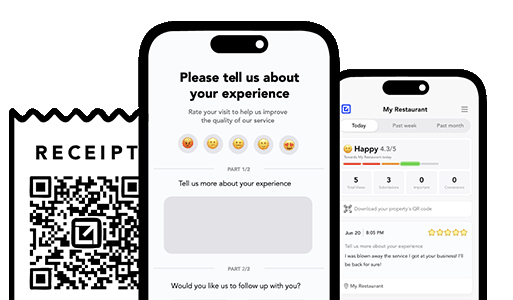
How can I prevent negative reviews from hurting my business? You can’t stop every unhappy customer from sharing feedback, but you can intercept it before it goes public. Tools like VisibleFeedback allow customers to scan a QR code and leave feedback privately. If the feedback is negative, you’re alerted instantly so you can resolve the issue before it turns into a 1-star review.Why are customer reviews so important for local SEO? Reviews are one of the top local ranking factors on Google. Businesses with consistent positive reviews rank higher in search results and attract more customers. By using VisibleFeedback to capture happy customer moments and guide them to Google or Yelp, you build a steady flow of authentic reviews that improve both your reputation and your local SEO.What’s the best way to collect customer feedback in 2025? Traditional methods like comment cards and long surveys don’t work anymore, customers want convenience. The easiest way to collect real-time feedback in 2025 is by using QR codes and mobile-friendly forms. VisibleFeedback makes this simple, helping you get instant insights while turning satisfied customers into 5-star reviewers.How does feedback help improve retention? Feedback reveals what keeps customers loyal and what drives them away. VisibleFeedback helps you act on insights before customers churn.What’s the link between customer experience and retention? Positive experiences lead to repeat business. Using tools like VisibleFeedback ensures you consistently deliver great experiences by resolving issues early.Why should businesses prioritize retention over acquisition? Retaining customers is cheaper and more profitable than finding new ones. VisibleFeedback helps strengthen retention by keeping customers satisfied.
Austin Spaeth is the founder of VisibleFeedback, a tool that helps service companies automate post-job follow-ups, catch issues early, and drive repeat work with smart reminders. With a background in software development and a focus on practical customer retention systems, Austin built VisibleFeedback to make it easy to email customers after every job, route problems to the right person, and keep relationships strong without awkward outreach. When he’s not building new features or writing playbooks for service businesses, he’s wrangling his six kids or sneaking in a beach day.
🚀 What's your goal? Get a plan ...
🚀 Start Here For Help
Whether you’re dealing with callbacks, unhappy customers, or low repeat work, we’ll help you tighten the follow up loop.