TLDR: A moving company follow-up is a short check-in you send once the truck is unloaded. It catches a damage or timing complaint privately, before it becomes a 1-star review on Google or Yelp, and it routes your happy customers to leave a public review at the moment the relief hits. Add referral asks and reminders for the realtors and property managers who feed you jobs, and the same system that protects your reputation also keeps next month’s calendar full. Below is the timing, the exact messages, copy-paste templates, a private-first review funnel, and the referral loop that turns one move into three.
Why the moving company follow-up is your best reputation insurance
Moving is different from almost every other service you can buy. You are not fixing a faucet or mowing a lawn, you are showing up on the single most stressful day of a customer’s year and physically handling every object they own. The emotional stakes are enormous, the margin for error feels like zero, and the customer is exhausted and watching. That combination is exactly why movers carry some of the harshest review profiles in all of home services. A single scuffed wall or one missed arrival window can outweigh six hours of careful, honest work, because the customer remembers the one thing that went wrong far more vividly than the ninety things that went right.
A moving company follow-up is the 60 seconds that keeps you in the conversation before that one thing becomes a public star. It is a short message once the truck is unloaded that says, in effect, “we are done, everything is in, tell us if anything is off.” Here is why it matters so much for movers specifically: the average happy customer is too wiped out to write a review, so they exhale and forget you, while the one frustrated customer has all the motivation in the world to type. Left alone, that imbalance drags a great company’s rating down toward the loudest bad day. The follow-up flips it.
What a moving company follow-up actually is (and what it is not)
It is not a survey. It is not a “thanks for choosing us” email that lands in a spam folder while the customer is still unpacking. And it is not three review requests in two days that make a stressed-out person feel hounded right after they paid you.
A good moving company follow-up is one short, plain message that does two jobs at once:
gives an unhappy customer a private, easy way to flag damage or a problem before they post about it
gives a happy customer a nudge toward a public review, right when the relief of being moved in is at its peak
That is the whole thing. The wording barely matters. What matters is the timing and the discipline of sending it after every single move, not just the ones you have a good feeling about.
When should you send the moving company follow-up?
Timing beats phrasing, and for movers the window is tight. A damage complaint hardens into a review fast, usually within 48 hours, while the customer is unpacking and finding things.
Same day, once the truck is unloaded: the main check-in. The customer is standing in the new place, can glance around, and reply in one tap.
Next morning, only to happy customers: the review ask. Never bundle it with the check-in, and never send it to someone who just told you a table showed up scratched.
A few weeks later, and to your referral partners: the referral ask to happy customers, and a check-in with the realtors, property managers, and apartment complexes that feed you jobs.
Send the check-in too late and the customer has already found the nicked dresser, decided you didn’t care, and posted about it. Send the review ask to a frustrated customer and you have basically handed them the invitation to leave the review you were trying to prevent.
Automate follow ups after every job
Catch issues early and drive repeat work with smart reminders.
Keep the first message dead simple. The customer is tired and surrounded by boxes. You want a reply in one tap.
Hi [Name], it’s [Company]. All moved in! Did everything arrive in good shape, or is there anything we should make right? 1 = All great 2 = Something’s off 3 = Please call me
Every answer is useful. “All great” is a future review and a future referral. “Something’s off” and “Please call me” are a bad review you get to prevent, handled privately in a text thread before it ever reaches Yelp.
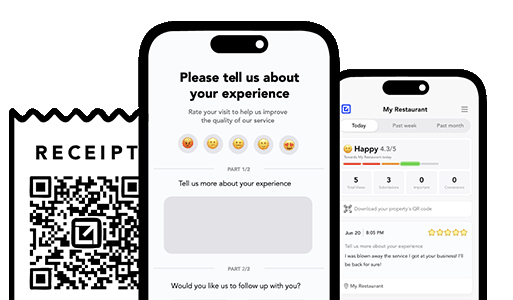
This is the whole idea behind a private-first review funnel: happy customers get pointed at Google, unhappy customers get pointed at you. Tools like VisibleFeedback intercept dissatisfaction before it turns into a public review, so the scuff or the claim lands in your inbox instead of on your listing.
Moving company with a follow-up vs. one without
Two companies, same crews, same trucks, same careful work. The only difference is the message after the truck is unloaded.
Situation
No follow-up
With a moving company follow-up
A dresser gets nicked in transit
Customer finds it unpacking, posts a 1-star
Replies “something’s off,” you touch it up or credit it
The crew ran two hours behind
Customer feels disrespected, warns their friends
You catch it same day, apologize, and make it right
Move went perfectly
Customer is relieved but silent
Replies “all great,” you ask, you get the 5-star
Customer knows someone moving soon
Never comes up, you lose the referral
Your referral ask lands while you’re fresh in their mind
You learn about a problem
When the review or the chargeback lands
The same afternoon, privately
Same trucks, same crews, wildly different reputation and a very different pipeline of new jobs. The follow-up is the cheapest reputation insurance a moving company can buy, and it doubles as your best referral engine.
Copy-paste moving company follow-up templates
Steal these, swap in your names, and send them every time. Short beats clever, especially to someone standing in a room full of boxes.
Same-day check-in (SMS)
Hi [Name], it’s [Company]. All moved in! Did everything arrive in good shape, or anything we should make right? 1 = All great 2 = Something’s off 3 = Please call me
If they reply “something’s off” or “please call me”
Thanks for telling me, and I’m sorry to hear it. What are you seeing, damage, a missing box, a billing question, or something else? A quick photo helps us get it sorted fast. We’ll make it right.
Next-morning review ask (only to happy customers)
So glad the move went smoothly, [Name]! If you have 30 seconds, a quick Google review helps other people find movers they can actually trust with their stuff. Here’s the link: [link]. Thanks for having us.
Referral ask (a few weeks later, to happy customers)
Hi [Name], hope you’re settled in! Moving season is busy and word of mouth means everything to us. If a friend or coworker is moving, we’d be grateful if you passed our name along. Here’s an easy link to share: [link].
Hi [Name], it’s [Company]. We loved working with your clients this month. If you have anyone closing or turning over a unit soon, we’ll take great care of them and keep you looped in. Want me to hold a couple of dates?
Damage claim follow-up (close the loop after a fix)
Hi [Name], just confirming the [item] has been [repaired / replaced / credited]. Anything else we can do? We want you fully taken care of before you think about the move again.
Notice none of these ask for anything hard. One number, one photo, or a quick share. That is what gets answered on a moving day.
Turning relieved customers into actual 5-star reviews
Most moving customers are happy and silent. The truck pulled away, the boxes are inside, and the last thing on their mind is opening Yelp to praise you. Meanwhile the one customer whose coffee table got scratched is writing three paragraphs with photos. That imbalance is exactly how a careful, honest moving company ends up with a 3.8 rating it doesn’t deserve. The follow-up fixes it, because you are only asking the people who already told you the move went great, at the moment the relief is highest.
Referrals and repeat partners: the pipeline half most movers skip
Reviews protect your reputation. Referrals and partner relationships fill your calendar. And here is the honest truth about the moving business: most residential customers won’t hire you again for years, so chasing “repeat” the way an HVAC company does is a losing game. Your real repeat revenue lives somewhere else.
Referrals from happy customers. People move in clusters. A great experience is fresh for weeks, and one satisfied customer will happily hand your name to a coworker or a friend who is dreading their own move, if you ask.
Realtors and closing agents. They send buyers to movers constantly, and they only refer people who make them look good. One good realtor relationship can be worth a dozen jobs a year.
Property managers and apartment complexes. Turnovers are steady, predictable, and repeat by nature.
Corporate and office relocations. Businesses move, expand, and consolidate on a cycle.
The mistake is leaving all of that to memory. You do a great job, you mean to follow up with that realtor, and then next month’s moves swallow the week. A single well-timed referral ask or partner check-in can be worth more than the move that earned it, because it doesn’t end with one truck, it starts a stream. This is where the follow-up and the reminder become one system: the same channel that caught a damage complaint after a move can nudge a happy customer to refer a friend or ping a realtor about next month’s closings. VisibleFeedback was built to catch issues before they show up on Yelp or Google, and to send those referral and partner reminders automatically, so you are not the one setting calendar alarms for every customer and agent you work with. There is more on the mechanics in turning one-time customers into repeat work without spam and in the reminder revenue playbook.
A simple response workflow so follow-ups don’t create chaos
If you send check-ins, you have to handle the replies fast, or you have just built a machine for annoying already-stressed people. Keep it to five states and two rules.
Statuses: New -> Acknowledged -> In progress -> Resolved -> Confirmed
Rule one: every “2 something’s off” or “3 please call me” reply gets an owner within the hour, not the end of the day
Rule two: confirm after the touch-up, the claim, or the return trip, so the customer hears “handled” from you before they decide whether to post anything
That is the whole system. On a job where a single unhappy customer can cost you a 1-star and a chargeback, an hour of response time is the best hour you will spend all week. For the recovery script itself, see how to handle unhappy customers fast.
Where VisibleFeedback fits
You can absolutely run this by hand with a notes app and a texting app, and you should start today if that is all you have. It works because the habit works, not because the tool is fancy.
The reason moving companies automate it is volume and timing. During peak season, when your crews are running two and three jobs a day, remembering to text each customer once the truck is unloaded, only asking the happy ones for a review, and following up with every referral source becomes its own full-time job, and it is exactly the job that slips when you are busiest. VisibleFeedback runs it on autopilot: it sends the post-move check-in, routes any unhappy reply straight to you before it goes public, points happy customers to a review, and fires the referral and partner reminders on schedule. It starts at $65 a month with no contract, versus the $299 to $699 the big reputation platforms charge, which matters when you are running a couple of trucks and not a national van line.
A quick moving company follow-up checklist
Send a check-in after every move, once the truck is unloaded
Keep it to one tap: 1 all great / 2 something’s off / 3 please call me
Route “off” replies to a private fix, touch-up, or claim, never to a review
Ask only happy customers for a review, the next morning
Send the review link directly, not “find us on Google”
Ask happy customers for a referral a few weeks later
Keep realtors, property managers, and offices on a recurring check-in
Do it every move, not just when you remember
FAQ
What is a moving company follow-up? It is a short message you send after each move, once the truck is unloaded, to check whether everything arrived in good shape. It catches damage complaints and timing issues privately so you can fix them before they become public reviews or chargebacks, and it routes happy customers toward leaving a review. Paired with referral asks and partner reminders, it also keeps new jobs flowing in.
When should I send the follow-up text? The same day, right after the truck is unloaded, while the customer can look around and any problem is still fresh and cheap to fix. Send the review request the next morning, and only to customers who told you the move went great. Send referral asks a few weeks later, and keep realtors and property managers on a recurring check-in.
Won’t customers find the texts annoying right after a move? Not if you keep them short and infrequent. One quick check-in after the move and an occasional referral note reads as attentive service from a company that cares, not spam. What annoys people is a ten-question survey or three review asks in two days while they are still unpacking.
How do movers get more reviews without sounding pushy? Only ask the customers who already told you the move went great, ask once, and make it one tap with a direct link. That is the whole trick. Here is the longer version on getting more Google reviews.
How does this help me get more jobs, not just protect my rating? Two ways. The check-in catches the damage complaint before it turns into a bad review that scares off future customers, and the referral and partner reminders turn happy customers, realtors, and property managers into a steady source of new moves instead of a one-time job. For timing, see when to send follow-ups after a job.
The bottom line
Your moving company’s reputation is not decided by the hundreds of moves that go perfectly. It is decided by the handful where something went sideways, in the two days a tired customer spends unpacking and deciding whether you cared enough to make it right. A single short text puts you back in that moment: you catch the frustrated customers before they go public, you turn the relieved ones into the reviews that win the next customer, and you keep happy movers and referral partners feeding your calendar between seasons.
Start with the templates above and one habit: message every customer after every move. If you would rather it run itself on every job, start a free 14-day trial of VisibleFeedback, no credit card required.
Automate follow ups after every job
Catch issues early and drive repeat work with smart reminders.
How can I prevent negative reviews from hurting my business? You can’t stop every unhappy customer from sharing feedback, but you can intercept it before it goes public. Tools like VisibleFeedback allow customers to scan a QR code and leave feedback privately. If the feedback is negative, you’re alerted instantly so you can resolve the issue before it turns into a 1-star review.Why are customer reviews so important for local SEO? Reviews are one of the top local ranking factors on Google. Businesses with consistent positive reviews rank higher in search results and attract more customers. By using VisibleFeedback to capture happy customer moments and guide them to Google or Yelp, you build a steady flow of authentic reviews that improve both your reputation and your local SEO.What’s the best way to collect customer feedback in 2025? Traditional methods like comment cards and long surveys don’t work anymore, customers want convenience. The easiest way to collect real-time feedback in 2025 is by using QR codes and mobile-friendly forms. VisibleFeedback makes this simple, helping you get instant insights while turning satisfied customers into 5-star reviewers.How does feedback help improve retention? Feedback reveals what keeps customers loyal and what drives them away. VisibleFeedback helps you act on insights before customers churn.What’s the link between customer experience and retention? Positive experiences lead to repeat business. Using tools like VisibleFeedback ensures you consistently deliver great experiences by resolving issues early.Why should businesses prioritize retention over acquisition? Retaining customers is cheaper and more profitable than finding new ones. VisibleFeedback helps strengthen retention by keeping customers satisfied.
Austin Spaeth is the founder of VisibleFeedback, a tool that helps service companies automate post-job follow-ups, catch issues early, and drive repeat work with smart reminders. With a background in software development and a focus on practical customer retention systems, Austin built VisibleFeedback to make it easy to email customers after every job, route problems to the right person, and keep relationships strong without awkward outreach. When he’s not building new features or writing playbooks for service businesses, he’s wrangling his six kids or sneaking in a beach day.
🚀 What's your goal? Get a plan ...
🚀 Start Here For Help
Whether you’re dealing with callbacks, unhappy customers, or low repeat work, we’ll help you tighten the follow up loop.