TLDR: A junk removal follow-up is a short check-in you send the same day or the next morning after a haul, so any scuffed wall, missed item, or “where did my stuff go?” question reaches you privately before it becomes a public review. It catches those small complaints quietly, and it routes your happy customers to leave a review while the empty garage and clean driveway are still fresh in their mind. Add a recurring nudge for realtors, property managers, and contractors, and the same system that protects your rating also keeps your trucks booked. Below is the timing, the exact messages, copy-paste templates, a private-first review funnel, and the repeat-work loop that turns one cleanout into a steady customer.
Why the junk removal follow-up is your best reputation insurance
Junk removal is one of the most review-driven trades there is. A homeowner with a packed garage does not have a hauler on speed dial; they pull out their phone, search “junk removal near me,” and click whoever has the most stars and the most reviews. That means your rating is not a vanity number, it is the top of your entire sales funnel. A junk removal follow-up is the short message that keeps you in the loop during the gap between “truck pulls away” and “customer posts,” which is exactly where those stars are decided.
Think about a normal haul. You clear a two-car garage, drag a waterlogged sectional up a basement stair, wrestle an old treadmill through a doorway, and sweep up on the way out. Everything looks great when you pull off. Then the customer walks the space and starts noticing the small stuff: a scuffed door frame from the couch, a gouge in the drywall at the stair turn, two bags left in the corner they assumed were part of the job, a dresser they meant to keep, or a nagging worry about where that old TV and mattress actually ended up. None of that feels small to the person who just paid you a few hundred dollars. And because you are strangers they let into their home to carry things out, trust is the whole transaction, so a scuff plus silence reads as “they were careless and they don’t care.” Left alone, one door ding hardens into a public star, because by the time they notice, you are two jobs away and the only outlet they have is Google.
What a junk removal follow-up actually is (and what it is not)
It is not a survey. It is not a “thanks for choosing us” email that lands in a promotions folder. And it is not you calling twice to make sure the payment went through.
A good junk removal follow-up is one short, plain message, sent at the right moment, that does two jobs at once:
gives a customer who found a scuff, a missed item, or a worry a private, easy way to flag it, so you can fix it before they post
gives a happy customer a nudge toward a public review, right while the empty garage and swept driveway are fresh on their mind
That is the whole thing. The wording barely matters. What matters is the timing and the discipline of sending it after every single job, not just the ones your crew felt great about. The jobs you assume went perfectly are usually where the surprise reviews come from.
When should you send the junk removal follow-up?
Timing beats phrasing. Junk removal is a same-day trade: the customer sees the result the moment you pull away, walks the space within the hour, and forms an opinion fast. You want to land while they are standing in the newly cleared room, still feeling the relief, and before a small annoyance has time to curdle.
The same day, a few hours after the haul, or the next morning at the latest: the main check-in. Long enough that they have walked the space and any scuff or missed item has surfaced, short enough that the good feeling of a clear garage is still fresh and a quick fix is an easy yes.
After any fix is handled, or right away if it all looked great: the review ask. Never bundle it with the check-in, and never send it to someone who just told you there is a gouge in the drywall.
On a recurring cadence for repeat clients, and after any referral: the “got another cleanout coming up?” nudge to realtors, property managers, and contractors, and a thank-you plus referral ask to anyone who sends you a neighbor.
Send the check-in three days late and they have already stared at the door ding, decided you were careless, and posted about it. Same day or next morning is the sweet spot for junk removal. For more on nailing the timing, here is when to send follow-ups after a job.
Automate follow ups after every job
Catch issues early and drive repeat work with smart reminders.
Keep them short and human. Here is a copy-paste set you can adapt to your own voice. Swap the reply keywords for whatever your texting setup uses.
When
Channel
Message
Same day or next morning
Text
Hi [Name], it’s [Your Name] with [Company]. Now that the [garage/basement/space] is cleared out, is everything looking good on your end, or did we miss anything or leave a mark we should come back and take care of? Reply 1 looks great, 2 one thing to fix, 3 please call me.
Longer version
Email
Hi [Name], thanks for having us out today. Now that you’ve had a chance to walk the space, I wanted to check in. Moving heavy, awkward loads out of a home sometimes leaves a scuff, or there’s an item that got left or one that should have stayed, and I would much rather come back and make it right than have you stuck with it. Is everything the way you hoped, or is there anything you’d like us to handle? Just reply and we’ll get on it.
After a “looks great” reply
Text
So glad it all worked out, [Name]. Quick favor: would you mind leaving us a short review? It genuinely helps other folks find a junk removal crew they can trust in their home. Here’s the direct link: [review link]. Thank you!
Recurring, for realtors and property managers
Text
Hi [Name], it’s [Your Name] with [Company]. Hope the last cleanout made the turn easier. Got another listing or unit coming up? We’ll hold a slot whenever you’re ready, just send the address.
After a referral
Text
[Name], thank you so much for sending [Referred Name] our way. It means a lot, and we’ll take great care of them.
The check-in is the one that protects you. The review ask is the one that grows you. The recurring nudge is the one that keeps your trucks booked. You need all three, but if you only ever do one, do the check-in.
The private-first review funnel
The reason this works is not that you are gaming reviews. You are not filtering anyone or hiding complaints. You are giving every customer a private channel first, and simply asking for a public review only after they have told you they are happy. Unhappy customers get a fix. Happy customers get a link. Everyone gets heard.
Make the review one tap. Send the direct link, not “search for us on Google.” If you want to go deeper, here is how to get more Google reviews for your service business without begging, and when a bad one does slip through, how to respond to bad reviews so your reply reassures the next dozen homeowners deciding whether to let your crew in the door.
Fewer complaints, and the ones you do get stay private
Complaints are the tax on moving heavy things through tight spaces. You cannot eliminate them, because you are hauling waterlogged furniture down narrow stairs and out doorways that were not built for it. What you can control is whether a complaint reaches you as a quiet text or as a public review. The follow-up is what makes that choice for you.
Here is the difference in plain terms. Without a follow-up, the scuffed frame and the two left-behind bags sit until the customer gets annoyed enough to either dig up your number or, far more often, just post. With a follow-up, you asked first, so the same scuff comes to you as a reply you can fix on the way back through the neighborhood, and the customer walks away thinking “they stand behind their work” instead of “they were careless and gone.” Same complaint, opposite outcome. If callbacks and comebacks are eating your week, the deeper playbook is here: how to reduce callbacks with a post-job follow-up system.
One more thing unique to junk removal: the “where did my stuff go?” worry. People care whether their old couch got dumped or donated, whether the mattress was recycled, whether the electronics were handled responsibly. A follow-up is the perfect place to reassure them, “everything usable went to [local donation spot], the metal was recycled,” which turns a quiet doubt into a reason to leave five stars and tell a neighbor.
Repeat work and referrals: the half most junk haulers leave on the table
Reviews protect your reputation. Repeat work and referrals are what actually fill your schedule, and junk removal is a far better repeat business than it looks, because the people who need you once tend to need you again and again once they know you are reliable.
Realtors and their listings. Every listing that goes on the market needs to be cleared, staged, and turned fast. An agent who trusts one crew to show up on time and leave the place broom-clean will call that crew on every listing for years. Land one and you have standing work.
Property managers and landlords. Unit turns, evictions, and end-of-lease cleanouts are constant. A property manager with a portfolio is worth dozens of jobs a year. Be the one they never have to chase.
Contractors and remodelers. Every gut renovation produces debris. General contractors who do not want to tie up their own dumpster will hand you the haul-off on every project if you are dependable.
Estate and downsizing cleanouts. These come with grief, deadlines, and a family that talks. Handle one with care and you become the name that gets passed around an entire extended family and their friends.
Referrals from happy homeowners. A hauler who was careful, fair, and quick is exactly what people ask each other for. Homeowners hand out a good name gladly, if you ask while the clear garage is still fresh.
The mistake is treating every job as one-and-done. You mean to circle back with that realtor, and then next week’s jobs swallow the day. A single well-timed “got another one coming up?” can be worth more than the job that earned it, because it does not end with one haul, it turns a stranger into your standing account. This is where the follow-up and the reminder become one system: the same channel that caught a scuff after the job can nudge a happy realtor to book the next listing or a homeowner to refer a neighbor. Tools like VisibleFeedback intercept dissatisfaction before it turns into churn, and send those repeat-work and referral reminders automatically, so you are not the one setting phone alarms for every client you cleared out last month. There is more on the mechanics in turning one-time customers into repeat work without spam and in the reminder revenue playbook.
A simple response workflow so follow-ups don’t create chaos
If you send check-ins, you have to handle the replies fast, or you have just built a machine for reminding people about the scuff they were about to forget. Keep it to five states and two rules.
Statuses: New -> Acknowledged -> Scheduled -> Fixed -> Confirmed
Rule one: every “2 one thing to fix” or “3 please call me” reply gets a same-day response, not the end of the week
Rule two: confirm after the fix, so the customer hears “handled” from you before they ever decide whether to post
That is the whole system. On a trade where a single scuffed frame can cost you a 2-star and the next dozen homeowners who read it before they click, a same-day text and a quick swing-by is the best time you will spend all week. For the recovery script itself, see how to handle unhappy customers fast.
Where VisibleFeedback fits
You can absolutely run this by hand with a notes app and a texting app, and you should start today if that is all you have. It works because the habit works, not because the tool is fancy.
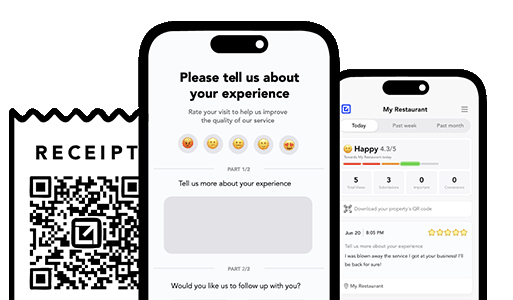
The reason junk removal companies automate it is timing and memory. When you are running two or three trucks and a dozen hauls a day, remembering to text each customer the same day, only asking the happy ones for a review, routing every “you scuffed the wall” reply to a manager before it goes public, and staying in front of every realtor and property manager you have ever cleared out becomes its own second job, and it is exactly the job that slips when the crews are slammed. VisibleFeedback runs it on autopilot: it sends the post-haul check-in on your schedule, routes any complaint reply straight to the right person before it goes public, points happy customers to a review, and fires the recurring and referral reminders automatically. VisibleFeedback was built to catch issues before they show up on Yelp or Google. It starts at $65 a month with no contract, versus the $299 to $699 the big reputation platforms charge, which matters when you are running a couple of trucks, not a national franchise.
A quick junk removal follow-up checklist
Send a check-in after every haul, the same day or next morning, once the customer has walked the space
Keep it to one tap: 1 looks great / 2 one thing to fix / 3 please call me
Route “one thing to fix” replies to a same-day response, never to a review
Reassure customers where their items went; donation and recycling details earn stars
Ask only happy customers for a review, after they tell you it looks great
Send the review link directly, not “find us on Google”
Thank and ask for a referral while the clear space is still fresh
Put realtors, property managers, and contractors on a standing recurring cadence
Do it every job, not just when you remember
FAQ
What is a junk removal follow-up? It is a short message you send the same day or the next morning after a haul, once the customer has walked the cleared space, to check whether everything looks good. It catches scuffs, missed items, and dumping questions privately so you can fix them before they become public reviews, and it routes happy customers toward leaving a review. Paired with a recurring nudge to realtors and property managers, it also keeps new work flowing in.
When should I send the follow-up text? The same day, a few hours after the haul, or the next morning at the latest, not three days later. That gives the customer time to walk the space and notice anything while the good feeling of a clear garage is still fresh. Send the review request after they tell you it looks great, and send a repeat-work nudge to commercial clients on a recurring cadence.
Won’t customers find the texts annoying? Not if you keep them short and infrequent. One quick check-in after the haul and an occasional “got another one coming up?” to repeat clients reads as a crew that stands behind its work, not spam. What annoys people is a ten-question survey or three review asks in two days. What annoys them even more is a hauler who scuffed a wall and never came back.
How do junk removal companies get more reviews without sounding pushy? Only ask the customers who already told you the space looks great, ask once, and make it one tap with a direct link. That is the whole trick. Here is the longer version on getting more Google reviews.
How does this help me get more work, not just protect my rating? Two ways. The check-in catches the scuff or missed item before it turns into a bad review that scares off the next searcher, and the recurring and referral nudges turn one-time hauls into steady accounts. Realtors, property managers, and contractors on a set cadence are where this compounds fastest, because you are servicing people who generate cleanouts month after month.
The bottom line
Your junk removal reputation is not decided while the crew is loading the last box and everything looks clear. It is decided a few hours later, when the customer walks the space and finds the scuffed frame, the two left-behind bags, or the worry about where their old TV went, the one small thing you would have fixed in five minutes if anyone had told you. A single short text puts you back in that moment: you catch the complaints before they go public, you turn the happy customers into the reviews that win the next search click, and you become the crew that realtors, property managers, and neighbors call for every cleanout.
Start with the templates above and one habit: message every customer the same day or the next morning after every haul. If you would rather it run itself on every job, start a free 14-day trial of VisibleFeedback, no credit card required.
Automate follow ups after every job
Catch issues early and drive repeat work with smart reminders.
How can I prevent negative reviews from hurting my business? You can’t stop every unhappy customer from sharing feedback, but you can intercept it before it goes public. Tools like VisibleFeedback allow customers to scan a QR code and leave feedback privately. If the feedback is negative, you’re alerted instantly so you can resolve the issue before it turns into a 1-star review.Why are customer reviews so important for local SEO? Reviews are one of the top local ranking factors on Google. Businesses with consistent positive reviews rank higher in search results and attract more customers. By using VisibleFeedback to capture happy customer moments and guide them to Google or Yelp, you build a steady flow of authentic reviews that improve both your reputation and your local SEO.What’s the best way to collect customer feedback in 2025? Traditional methods like comment cards and long surveys don’t work anymore, customers want convenience. The easiest way to collect real-time feedback in 2025 is by using QR codes and mobile-friendly forms. VisibleFeedback makes this simple, helping you get instant insights while turning satisfied customers into 5-star reviewers.How does feedback help improve retention? Feedback reveals what keeps customers loyal and what drives them away. VisibleFeedback helps you act on insights before customers churn.What’s the link between customer experience and retention? Positive experiences lead to repeat business. Using tools like VisibleFeedback ensures you consistently deliver great experiences by resolving issues early.Why should businesses prioritize retention over acquisition? Retaining customers is cheaper and more profitable than finding new ones. VisibleFeedback helps strengthen retention by keeping customers satisfied.
Austin Spaeth is the founder of VisibleFeedback, a tool that helps service companies automate post-job follow-ups, catch issues early, and drive repeat work with smart reminders. With a background in software development and a focus on practical customer retention systems, Austin built VisibleFeedback to make it easy to email customers after every job, route problems to the right person, and keep relationships strong without awkward outreach. When he’s not building new features or writing playbooks for service businesses, he’s wrangling his six kids or sneaking in a beach day.
🚀 What's your goal? Get a plan ...
🚀 Start Here For Help
Whether you’re dealing with callbacks, unhappy customers, or low repeat work, we’ll help you tighten the follow up loop.