🚀 Start Here For Help

Whether you’re dealing with callbacks, unhappy customers, or low repeat work, we’ll help you tighten the follow up loop.

Turn Jobs Into Repeat Work

VisibleFeedback automatically texts or emails customers after every job.

  • Automated texts or emails post job
  • Catch issues before they go public
  • Reminders that drive repeat jobs
Send My First Follow Up
14 day trial, no credit card required

Recent Retention Insights

1/10/2026
Retention

How to Handle Unhappy Customers Fast: A 15-Minute Recovery Process

A fast, repeatable recovery playbook that stops complaints from becoming bad reviews and saves customers before they churn.

1/10/2026
HVAC

Handling “It’s Still Not Cooling” Complaints: A Fast HVAC Response Playbook

A fast, calm triage workflow for “still not cooling” complaints that reduces callbacks, prevents bad reviews, and keeps conversations private.

1/10/2026
Pest Control

Handling “The Bugs Are Back” Complaints: A Fast Recovery Workflow

A practical, calm workflow for “the bugs are back” complaints: triage quickly, schedule confidently, and confirm improvement so customers don’t cancel.

1/10/2026
Pest Control

How Pest Control Businesses Prevent Cancellations With Post-Visit Check-Ins

A simple post-visit check-in (“how’s it going?”) reduces churn by catching expectation gaps early and proving you’ll show up when problems persist.

1/10/2026
HVAC

HVAC Install Follow-Up Checklist: What to Ask After a System Replacement

A practical post-install checklist that catches comfort issues, confusion, and workmanship problems early—before they turn into regret, refunds, or chargebacks.

1/10/2026
HVAC

HVAC Service Membership Retention: Follow-Ups That Keep Customers Renewing

Membership retention isn’t “send more promos.” It’s a simple post-service follow-up flow that proves value, resolves friction fast, and makes renewal feel obvious.

1/10/2026
Pest Control

Pest Control Renewal Retention: Follow-Ups That Keep Customers on Plan

Renewals aren’t won at renewal time. They’re won by consistent post-visit check-ins, fast recovery, and a pre-renewal process that surfaces silent dissatisfaction.

1/10/2026
follow-ups

The Post-Job Follow-Up Loop: A Simple System That Works

A one-tap follow-up loop that catches complaints privately, keeps customers happy, and drives repeat business and reviews.

1/10/2026
Retention

The “Saved Job” ROI Calculator: When Follow-Ups Pay for Themselves

A blunt ROI model: if follow-ups save even a handful of jobs or callbacks, $99–$199/month pays for itself.

1/10/2026
Tips

Turn One-Time Customers Into Repeat Work (Without Spam)

Repeat work doesn’t happen by accident—customers forget. Here’s a simple reminder system (with templates and trade-specific examples) that gets rebooks and referrals without feeling spammy.

8/8/2025
Reviews

Preventing Bad Reviews

How to spot and fix issues before they turn into bad reviews.

8/5/2025
Salon

How to Keep Clients Coming Back to Your Salon

Getting a new client is great, but keeping them is how salons actually grow.

8/4/2025
Restaurant

Why Themed Event Nights Still Work in 2025 (And How to Make Them Work for You)

From Trivia Tuesdays to Family Nights, themed events still draw a crowd. Here’s how to do them right in 2025.

8/2/2025
Restaurant

Personalized Email Offers That Keep Diners Coming Back

Want more repeat diners? Personalized email offers make it happen, here’s how.

7/29/2025
Gym

Reduce Gym Member Churn

Actionable ways to keep gym members loyal and reduce costly churn.

Show more insights
The “Saved Job” ROI Calculator: When Follow-Ups Pay for Themselves
© Photo by Towfiqu barbhuiya on Unsplash

The “Saved Job” ROI Calculator: When Follow-Ups Pay for Themselves

TLDR: Most owners hate monthly software fees because they’ve been burned by tools that promise “more leads” and deliver vague charts. A follow-up system is different because the ROI is mechanical: you save jobs that would’ve churned, prevent callbacks that waste labor, and convert satisfied customers into repeat work and reviews. You don’t need hand-wavy math. You need a simple model: what’s one saved job worth, how often do you currently lose customers to unresolved issues, and how many negative moments can you catch with a fast one-tap follow-up? This article gives a practical calculator you can do in your head, realistic scenarios for small teams, and break-even examples for $99–$199/month. The punchline: if a follow-up system prevents even one lost customer or one callback every month, it’s often already profitable. VisibleFeedback exists to run that loop automatically—one-tap feedback, instant alerts, recovery workflow, and safer review asks—so the savings happen consistently without the owner babysitting it.


Why This ROI Model Is Different (No “More Leads” Fairy Dust)

Most SaaS pitches for small service businesses are basically:

  • “Pay us $199/mo and you’ll get more leads.”
  • “Trust us. Look at this graph.”

That’s why owners tune out. It’s not that $199 is expensive. It’s that the payoff is usually vague.

Follow-ups have a cleaner ROI because they operate on things you already have:

  • customers you already worked for
  • jobs already completed
  • issues that already happen
  • callbacks you already eat
  • reviews you already depend on

The question isn’t “will it magically create demand?”
The question is “how much money leaks today because issues slip and customers churn?”


The “Saved Job” Mental Model

A saved job is any situation where:

  • the customer would’ve churned, complained publicly, or demanded a refund
  • but a fast follow-up caught it early and you fixed it

This includes:

  • small complaints that turn into bad reviews
  • “the problem came back” that becomes a callback + reputation hit
  • misunderstandings that become chargebacks
  • installs where a minor tweak prevents regret and cancellation of a maintenance plan

A follow-up system doesn’t need to produce 50 extra jobs. It just needs to save a few you were going to lose anyway.


Step 1: Know Your “One Saved Job” Value

You can compute this without a spreadsheet. Pick one of these approaches.

Option A: Profit per job (the cleanest)

One saved job is worth the profit you would’ve made on that customer’s next job.

  • Saved job value ≈ average gross profit per job

If you don’t know gross profit, use a rough number. Most owners do. Even a conservative estimate works.

Option B: Customer lifetime value (if you have recurring opportunity)

If you do maintenance plans or repeat services, one saved customer is worth more than one job.

  • Saved customer value ≈ profit on next 12 months of work

This can be surprisingly high for HVAC, pest control, and any recurring service.

Option C: “Avoided refund/credit” value

Sometimes the “save” is avoiding a refund, discount, or chargeback.

  • Saved value ≈ refund/credit you avoid + the job margin you keep

Step 2: Add Callback Avoidance (The Hidden ROI)

Callbacks are straight cash burn:

  • another trip
  • more labor
  • schedule disruption
  • often a worse review risk

A callback doesn’t just cost gas. It costs capacity.

A simple callback cost estimate:

  • Callback cost ≈ (labor hours × loaded hourly cost) + travel/overhead

If you don’t know loaded cost, estimate it. The point is directionally correct.

Even preventing one callback per month can justify $99–$199 easily for many teams.


Step 3: Use the Break-Even Rule (Simple and Honest)

Here’s the core “calculator”:

Break-even = monthly cost / value per save

Where “value per save” can be:

  • one saved job profit, or
  • one avoided callback cost, or
  • one saved customer’s next 12-month profit (if recurring)

Break-even examples (no fluff)

If a tool costs $99/mo:

  • If one saved job is worth $300 profit → you only need 0.33 saves/mo (one save every 3 months)
  • If one avoided callback costs you $200 → you need ~0.5 avoided callbacks/mo (one every 2 months)

If a tool costs $199/mo:

  • If one saved job is worth $400 profit → you need ~0.5 saves/mo (one save every 2 months)
  • If one avoided callback costs you $250 → you need ~0.8 avoided callbacks/mo (one per month)

This is the whole point: the bar is often low.


A Practical “In Your Head” Calculator

Ask yourself three questions:

1) What’s your average profit on a job?
2) How many customers per month end up unhappy enough to complain, churn, or leave a bad review?
3) If you could catch and fix even a fraction of those quickly, how many would you save?

Then do this:

Monthly ROI estimate ≈ (saved jobs × profit per job) + (avoided callbacks × callback cost)

If that number is above $99–$199, the tool is already paying for itself.


Three Realistic Scenarios (Small Teams, Realistic Numbers)

Scenario 1: The “One Save” Business

  • 80 jobs/month
  • You get 3–5 “unhappy moments” per month (late tech, miscommunication, incomplete fix)
  • Profit per job: $300
  • Tool cost: $99/mo

If fast follow-ups save just 1 job every 2–3 months:

  • Saved value per month ≈ $100–$150 You’re already break-even.

Scenario 2: The Callback Leak

  • 120 jobs/month
  • Callbacks: 5/month
  • Each callback costs you ~$200 in labor/time/overhead
  • Tool cost: $199/mo

If follow-ups prevent 1 callback per month (by catching “problem isn’t fixed” early):

  • Saved value per month ≈ $200 Break-even.

If it prevents 2 callbacks:

  • You’re clearly positive.

Scenario 3: The Recurring Opportunity (HVAC / Pest)

  • You sell maintenance/recurring plans
  • One saved customer converts into recurring value over the next year
  • That value might be $600–$1,500+ profit depending on your model
  • Tool cost: $99–$199/mo

If follow-ups help you save 1 customer per quarter and convert them to repeat work:

  • Break-even is almost automatic.

The recurring model is where follow-ups can be absurdly high ROI, without needing wild claims.


Why Follow-Ups Actually Create “Saves”

A save usually happens when you do three things consistently:

1) Ask for feedback in a way customers will actually respond to (one-tap)
2) Respond fast when someone is unhappy (minutes/hours, not days)
3) Close the loop (confirm it’s resolved)

Most businesses fail at #2 and #3 because the owner is busy. That’s the whole reason this category exists.


What a Follow-Up System Should Do (If It’s Worth Paying For)

If you’re considering spending $99–$199/mo, the tool should do more than “send messages.”

It should:

  • trigger follow-ups automatically after jobs
  • make feedback extremely low-friction
  • alert you instantly on negative signals
  • track status (New → Acknowledged → Contacted → Resolved)
  • help you confirm resolution
  • make review asks safe and consistent

If it doesn’t do those things, it’s just another messaging tool with a subscription.


Where VisibleFeedback Fits (And Why It’s Not Hand-Wavy)

VisibleFeedback is built around the mechanical ROI model above:

  • one-tap feedback capture increases response rates
  • negative feedback triggers alerts so you can respond before it goes public
  • issue tracking statuses keep problems from slipping
  • confirmation closes the loop so “resolved” actually means resolved
  • review asks happen in a safer, more professional way

That makes “saves” more frequent and more consistent, which is the real lever.


Bottom Line

Don’t buy follow-up software because someone promised “more leads.”

Buy it if you believe this is true in your business:

  • customers sometimes leave unhappy without telling you
  • you sometimes find out too late
  • callbacks waste labor
  • repeat work and reviews depend on trust

If a system helps you save even one job or one callback per month, $99–$199/mo usually pays for itself. The rest is upside.
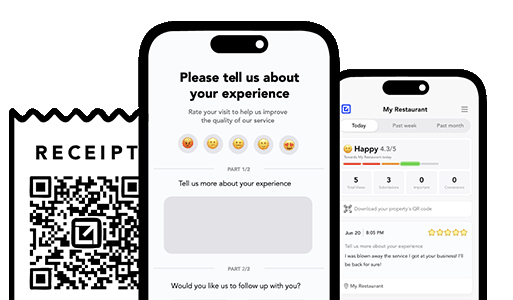
VisibleFeedback running on iphones

Turn Jobs Into Repeat Work

Text or email clients after every job. Catch issues early, recover unhappy clients fast, and drive repeat work with smart reminders.

No card needed, cancel any time

Related articles

Best Pest Control Follow-Up Software: Features That Drive Retention

1/10/2026

Most “follow-up tools” send messages. The best pest control follow-up software drives retention by closing the loop: check-ins, recovery, confirmation, and renewals.

Dispatch-Friendly HVAC Issue Inbox: Assignment + Escalation Rules That Work

1/10/2026

A simple issue inbox model for HVAC dispatch: clear ownership, tight escalation triggers, and daily habits that keep response times low.

Issue Tracking for Small Service Teams: Statuses That Prevent Problems From Slipping

1/10/2026

A lightweight status flow that keeps customer issues visible, owned, and resolved—without needing a complicated ticketing system.

People also ask

How can I prevent negative reviews from hurting my business? You can’t stop every unhappy customer from sharing feedback, but you can intercept it before it goes public. Tools like VisibleFeedback allow customers to scan a QR code and leave feedback privately. If the feedback is negative, you’re alerted instantly so you can resolve the issue before it turns into a 1-star review.
Why are customer reviews so important for local SEO? Reviews are one of the top local ranking factors on Google. Businesses with consistent positive reviews rank higher in search results and attract more customers. By using VisibleFeedback to capture happy customer moments and guide them to Google or Yelp, you build a steady flow of authentic reviews that improve both your reputation and your local SEO.
What’s the best way to collect customer feedback in 2025? Traditional methods like comment cards and long surveys don’t work anymore, customers want convenience. The easiest way to collect real-time feedback in 2025 is by using QR codes and mobile-friendly forms. VisibleFeedback makes this simple, helping you get instant insights while turning satisfied customers into 5-star reviewers.
How does feedback help improve retention? Feedback reveals what keeps customers loyal and what drives them away. VisibleFeedback helps you act on insights before customers churn.
What’s the link between customer experience and retention? Positive experiences lead to repeat business. Using tools like VisibleFeedback ensures you consistently deliver great experiences by resolving issues early.
Why should businesses prioritize retention over acquisition? Retaining customers is cheaper and more profitable than finding new ones. VisibleFeedback helps strengthen retention by keeping customers satisfied.
Authored by Austin Spaeth

Austin Spaeth

Austin Spaeth is the founder of VisibleFeedback, a tool that helps service companies automate post-job follow-ups, catch issues early, and drive repeat work with smart reminders. With a background in software development and a focus on practical customer retention systems, Austin built VisibleFeedback to make it easy to text or email customers after every job, route problems to the right person, and keep relationships strong without awkward outreach. When he’s not building new features or writing playbooks for service businesses, he’s wrangling his six kids or sneaking in a beach day.

🚀 What's your goal? Get a plan ...

🚀 Start Here For Help

Whether you’re dealing with callbacks, unhappy customers, or low repeat work, we’ll help you tighten the follow up loop.

×

👋 Wait! Before You Go

Send your first follow up today! Catch issues early and drive repeat work.

No credit card required.