8/7/2025
Reviews
Smart Ways to Get More Reviews [Guide]
Practical, proven ways for any business to get more authentic reviews.
Most service business owners know they need more Google reviews. What they don’t know is why some competitors have 100+ reviews while they’re stuck at 8.
The difference isn’t quality of work. It’s not how nice their techs are. It’s whether they have a system for asking.
Here’s what actually works.
The typical scenario: Your tech finishes a great job. Customer is happy. Tech packs up and leaves.
Three days later, you think “I should ask for a review.” You text the customer. Maybe they see it. Maybe they don’t. Maybe they mean to do it later and forget.
Two weeks pass. No review. You move on.
The problem isn’t that customers won’t leave reviews. It’s that asking is inconsistent.
When asking happens randomly, you get random results. When asking is systematic, you get predictable reviews.
Service businesses with 50-100+ reviews all do the same thing: they ask after every single job.
Not just the great jobs. Not just the big jobs. Every job.
Here’s why that works:
1. Happy customers WANT to help you.
Most customers who had a good experience will leave a review if you make it easy. But they won’t remember to do it on their own. You have to ask.
2. Timing matters more than you think.
A customer who’s happy on Tuesday might be neutral by Friday. You need to ask while the experience is fresh — ideally within 24-48 hours.
3. Consistency compounds.
Getting one review from 100 jobs = 1% conversion. Getting one review from every 10 jobs = 10% conversion. At 200 jobs/year, that’s the difference between 2 reviews and 20 reviews.
The reason most business owners hesitate to ask is they feel like they’re bothering people. But you’re not asking for a favor — you’re giving happy customers an easy way to say “good job.”
Template that works:
Hi [Name], this is [Business]. Thanks for letting us [service you provided]. If you were happy with the work, we’d really appreciate a quick Google review — it helps other [industry] businesses find us. Here’s the link: [Google review link].
What makes this work:
Send this as a text or email within 24 hours of the job.

Mistake 1: Asking in person before you leave.
This puts the customer on the spot. They’ll say yes, then forget. Ask after you leave, when they can do it at their own pace.
Mistake 2: Waiting to ask until the invoice is paid.
The job is done. The customer is happy. Ask now. Waiting 2 weeks for payment kills momentum.
Mistake 3: Only asking after “perfect” jobs.
Even good-not-great jobs deserve review requests. A 4-star review is better than no review. Most customers are reasonable — they’ll say the job was good even if it wasn’t flawless.
Mistake 4: Asking without a direct link.
If you say “leave us a Google review,” they have to:
Most people abandon halfway through. Send them straight to the review form. (Google “how to get Google review link” if you don’t have yours.)
Mistake 5: Asking once and giving up.
Some people need a reminder. If they don’t leave a review within 3-5 days, send one follow-up. Just one. Don’t spam, but don’t assume silence means no.
You will. Everyone does. Here’s the reality:
1 bad review among 5 total = looks terrible.
1 bad review among 50 total = looks normal.
The best defense against bad reviews isn’t perfection — it’s volume. When you have 40 good reviews, one bad one doesn’t tank your rating.
And sometimes, responding well to a bad review actually helps your reputation. Other people see that you care about fixing problems.
Here’s a rough benchmark for service businesses:
| Jobs per Month | Target Reviews per Month | Annual Reviews |
|---|---|---|
| 20 | 2-4 | 24-48 |
| 50 | 5-10 | 60-120 |
| 100 | 10-20 | 120-240 |
If you’re doing 50 jobs/month and getting less than 5 reviews/month, your system isn’t working. You’re either not asking everyone, or your ask isn’t clear enough.
If you’re starting from zero or near-zero, here’s the sprint:
Week 1: Go through your last 30 days of completed jobs. Text every customer with the review request template above. You’ll get 3-6 reviews.
Week 2: Ask after every new job this week. You’ll get 2-4 more.
Week 3-4: Keep asking after every job. By the end of the month, you should be at 10-15 reviews.
After that, the system maintains itself. You just keep asking after every job, and reviews accumulate automatically.
Google’s terms of service prohibit offering incentives (discounts, gift cards, etc.) in exchange for reviews. Don’t do it. You’ll get flagged and Google can remove your reviews.
You don’t need incentives anyway. Happy customers will review you for free if you ask clearly and make it easy.
Once you prove the system works manually, you can automate it. Tools exist that send the review request automatically after each job. You set it up once, and it runs in the background.
The key is to test the process manually first. Make sure your message is working and you’re actually getting reviews before you automate it. Otherwise you’re just automating a bad process.
Getting more Google reviews isn’t about being the best service company in town. It’s about being the one that asks.
Build a system:
Do that consistently for 90 days and you’ll have more reviews than most of your competitors.
The work is already done. The customers are already happy. You just need to ask.
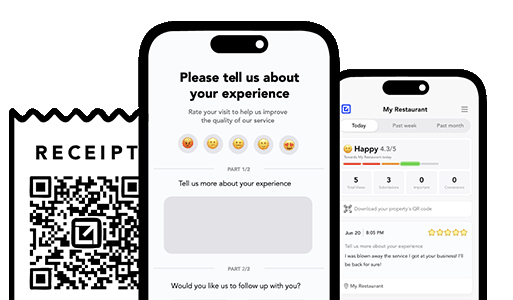
Text or email clients after every job. Catch issues early, recover unhappy clients fast, and drive repeat work with smart reminders.

Austin Spaeth is the founder of VisibleFeedback, a tool that helps service companies automate post-job follow-ups, catch issues early, and drive repeat work with smart reminders. With a background in software development and a focus on practical customer retention systems, Austin built VisibleFeedback to make it easy to text or email customers after every job, route problems to the right person, and keep relationships strong without awkward outreach. When he’s not building new features or writing playbooks for service businesses, he’s wrangling his six kids or sneaking in a beach day.
Whether you’re dealing with callbacks, unhappy customers, or low repeat work, we’ll help you tighten the follow up loop.
No credit card required.
