8/7/2025
Reviews
Smart Ways to Get More Reviews [Guide]
Practical, proven ways for any business to get more authentic reviews.

TLDR: Google reviews are the single biggest factor in whether a potential customer calls you or your competitor. But most service businesses either don’t ask for reviews at all, or ask in ways that feel awkward, pushy, or poorly timed. The fix isn’t complicated: ask the right customers at the right moment through the right channel. That means following up after a completed job (not during), sending a direct link that takes one tap, and making the ask feel like a natural part of great service rather than a favor. This article covers the specific timing, wording, and delivery methods that work for service businesses — plumbers, HVAC techs, pest control, landscapers, cleaners — along with the common mistakes that tank your response rate. You’ll also learn why volume and consistency matter more than perfection, and how to build a review system that runs on autopilot.
A homeowner’s AC dies on a 95-degree Saturday. They grab their phone, search “AC repair near me,” and see two companies. One has 47 reviews at 4.8 stars. The other has 12 reviews at 4.2 stars.
They call the first one. Every time.
Google reviews aren’t a nice-to-have for service businesses. They’re the front door. More reviews with better ratings means more calls, more bookings, and more revenue. But knowing that and actually getting reviews consistently are two different problems.
Here’s how to solve the second one.
It’s not that your customers don’t want to leave reviews. Research shows that over 70% of people will leave a review after a positive experience if they’re asked. The problem is that most service businesses either:
The good news: fixing these is straightforward.
Timing is everything. Ask too early and the customer hasn’t experienced the full result yet. Ask too late and the positive feeling has faded.
The sweet spot for service businesses: 2 to 5 days after the job is complete.
Here’s why that window works:
The best approach is a two-step sequence: check in first, then ask.
Send a text or email that’s genuinely about the work — not the review.
“Hi [Name], this is [Your Company]. Just checking in after yesterday’s [service type]. Everything working the way it should? Let us know if you have any questions.”
This message does two things. First, it shows you care about quality, which strengthens the customer’s positive impression. Second, it gives unhappy customers a private channel to tell you about problems before they go public.
If someone replies with an issue, you handle it. If they reply with something positive — “Everything’s great, thanks!” — that’s your opening for step two.
Now you ask. And you make it painless.
“That’s great to hear! If you have a minute, we’d really appreciate a quick Google review. It helps other homeowners in [city/area] find us. Here’s the link: [direct review link]”
Key elements that make this work:
This is the single most important technical step. If you skip it, your response rate will suffer.
That link drops the customer directly into the review writing box. No friction. No confusion. Send this link every single time.
Good review requests sound like:
Bad review requests sound like:
Keep it casual, honest, and brief. You’re not begging. You’re giving a happy customer an easy way to share their experience.
Text messages win. For service businesses, texts outperform email by a wide margin for review requests.
Why? Your customer is on their phone. The text arrives with the link. They tap it. They’re on Google writing the review. The whole thing takes 60 seconds.
Email review requests sit in inboxes. They get opened later — or never. By the time the customer gets around to it, the motivation is gone.
If you don’t have a text-based system, email still works, but expect lower conversion rates. Pair it with a subject line that’s personal, not promotional: “How’d the repair go?” beats “Leave us a review!” every time.
Here’s the reality: you will not remember to send review requests to every customer after every job. You’ll do it for a week, get busy, and stop.
The businesses that consistently grow their review count don’t rely on someone remembering. They automate it.
A basic review automation system looks like this:
Tools like VisibleFeedback handle this exact workflow. After every job, the customer gets a quick check-in. Happy customers get routed toward Google with a direct review link. Unhappy customers get flagged to your team so you can fix the problem privately. The whole system runs in the background, and your review count climbs steadily without you managing it day to day.
Some business owners get hung up on getting only 5-star reviews. They cherry-pick who they ask, only sending requests to customers they’re sure will rate them highly.
This backfires. Here’s why:
Ask every customer. Every time. Let the numbers work in your favor.
If you ask everyone, some of those reviews won’t be 5 stars. That’s okay.
When a negative review comes in:
A negative review with a thoughtful response actually builds trust. It shows potential customers that you stand behind your work and handle problems head-on.
Here’s what happens when you build a consistent review system:
Month 1: You go from 2-3 reviews per month to 8-10. Not earth-shattering, but noticeable.
Month 3: You’ve added 25+ new reviews. Your Google Business Profile starts ranking higher for local searches. You notice a bump in calls.
Month 6: You’ve added 50+ reviews. You’re now the highest-reviewed company in your category for your service area. The calls keep increasing, and you’re spending less on ads because organic search is doing the work.
Year 1: 100+ new reviews. Your cost per acquisition has dropped. Referrals are up because happy customers are more engaged. Your review profile is a competitive moat that new competitors can’t easily replicate.
That all starts with one text message sent one day after a completed job.
Pick your next 10 completed jobs. Send each customer a check-in text the day after service. For those who respond positively, follow up with a direct Google review link two days later.
Track how many reviews you get. You’ll likely land 2 to 3 from those 10. Now imagine that running automatically for every job, every week, every month.
That’s how you build a review profile that fills your calendar without filling your ad budget.
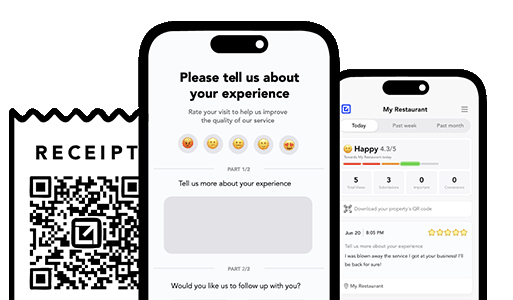
Text or email clients after every job. Catch issues early, recover unhappy clients fast, and drive repeat work with smart reminders.

Austin Spaeth is the founder of VisibleFeedback, a tool that helps service companies automate post-job follow-ups, catch issues early, and drive repeat work with smart reminders. With a background in software development and a focus on practical customer retention systems, Austin built VisibleFeedback to make it easy to text or email customers after every job, route problems to the right person, and keep relationships strong without awkward outreach. When he’s not building new features or writing playbooks for service businesses, he’s wrangling his six kids or sneaking in a beach day.
Whether you’re dealing with callbacks, unhappy customers, or low repeat work, we’ll help you tighten the follow up loop.
No credit card required.
