8/7/2025
Reviews
Smart Ways to Get More Reviews [Guide]
Practical, proven ways for any business to get more authentic reviews.

TLDR: A lot of businesses avoid asking for reviews because they’re worried it looks desperate—or worse, shady. And they’re right to worry: many “review strategies” are just review gating with nicer wording. The legitimate approach is simpler: ask every customer for private feedback first (the same way you’d ask in person), use that feedback to fix problems quickly, and invite all customers—without filtering—to share a public review after the experience has had time to settle. That isn’t review gating; it’s basic service recovery and customer care. This article explains what review gating is, why it’s risky, and how to build a review request process that feels honest: timing rules, scripts, and a two-step loop that increases reviews without creating the ‘intercept bad reviews’ vibe. You’ll also see how VisibleFeedback supports a compliant approach by collecting private feedback, speeding up resolution, and helping you ask for reviews in a way that feels earned, not manipulative.
Customers can smell manipulation.
They know when you’re doing the thing where:
Even if you don’t mean it that way, the vibe matters. If your process feels like you’re trying to hide complaints, you’ll get distrust, backlash, and occasionally someone calling you out directly in a review.
The goal isn’t to “game the system.” The goal is to build a review request process that feels normal, fair, and consistent.
Review gating is when you intentionally filter who gets asked to leave a public review based on whether they’re likely to leave a positive one.
Common examples:
That’s the line you want to avoid if you want to be seen as legitimate.
You can still collect private feedback. You can still fix issues. You just can’t run a system whose purpose is to hide negative reviewers from public platforms.
Here’s a clean approach that works for most service businesses:
1) Step one: ask for private feedback from everyone
2) Step two: later, invite everyone to leave a public review
The key difference:
This sounds subtle, but it’s what keeps the process ethical and defensible.
If you were running a business in a small town 30 years ago, you’d do this naturally:
That is not sinister. That is customer care.
The “intercept bad reviews” vibe happens when:
So the fix is: keep feedback as feedback, and keep review invitations consistent.
Timing is the easiest way to keep things legit while still being practical.
Feedback should be fast, because fast feedback lets you fix issues while they’re still fixable.
Review invites should come after the customer has had time to evaluate the outcome.
This reduces the chance you catch someone at peak irritation or price pain.
Keep it short. One message. No begging.
Hey [Name] — quick 2-second check: how did we do?
🙂 Great 😐 Okay 🙁 Not good
Thanks again for choosing [Business]. If you have a minute, would you mind leaving an honest Google review? It helps local businesses like ours a lot.
[Review Link]
Note the language: “honest.” That’s a credibility signal.
Subject: Quick favor? (Honest review)
Hi [Name],
Thanks again for choosing [Business]. If you have a minute, we’d appreciate an honest Google review. It helps future customers find us and helps us keep improving.
Here’s the link: [Review Link]
Thanks,
[Signature]
Avoid these patterns:
“If you had a good experience, click here. If not, click here.” That’s the classic gating structure.
Asking for reviews immediately after collecting payment. You’re catching “price pain,” not satisfaction.
Offering incentives for reviews in ways that violate platform policies. Some platforms have strict rules here. Even if it “works,” it’s a risk.
Repeated begging. One clean ask beats three needy ones.
Making customers log in or fill out a long form. That tanks response rate and increases annoyance.
If someone tells you they’re unhappy, the legitimate move is:
Don’t do:
Do:
If the customer later leaves a review mentioning the recovery, that can actually strengthen trust. People don’t expect perfection. They expect competence and ownership.
Here’s a practical workflow:
1) Every job gets a feedback check (one-tap)
2) Any negative feedback triggers contact within 1 hour
3) Issues move through a clear internal status flow (New → Acknowledged → Contacted → Resolved)
4) Everyone gets a review invite later based on job type timing
5) Review invites are single-shot, not spam
This approach builds a reputation that feels earned.
The “shady” feeling usually comes from how the system is presented and how obviously it filters.
VisibleFeedback can support an ethical approach by:
The goal isn’t to hide unhappy customers. It’s to run a business that addresses problems fast and asks for reviews like a normal, confident company.
If you want to ask for reviews without being shady:
Do that, and you’ll get more reviews, fewer bad ones, and zero “intercept bad reviews” energy.
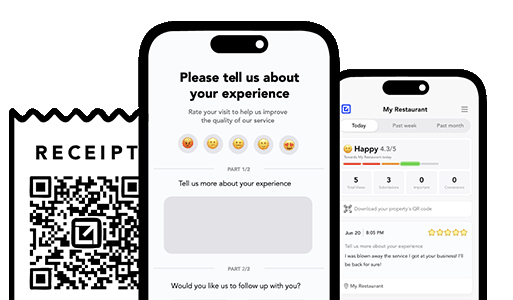
Text or email clients after every job. Catch issues early, recover unhappy clients fast, and drive repeat work with smart reminders.

Austin Spaeth is the founder of VisibleFeedback, a tool that helps service companies automate post-job follow-ups, catch issues early, and drive repeat work with smart reminders. With a background in software development and a focus on practical customer retention systems, Austin built VisibleFeedback to make it easy to text or email customers after every job, route problems to the right person, and keep relationships strong without awkward outreach. When he’s not building new features or writing playbooks for service businesses, he’s wrangling his six kids or sneaking in a beach day.
Whether you’re dealing with callbacks, unhappy customers, or low repeat work, we’ll help you tighten the follow up loop.
No credit card required.
