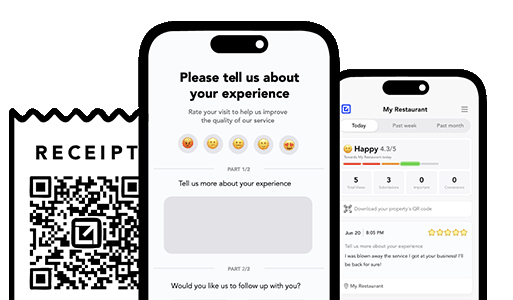
TLDR: Most pest control teams don’t lose customers because they can’t solve pest problems—they lose customers because complaints get routed wrong. A billing issue gets treated like a tech issue. A high-risk “bugs are back” complaint sits in a generic inbox. A scheduling miss gets debated instead of fixed. The solution is a simple routing policy: one intake inbox, fast acknowledgement, and clear assignment rules for who owns the next action (office/dispatch, service manager, owner, or technician). This article gives an operations-ready framework: issue categories, assignment rules, escalation triggers, SLAs, and copy/paste scripts to keep tone calm while moving fast. It also shows how VisibleFeedback supports the workflow by capturing one-tap signals, alerting the right person instantly, and tracking status until the customer confirms resolution.
Why Routing Matters More Than “Customer Service Skills”
Most “bad service” complaints are actually workflow failures.
A customer says:
- “bugs are back”
- “this didn’t work”
- “I was charged twice”
- “you missed my appointment”
- “your tech was rude”
If the wrong person owns the next step, two things happen:
- response time increases
- the customer feels ignored
That creates cancellations and bad reviews, even when your treatment plan is solid.
Routing is not politics. It’s operational risk management.
The Foundation: One Intake Inbox + One Owner Per Issue
Before assignment rules matter, you need two basics:
1) One intake inbox (one place issues go)
2) One owner per issue (someone is accountable)
The owner doesn’t have to fix it personally. They just have to ensure the next step happens.
If an issue is “everyone’s,” it’s nobody’s.
A Simple Status Flow (So Nothing Slips)
Use a minimal status flow across all issues:
- New
- Acknowledged
- Contacted
- Scheduled (if a visit is needed)
- Completed
- Confirmed
You can collapse this if you want, but “Confirmed” matters. Pest control problems are easy to assume away.
Rule:
- you don’t close issues until you confirm improvement.
The Assignment Model (Who Owns What)
Office/Dispatch Owns (Default)
Dispatch is the router and the stabilizer. Office/dispatch should own:
- scheduling changes, access notes, arrival windows
- “what’s the status?” messages
- mild “still seeing activity” complaints that need quick triage
- education/confusion (what to expect, safety questions, plan coverage questions)
- new customer onboarding questions
- creating and assigning tickets to techs/managers
Dispatch actions:
- acknowledge fast
- triage with 2–6 questions
- assign to tech or manager
- keep customer updated
Dispatch should not argue about pest biology. Dispatch should move the issue forward.
Technician Owns (Field Resolution)
Techs should own issues when the next step is a technical/field action:
- follow-up treatments (“still seeing ants in kitchen”)
- re-service due to persistent activity
- focused treatment adjustments (entry points, bait strategy, exclusion notes)
- inspection needs (rodent signs, attic/crawlspace checks)
- “what did the tech do?” clarification calls (handled professionally)
Tech actions:
- contact customer within SLA if assigned
- document findings clearly
- set expectations for timeline
- propose the next step (follow-up / exclusion / monitoring)
Important:
- techs can own resolution tasks, but dispatch should still control the inbox and due times.
Service Manager Owns (Risk + Quality + Exceptions)
Your service manager (or equivalent lead) owns issues that are:
- high-risk for churn/reputation
- repeat failures
- quality problems
Examples:
- “bugs are back” after multiple visits
- angry customer threatening to cancel/review
- repeated scheduling failures
- technician conduct complaints
- disagreements about what’s included
- plan-level changes (moving a customer to a different protocol)
Manager actions:
- same-day contact for high-risk complaints
- write the plan (“here’s what we’re doing next”)
- approve a follow-up visit priority or special handling
- coach techs (root cause, not blame)
The manager’s job is to prevent a solvable issue from becoming a cancellation.
Owner Owns (Money + Liability + Brand)
The owner should not be dragged into everything. Keep the owner for:
- chargebacks/disputes/BBB/legal threats
- refunds/credits beyond a threshold
- property damage claims
- repeated failures on VIP/commercial accounts
- policy decisions (exception approvals, plan restructures)
- public reputation escalations that require a careful response
Owner actions:
- de-escalate and protect the relationship
- approve financial outcomes
- set policy and boundaries
- ensure the team learns the lesson
If the owner is handling routine “still seeing ants” issues, your business will never scale.
Escalation Rules (Pest Edition)
These rules mirror real operations and prevent “we’ll get to it” drift.
Escalate to Service Manager immediately if:
- customer threatens cancellation, review, dispute
- “bugs are back” within 7–14 days of service with heavy activity
- same issue repeats after a follow-up visit
- activity is spreading to new areas
- roaches (heavy) or rodents (strong signs)
- new customer in first 30–60 days is unhappy (high churn risk)
- high-value recurring customer reports worsening activity
Escalate to Owner immediately if:
- chargeback/dispute/legal threat
- refund request above $X
- property damage claim
- public complaint is going viral (local groups / Nextdoor) and needs careful handling
- commercial account at risk of cancellation (if meaningful revenue)
SLA Targets (Simple, Achievable)
These are operationally realistic for most small teams.
- High-risk issues: acknowledge within 10–30 minutes in business hours, contact within 2 hours
- Standard issues: acknowledge same day, contact within 24 hours
- Assigned to tech: tech contact within 24 hours (or same day if urgent)
- Follow-up scheduling: give a concrete window within 24 hours
Customers don’t need instant fixes. They need instant clarity.
The Triage Script Dispatch Should Use (Under 5 Minutes)
Triage is how you assign correctly without wasting time.
Core questions
1) What pest are you seeing?
2) Where are you seeing it?
3) How bad is it (occasional/daily/heavy)?
4) Same area or spreading?
5) When did you first notice it again?
6) Any recent changes (rain, construction, leaks, food sources)?
Then route:
- mild + early timeline → tech follow-up or expectation reset (dispatch owns next step)
- heavy/spreading/angry → manager
- money/dispute → owner
Copy/Paste Responses by Owner Type
Dispatch acknowledgement (SMS)
Thanks for letting us know — we’ll take care of it. Quick question so we can move fast: what are you seeing and where?
Manager escalation acknowledgement (SMS)
I understand. We’re going to make this right. I’m escalating this now and we’ll contact you shortly with the plan.
Owner escalation acknowledgement (SMS)
Thanks for reaching out. We take this seriously and want to resolve it. I’m escalating this to leadership and we’ll contact you shortly.
Keep messages short. The plan comes next.
Preventing “Ping-Pong” (The Hidden Customer Experience Killer)
The worst customer experience is being bounced between roles.
Rules to prevent ping-pong:
- whoever replies first owns the next step until handoff is explicit
- handoff messages include: owner name + next action + timing
- tech updates go back into the same issue thread/ticket
Example handoff message:
I’m assigning this to our service manager [Name] who will call you today with the plan.
If you can’t name the owner, don’t hand off yet.
How VisibleFeedback Mirrors This in Real Operations
VisibleFeedback fits this routing model because it’s built around:
- one-tap signals that surface issues early
- immediate alerting based on severity
- assignment and escalation rules (dispatch vs manager vs owner)
- simple statuses so issues don’t slip
- confirmation prompts so “resolved” means confirmed
It turns routing from “tribal knowledge” into a repeatable process.
Bottom Line
If you want fewer cancellations and fewer public complaints, stop routing issues by vibes.
Use:
- one inbox
- one owner per issue
- dispatch for triage + coordination
- techs for field resolution
- managers for high-risk recovery
- owners for money/liability/brand
Clear rules beat heroic customer service every time.