TLDR: Most pest control companies struggle with reviews not because of bad service, but because the work is invisible — bugs just quietly disappear. Customers forget to review what they can’t see. The fix is a 5-step system: deliver a review-worthy experience through communication, ask at the right moment (2-3 days after treatment, not at the door), send a direct Google review link via text (30-40% action rate vs 5-10% for email), respond to every review you receive, and automate the follow-up so it happens after every job without anyone remembering. Companies that do this consistently add 3-5 reviews per month. In two years, you go from 12 reviews to 100+. The difference between a company with 12 reviews and one with 200 is not better service — it’s a system.
Your technician just treated a house for roaches. The homeowner is relieved. The bugs are gone. The job was clean, fast, and professional.
Two weeks later, that homeowner is telling their neighbor about “some pest control guy” they used but cannot remember the name of. They never left a review. They never will — unless you do something about it.
This is the reality for most pest control companies. The work is excellent. The reviews do not reflect it. You have 12 Google reviews while the company across town has 200. Customers pick them because 200 reviews at 4.7 stars looks more trustworthy than 12 reviews at 5.0 stars. Volume matters.
The good news: getting more reviews is not about being pushy or buying fake ones. It is about building a simple system that makes it easy and natural for happy customers to share their experience. Here is how.
Why Pest Control Companies Struggle With Reviews
Before we fix the problem, it helps to understand why pest control has a unique reviews challenge compared to other service businesses.
The work is invisible. When a plumber fixes a leak, the customer sees the result immediately. When an HVAC tech installs a new unit, the house gets cool. But when a pest control technician treats a home, the result is the absence of something. No more ants. No more mice. It is hard to get excited about something not happening — even though that is exactly what you delivered.
The customer forgets fast. Pest control is out-of-sight, out-of-mind. Once the bugs are gone, the customer moves on with their life. By the time they might think about leaving a review, the urgency is gone and the moment has passed.
Quarterly service blurs together. For recurring customers on quarterly plans, each visit feels routine. The third quarterly spray does not feel review-worthy — even though the consistency is exactly what keeps their home pest-free.
Nobody asks. This is the biggest one. Nearly 70% of customers will leave a review if asked. But most pest control companies never ask, or they ask once on a card that gets thrown away.
The 5-Step Review System
This system works whether you are a solo operator treating 10 homes a week or a company with 15 technicians running 50 jobs a day. The key is consistency.
Step 1: Fix the Service Experience First
Reviews are a mirror. If the service is sloppy, more reviews will just amplify the problems. Before you focus on collecting reviews, make sure the basics are locked in:
- Show up on time. This is the number one complaint in pest control reviews industry-wide. If you say 2:00, be there at 2:00. If you are running late, text the customer.
- Explain what you are doing. Customers feel uneasy about chemicals in their home. A 30-second walkthrough of what you are spraying, where, and why goes a long way. “I’m treating the baseboards and entry points with a product that’s safe for pets once it dries — takes about 20 minutes” turns anxiety into confidence.
- Leave the place clean. No boot prints, no chemical residue on counters, no mess. Treat every home like it is a showing.
- Tell them what to expect. “You might see a few more bugs in the next 24-48 hours — that’s normal, it means the treatment is working. If you’re still seeing activity after a week, call us and we’ll come back at no charge.”
When you do these four things, you are not just providing pest control — you are creating a review-worthy experience. The customer walks away thinking “that was really professional” instead of “I guess the bug guy came.”
Step 2: Ask at the Right Moment
Timing is everything. The best time to ask for a review is right after the service when the customer is most satisfied and most likely to act.
For one-time treatments (roaches, ants, rodents, bed bugs):
The ideal moment is 2-3 days after treatment, once the customer has seen results. Send a follow-up message:
“Hi [Name], just checking in — how’s the house looking after the treatment on [day]? Any activity, or are things looking clear?”
If they respond positively (“All clear!” or “Haven’t seen a single ant”), that is your window:
“That’s great to hear. If you have a second, a Google review would really help us out. Here’s a direct link: [link]. Takes about 30 seconds. We really appreciate it.”
For recurring quarterly customers:
Ask after the first or second quarterly visit — when the customer has seen enough to evaluate the service but the experience is still fresh enough to write about. Do not ask after every visit. Once a year is plenty for existing customers.
For emergency calls (wasps, scorpions, wildlife):
These are your best review opportunities. The customer was scared, you showed up fast, you solved the problem. Ask the same day, within a few hours of the visit:
“Glad we could take care of that wasp nest today. If you’ve got 30 seconds, a Google review would mean a lot: [link]. Hope you can enjoy the yard again!”
Step 3: Make It Effortless
Every extra step between “I should leave a review” and actually posting one costs you reviews. Remove every barrier.
Use a direct Google review link. Do not send people to your website and hope they find the review button. Google lets you create a direct link that opens the review form immediately. Search “Google review link generator” to get yours.
Send it via text. Email review requests have a 5-10% action rate. Text messages have a 30-40% action rate. If you have the customer’s phone number, text the link. Keep the message under 160 characters so it does not split into multiple messages.
One tap, one screen. The customer should be able to tap the link, see the star rating, type a sentence or two, and hit submit. If your process requires more than that, you will lose most people.

Automate follow ups after every job
Catch issues early and drive repeat work with smart reminders.
Step 4: Respond to Every Review
This step is not about getting more reviews — it is about getting better reviews and showing future customers that you care.
Respond to positive reviews within 24-48 hours. Keep it personal and specific:
“Thanks, Sarah! Glad the quarterly treatment is keeping things under control. See you in June for the next visit.”
This does two things: it tells Sarah her review was seen and appreciated (making her more likely to review again next year), and it tells every future customer reading reviews that this company pays attention.
Respond to negative reviews within 24 hours. This is critical. A one-star review with no response looks like you do not care. A one-star review with a thoughtful, professional response looks like a company that takes feedback seriously.
Template for negative reviews:
“Hi [Name], I’m sorry to hear about your experience. That’s not the level of service we aim for. I’d like to look into this and make it right — could you call or text me directly at [number]? I want to understand what happened.”
Do not argue. Do not get defensive. Do not explain why the customer is wrong. Move the conversation offline and fix it.
Here is the math that matters: a business with 4.5 stars and 100 reviews (including a few responded-to negatives) looks more trustworthy than a business with 5.0 stars and 8 reviews. Potential customers know no business is perfect — what they want to see is how you handle imperfection.
Step 5: Build Reviews Into Your Workflow
The companies that get 200+ reviews did not get there by remembering to ask sometimes. They built it into their daily operations so it happens automatically.
Option A: Technician asks in person. At the end of every job, the tech says: “If you’re happy with the service, a Google review really helps us out. I can text you a quick link.” This works well but depends on each technician actually doing it. Some will, some will not.
Option B: Automated follow-up message. After every completed job, an automated text or email goes out with a satisfaction check-in and, if the customer is happy, a review request link. This is consistent and does not depend on any individual remembering.
Option C: Both. The technician mentions it in person. The automated message follows up. The customer gets two natural touchpoints without feeling hounded.
The most reliable approach is Option B or C, because it removes the human variable. If your tech had a rough day and forgot to ask, the automated message still goes out.
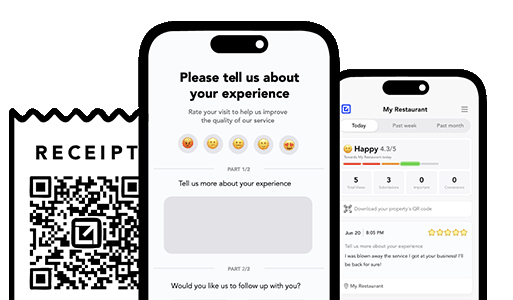
This is what tools like VisibleFeedback are designed for — automated post-job follow-ups that check in with the customer, surface any issues before they become bad reviews, and make it easy for satisfied customers to leave a review. The follow-up runs in the background after every job so nothing falls through the cracks.
How Many Reviews Do You Actually Need?
A common question. The answer depends on your market, but here are some benchmarks:
- Under 20 reviews: You are invisible to most customers comparing options. This is the danger zone.
- 20-50 reviews: You are credible. Customers will consider you, especially if your rating is 4.5+.
- 50-100 reviews: You are competitive with most local pest control companies.
- 100+ reviews: You are a dominant player in your market. New reviews continue to help with local SEO rankings.
The goal is not to jump from 12 to 200 overnight. It is to build a steady flow — 3 to 5 new reviews per month adds up to 36-60 per year. In two years, you are in the top tier for your area.
A note on star ratings: Do not obsess over maintaining a perfect 5.0. A 4.7 with 150 reviews is far better than a 5.0 with 15. Google’s local search algorithm factors in both rating and volume. And consumers actually trust ratings in the 4.5-4.8 range more than a perfect 5.0 — a perfect score can look curated or fake.
Reviews and Local SEO: The Connection
Google reviews directly influence where you show up in local search results — particularly the “Map Pack” (the three businesses shown at the top of local searches).
Here is what Google considers:
- Review quantity: More reviews signal a more established, trusted business.
- Review quality (rating): Higher average ratings improve rankings.
- Review recency: A business with 10 reviews in the last month outranks one with 50 reviews from two years ago.
- Review keywords: When a customer writes “great termite treatment” in their review, it helps you rank for “termite treatment” searches in your area.
- Review response rate: Responding to reviews signals an active, engaged business.
This means your review system is not just a reputation play — it is an SEO strategy. Every new review helps you rank higher in the searches that bring in new customers.
Common Mistakes to Avoid
Offering incentives for reviews. “Leave a review and get 10% off your next service” violates Google’s review policies. If caught, Google can remove your reviews or penalize your listing. Do not risk it.
Review gating. Sending customers to a private survey first and only routing happy ones to Google is technically against Google’s guidelines and erodes trust. Ask everyone. A few 4-star reviews mixed in actually make your profile look more authentic.
Asking too often. One request per customer per service event is appropriate. Do not send three follow-ups asking for a review. If they did not respond the first time, they are not going to.
Ignoring negative reviews. Every unanswered negative review is a red flag to potential customers. Respond professionally, offer to fix the issue, and move on. Most consumers will forgive a bad experience if they see the company handled it well.
Buying fake reviews. This should go without saying, but Google’s detection has gotten very good. Fake reviews get removed, your listing gets flagged, and the short-term boost is not worth the long-term damage.
Putting It Together
Here is the complete system:
- Deliver a review-worthy experience — show up on time, explain the treatment, leave the home clean, set expectations for results.
- Ask at the right moment — 2-3 days after one-time treatments, after the first or second quarterly visit, same-day for emergency calls.
- Make it effortless — direct Google review link, sent via text, one tap to submit.
- Respond to every review — thank the positives, address the negatives professionally, keep it personal.
- Build it into your workflow — automate the follow-up so it happens after every job without anyone having to remember.
Do this consistently and you will see results within 60-90 days. Not because of any trick or hack, but because you are doing what 90% of pest control companies are not: asking your satisfied customers to share their experience, and making it easy for them to do so.
Start this week. After your next completed job, send one follow-up text with a Google review link. See what happens.
Austin Spaeth is the founder of VisibleFeedback, a follow-up and retention tool built for service businesses. He writes about customer retention, reputation management, and repeat revenue for small service companies.