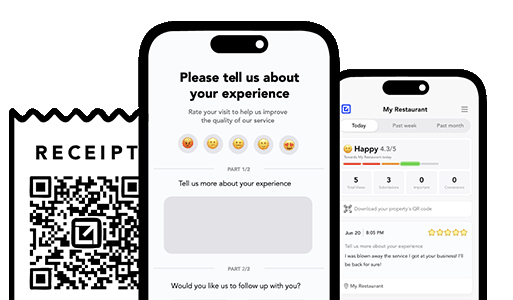
TLDR: Service businesses love asking “Should we follow up by SMS or email?” because it sounds like a marketing question. It’s actually an operations and reputation question. If you need a fast response to catch problems before they become bad reviews, SMS wins. If you need longer context, documentation, photos, maintenance instructions, or a multi-step nurture sequence, email wins. The best setup is often both: SMS for the one-tap feedback loop (happy vs unhappy), and email for the detailed follow-up that reinforces value and drives repeat work. This article breaks down when to use SMS vs email, what to send in each, timing rules, templates, and the common mistakes that tank response rates or create 1-star reviews. You’ll also see how VisibleFeedback routes unhappy customers into private resolution and sends review prompts only to happy customers, which is the safest way to protect reputation while still growing reviews.
Why This Choice Matters (It’s Not Just “Preference”)
A follow-up has three real jobs:
1) Catch dissatisfaction privately before it becomes a public review
2) Reinforce the value delivered so the customer feels good about the purchase
3) Drive the next action (maintenance plan, repeat service, referral, review)
SMS and email excel at different parts of that job. When businesses pick the wrong channel, they see:
- low response rates (feedback loop fails)
- delayed discovery of problems (reviews get wrecked)
- awkward “please review us” blasts (customers get annoyed)
- missed repeat work (customer forgets you)
The right channel depends on what you’re trying to accomplish in that specific message.
SMS vs Email: The Honest Comparison
Here’s the blunt truth.
SMS is best for: - fast replies - one-tap feedback (“Great / Okay / Not good”) - urgent issue recovery (same-day rescue) - short reminders (confirmations, “tech on the way,” “anything else?”) Email is best for: - long explanations and education (what was done, why it mattered) - photos, reports, invoices, warranties, and documentation - upsells that need context (maintenance plans, service agreements) - nurture sequences (seasonal checklists, “what to expect,” referrals)If you try to do email’s job in SMS, you’ll annoy people.
If you try to do SMS’s job in email, you’ll get ignored.
The Core Rule: Use SMS for Signals, Email for Details
A good follow-up system uses two layers:
- Layer 1 (SMS): get a fast signal about satisfaction
- Layer 2 (Email): deliver the “value story” and next steps
Why this works:
- People will tap an SMS link or button quickly
- People will read email when it contains useful info (receipt, summary, instructions)
- You avoid stuffing a wall of text into a message that should be 10 seconds long
When SMS Wins (Most Service Companies Underuse This)
SMS is your best tool for protecting reviews because it’s the fastest way to learn if someone is unhappy.
Use SMS when:
- the job is complete and you need confirmation it’s solved
- you want to catch “minor annoyances” before they escalate
- you want a high response rate from normal customers (not just angry ones)
Best SMS formats: - one question - one tap - one clear next stepExamples of one-tap prompts:
- “How did we do today?” 🙂 😐 🙁
- “Did we solve the problem?” Yes / No
- “Would you use us again?” Yes / No
What to avoid in SMS:
- long surveys
- multiple questions
- asking for a review before you know they’re happy
- “reply with a paragraph” requests (that filters for angry people)
When Email Wins (And Why It Still Matters)
Email isn’t dead. It’s just bad at getting immediate feedback.
Use email when:
- you want to document work performed (especially for installs or big repairs)
- you want to show value (before/after photos, checklist, readings)
- you want to reduce buyer’s remorse (“here’s what was fixed and why it matters”)
- you want predictable repeat work (seasonal reminders + maintenance education)
Email also gives you space for:
- warranties and product registration
- “how to use your new thermostat” instructions
- safety notes and common questions
- referral programs and service plan offers
If your email is generic fluff, it gets ignored.
If your email is useful, it gets saved and forwarded.
Same-Day vs Next-Day vs 3-Day Timing by Channel
A practical default:
SMS timing - emergency repair: 1–3 hours after completion - routine service: next day (late morning to early afternoon) - install: 2–4 days after completion Email timing - immediately: receipt + work summary + what was done - next day: “what to expect” + maintenance tips + contact options - 7–14 days: “any questions?” + light upsell (maintenance plan) if appropriateWhy the split works:
- SMS catches problems fast
- Email reinforces value and prevents regret later
The Best Setup: Use Both (But Don’t Spam)
For most service companies, the best system is:
- SMS: one-tap feedback loop
- Email: detailed follow-up with value recap
A simple flow: 1) Job completed → send email summary/receipt 2) Next day (or 3 days for installs) → send SMS one-tap check 3) If positive → review ask via SMS (or email if your customers respond better there) 4) If negative → private resolution workflow (no public links)
This avoids the #1 dumb mistake: blasting a review link to everyone regardless of experience.
Templates: SMS Follow-Ups That Actually Get Replies
Keep these short. Short wins.
SMS: routine service (next day) > Hey [Name] — quick 2-second check: how did we do yesterday? 🙂 Great 😐 Okay 🙁 Not good SMS: emergency service (same day) > Hey [Name] — quick check: is everything working normally now? Yes / No SMS: install (3 days) > Hey [Name] — checking in on the new install. How’s everything going so far? 🙂 Great 😐 Okay 🙁 Not good SMS: review request (only after positive signal) > Love to hear it. If you have 30 seconds, would you mind leaving a quick Google review? It helps a lot. SMS: negative branch (private capture) > Thanks for telling us. What should we fix? Comfort / Noise / Cleanliness / Communication / Didn’t solve issue / Other We’ll follow up shortly.
Templates: Email Follow-Ups That Build Trust and Repeat Work
Email is where you prove professionalism and reduce “was this worth it?” feelings.
Email subject lines that work - “Your service summary from [Business]” - “What we fixed today + what to expect” - “Install complete: quick tips and next steps” - “Your maintenance checklist and recommendations” Email structure that works 1) Short thank you (one sentence) 2) Work performed summary (bullets) 3) What to expect next (1–3 bullets) 4) How to get help quickly (reply/call/text) 5) Optional: maintenance plan or next recommended serviceExample email body outline:
- “Here’s what we did today…”
- “If you notice X, that’s normal for the first 24–48 hours…”
- “If anything feels off, reply directly and we’ll take care of it…”
What to avoid in email:
- giant walls of text
- generic marketing newsletters immediately after a job
- begging for reviews in the same message as the invoice (bad vibe)
What to Avoid (This Is How You Create Bad Reviews)
These are common, and they’re self-inflicted wounds.
1) Asking for a review before asking for feedback
If someone is unhappy, you just handed them a stage.
2) Sending a long survey
Only angry people complete long surveys. That increases risk, not insight.
3) Using the same message for every job type
Emergency, routine, and installs have different emotional timelines.
4) No response system for negative feedback
If you ask and then ignore it, customers learn to go public next time.
5) Too many messages
One email summary + one SMS check is plenty for most jobs. Don’t get cute.
Compliance and Deliverability Notes (Practical, Not Legal Advice)
Two realities:
- SMS requires cleaner consent practices. If you text customers, make sure you have permission and an easy opt-out (“Reply STOP to opt out”). This is especially important in the U.S.
- Email deliverability depends on usefulness. If your emails are just marketing, they’ll hit Promotions or spam. If they contain invoices, summaries, and instructions, they get opened.
If you don’t have a clean consent and opt-out flow for SMS, fix that before scaling.
How VisibleFeedback Makes This Easier (Without Duct Tape)
You can build this with a texting platform, forms, a CRM, and a spreadsheet. It works until it doesn’t.
VisibleFeedback is built for the follow-up loop service businesses actually need:
- SMS-friendly one-tap feedback capture
- automatic branching (happy → review ask, unhappy → private resolution)
- instant alerts for low ratings so you can respond fast
- structured categories that reveal patterns (not just one-off complaints)
- clean links/pages you can use in SMS, email, receipts, and QR codes
The biggest advantage isn’t “sending messages.” It’s routing outcomes safely:
- unhappy customers get handled privately
- happy customers drive reviews and repeat work
A Simple “Choose Your Channel” Checklist
Use this checklist before sending anything.
If your goal is fast feedback → SMS
If your goal is education, proof, documentation → Email
If your goal is review growth safely → SMS after a positive signal
If your goal is repeat work / maintenance plan → Email (with optional SMS reminder later)
Most companies should run:
- email summary immediately
- SMS one-tap check at the right time (next day for routine, 3 days for installs, same day for emergencies)
Bottom Line
SMS is the best channel for immediate satisfaction signals and saving reviews. Email is the best channel for reinforcing value, delivering details, and driving longer-term retention.
If you pick one: pick SMS for the one-tap feedback loop.
If you want the best results: run SMS for signals and email for details, with strict routing so unhappy customers never get shoved toward public reviews.