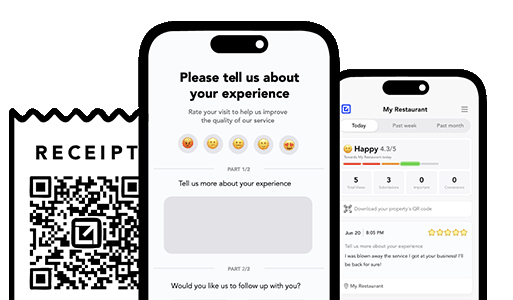
TLDR: Small service teams don’t lose customers because they’re lazy. They lose customers because issues fall into cracks: a missed call-back, a “we’ll handle it tomorrow,” a tech who never gets the follow-up, a customer who feels ignored and goes straight to Google. The fix is a tiny issue-tracking system with clear statuses and daily habits. This article lays out a simple flow—New → Acknowledged → Contacted → Resolved—plus optional statuses for Escalated and Waiting. You’ll learn what each status means, who owns it, what actions are required, and how to run a 10-minute daily review so nothing slips. You’ll also see how VisibleFeedback helps by capturing issues from one-tap follow-ups, alerting the right person instantly, and keeping a clear timeline of what happened until the customer confirms it’s resolved.
Why Small Teams Need Statuses More Than Big Teams
Big teams can afford messy processes because there are enough people to brute-force problems.
Small teams can’t. When you’re running lean, every dropped issue costs you twice:
- You lose the customer (or the repeat job)
- You lose time doing damage control (calls, refunds, review responses)
A simple status flow prevents “I thought you handled it” situations. It turns issues into visible objects with:
- a single owner
- a clear next action
- a defined “done”
No fancy ticketing system required. Just a consistent workflow.
The Minimal Status Flow That Works
Here’s the core flow:
New → Acknowledged → Contacted → Resolved
You can run this in:
- a spreadsheet
- a shared note
- a Trello board
- a basic CRM pipeline
- VisibleFeedback (if you want it integrated with feedback capture)
The point isn’t the tool. The point is that everyone uses the same definitions.
Status Definitions (Use These Exact Meanings)
Keep the definitions strict. If you let people interpret statuses however they want, you’re back to chaos.
New
Meaning: The issue exists, but nobody has taken ownership yet.
Required action:
- Assign an owner
- Decide the next step (call, text, schedule, escalate)
Rule:
- New should never sit longer than a short window (same day is the goal).
Acknowledged
Meaning: A real human has responded to the customer and confirmed someone is on it.
Required action:
- Send an acknowledgement message
- Set expectation for next contact (“I’ll call within an hour”)
Rule:
- Acknowledged is not the same as Contacted. It’s just the “we heard you” step.
Contacted
Meaning: You’ve actually talked to the customer (or had a meaningful back-and-forth) and agreed on the plan.
Required action:
- Capture what the customer wants
- Set the resolution plan + timeline
- Schedule the return visit or corrective action
Rule:
- A one-line “we’ll look into it” doesn’t count as Contacted.
Resolved
Meaning: The fix has been completed and the customer has either confirmed it or you have a reasonable confirmation signal.
Required action:
- Complete the fix (redo, refund/credit, re-treat, replace, explanation)
- Send a closure check (“All set now?”)
Rule:
- Resolved without confirmation is risky. If you can’t confirm, add a “Confirmed” checkbox or use the optional “Waiting” status below.
Two Optional Statuses That Make Life Easier
If you want slightly more precision without complexity, add these:
Escalated
Meaning: The issue needs a decision-maker (owner/manager) due to severity or risk.
Use when:
- safety issue
- property damage
- repeat failure
- customer mentions review/chargeback/legal threat
- high-value account
Required action:
- Name the decision-maker
- Set a time for the decision (today, not “sometime”)
Waiting
Meaning: Progress is blocked by the customer or an external dependency.
Use when:
- waiting for customer to reply
- waiting for parts
- waiting for landlord approval / property access
- waiting on a vendor
Required action:
- Set the next follow-up date/time (don’t leave it open-ended)
Ownership Rules (This Is Where Most Teams Fail)
Small teams drop issues because ownership is fuzzy.
Pick one of these ownership models and stick to it:
1) Dispatcher/office owns every issue end-to-end
2) “Last touch” owns it (whoever touched it last must move it forward)
3) Tech owns issues they created, office owns everything else
Model #1 is simplest for small teams. A single coordinator prevents bounce-around.
Whatever you pick, enforce this rule:
- Every issue has exactly one owner at any time.
If two people “own it,” no one owns it.
The Daily 10-Minute Routine (So Nothing Slips)
You don’t need weekly meetings. You need a short daily review.
Do this once per day (morning is best): 1) Review every item in New
2) For each New item: assign owner + send acknowledgement
3) Review every item in Acknowledged
4) For each Acknowledged item: confirm contact is scheduled today
5) Review every item in Contacted
6) For each Contacted item: confirm next action and due time
7) Review every item in Waiting
8) For each Waiting item: confirm follow-up date exists
9) Close anything truly Resolved and send confirmation check if missing
This sounds basic because it is. Basic is what runs.
A Simple Tracking Template (Spreadsheet Columns)
If you’re doing this without software, use a sheet with these columns:
- Date opened
- Customer name
- Phone/email
- Job type (emergency / routine / install / recurring)
- Issue category (communication / cleanliness / didn’t fix / price / scheduling / other)
- Status (New / Acknowledged / Contacted / Resolved / Escalated / Waiting)
- Owner
- Next action
- Due time
- Last touch timestamp
- Outcome (resolved / refund / redo / follow-up visit)
- Customer confirmed? (Y/N)
The “Due time” and “Last touch” columns are what prevent slipping. Without those, statuses become labels, not a system.
Where This Workflow Connects to Follow-Ups
Your follow-up system is the input stream. Issue tracking is the control system.
A clean setup looks like this:
- Follow-up message goes out (one-tap)
- Any neutral/negative response creates an issue
- That issue enters as New
- It moves through the flow until resolved and confirmed
This is how you stop “feedback” from being just data. It becomes action.
How VisibleFeedback Helps
You can run this flow manually. The problem is consistency, speed, and visibility when you’re busy.
VisibleFeedback helps by:
- capturing issues from one-tap follow-ups (no long forms)
- creating structured categories so you don’t have to interpret messy text
- alerting the right owner instantly when a low rating comes in
- tracking the timeline from New to resolution
- prompting confirmations so “resolved” actually means resolved
It turns the workflow into a default behavior, not a heroic effort.
Common Pitfalls (And the Fix)
Too many statuses: people stop using them
Fix: keep it to 4 core statuses + 1–2 optional
“Acknowledged” becomes a dead-end
Fix: require a due time for the next contact
Issues get marked Resolved without confirmation
Fix: add a “Customer confirmed?” checkbox or use Waiting for confirmation
Nobody owns the issue
Fix: enforce single-owner rule, always
Bottom Line
If you’re a small service team, a lightweight status flow is one of the highest leverage systems you can adopt.
New → Acknowledged → Contacted → Resolved
It’s simple on purpose. Run a 10-minute daily review, and you’ll stop losing customers to avoidable slippage. VisibleFeedback just makes the loop faster and more automatic—but the core is the status discipline.