TLDR: Most homeowners pick their plumber based on Google reviews, not ads. The plumbing companies with the best online reputations are not the ones with zero problems — they are the ones with a system that catches problems early and consistently earns reviews from happy customers. This article covers the three pillars of plumbing reputation management: catching problems before they go public with same-day follow-ups, building a steady stream of reviews through a simple two-step text sequence, and responding to every review to show future customers what kind of business you run.
A homeowner has a burst pipe at 11 PM. They grab their phone, search “emergency plumber near me,” and pick the one with 87 reviews and a 4.7 rating over the one with 9 reviews and a 4.2. The job goes to the company that managed its reputation — not necessarily the one with better plumbers.
Your online reputation is your storefront. For most plumbing companies, it is the first and last thing a customer sees before picking up the phone. And unlike a clean truck or a neat uniform, your reputation works for you 24 hours a day — or against you.
Why Reputation Hits Plumbers Harder Than Most Trades
Plumbing is personal. You are in someone’s home, often during a stressful moment. A leaking water heater, a backed-up sewer line, a kitchen flood — these are not calm situations. Customers are already anxious before your tech walks through the door.
That emotional charge means two things. First, a great experience creates a loyal customer who will happily tell the world. Second, even a minor hiccup — a slow callback, a miscommunication about pricing, a fitting that drips overnight — can trigger a harsh review.
The gap between “everything went fine” and “1-star, never again” is smaller in plumbing than in almost any other trade. That is why managing your reputation has to be intentional, not something you hope works out.
The Three Pillars of Plumbing Reputation Management
1. Catch Problems Before They Go Public
Most bad plumbing reviews follow a pattern. The tech finishes the job. The homeowner notices something off a day or two later — a slow drain, a small drip, a water heater that makes a weird noise. They try calling the office. Nobody picks up, or they get voicemail. They wait another day. Then they open Google and write about it.
The review was preventable. Not because the work was bad, but because nobody checked in.
A simple follow-up message the day after a job changes the entire dynamic. Something like: “Hi [Name], this is [Company]. Just checking in on yesterday’s repair — everything working the way it should? If anything seems off, reply here and we will get it sorted.”
That one message does three things. It catches real problems before they become public complaints. It makes the customer feel taken care of. And it opens a private channel where frustrations get resolved instead of broadcast.
If you run a plumbing company with five techs doing six calls a day, that is 30 potential review situations every single day. Even one check-in text per job adds up to hundreds of problems caught privately over a year.
2. Build a Steady Stream of Reviews
You do not need 500 reviews. You need a consistent flow. Google rewards recency, and customers trust businesses that have recent reviews more than ones with a big number from two years ago.
The key is making the ask part of your normal process, not a special event.
Timing matters. The best time to ask a plumbing customer for a review is 24 to 48 hours after the job — after they have had time to verify everything works but before they have moved on mentally. Asking at the moment of payment is too soon. Waiting a week is too late.
Make it one tap. Send a direct link to your Google Business Profile review form. Do not send them to your website and hope they find it.
Use text, not email. For plumbing customers, text messages get response rates three to five times higher than email. Homeowners check texts. They ignore emails from businesses.
Here is a simple two-step sequence that works:
- Day 1 (same day or next morning): Check-in message. “Everything working okay after yesterday’s service?”
- Day 2-3 (only if they respond positively or do not report a problem): “Glad to hear it. If you have a minute, a Google review helps us a lot.”
No gimmicks, no incentives, no pressure. Just good service followed by a simple ask.
3. Respond to Every Review — Good and Bad
Your responses to reviews matter almost as much as the reviews themselves. Potential customers read your responses to decide what kind of business you run.
For positive reviews: Thank them by name if possible. Be specific. “Thanks, Mike — glad we got that water heater swap done before the cold snap” reads better than a generic “Thank you for your kind words!”
For negative reviews: Respond calmly, take ownership where appropriate, and move the conversation offline. Something like: “Hi [Name], I am sorry this was not the experience you expected. I would like to understand what happened and make it right. Can you call or text me directly at [number]?”
What this does: It shows every future customer reading that review that you care and you take action. The review stays, but it stops hurting you. In many cases, the customer updates their rating after you resolve the issue.
What not to do: Do not argue. Do not explain technical details in public. Do not accuse the customer of being wrong. Every word you write is for the next 100 people who will read that review, not just the person who wrote it.
The Plumbing-Specific Review Traps to Avoid
Trap 1: Only asking after big jobs. A $200 drain clearing deserves a review request just as much as a $5,000 repipe. Volume matters, and smaller jobs are often the smoothest experiences.
Trap 2: Letting one tech tank your ratings. Track reviews by technician. If one tech consistently generates complaints, that is a training problem, not a reputation problem. Fix the root cause.
Trap 3: Ignoring Google Business Profile. Keep your hours updated. Add photos of your team and trucks. Respond to questions. Google favors active profiles, and customers trust complete ones.
Trap 4: Waiting for bad reviews to start caring. Reputation management is proactive. The companies with the best ratings are not the ones with zero problems — they are the ones who catch problems early and ask happy customers to share their experience.
How to Build a Reputation System That Runs Itself
The plumbing companies with the strongest online reputations are not doing anything complicated. They have a system that runs consistently:
- Every job gets a follow-up. Same day or next morning. Automated text or manual — consistency matters more than method.
- Happy customers get a review link. Simple, direct, one tap.
- Problems get flagged immediately. The office knows about an issue before the customer has time to write a review.
- Every review gets a response. Within 24-48 hours. Positive and negative.
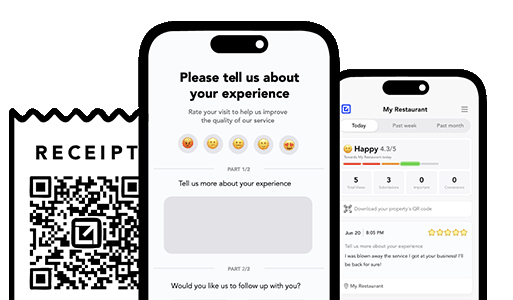
That loop — follow up, catch issues, earn reviews, respond — is the entire reputation management strategy. Tools like VisibleFeedback can automate the follow-up and review request steps so your office does not have to remember to send messages after every job. But even if you do it manually, the system works as long as it is consistent.
Key Takeaways
- Your online reputation is your biggest marketing asset. Most customers choose plumbers based on reviews, not ads.
- Catch problems early with a same-day or next-day follow-up after every job. One text can prevent a 1-star review.
- Build review volume through a consistent two-step process: check in first, then ask for a review only after confirming the customer is happy.
- Respond to every review — positive and negative. Your responses are for future customers, not just the reviewer.
- Track reviews by technician to catch training issues before they become reputation problems.
- Consistency beats intensity. A simple system that runs after every job outperforms occasional bursts of effort.