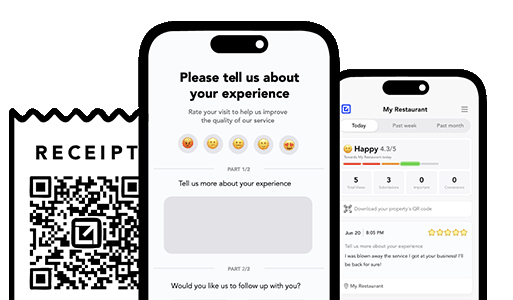
TLDR: Bad reviews and public complaints are inevitable in pest control because outcomes can be gradual and customers often have unrealistic expectations. The worst response is emotional, defensive, or overly technical—because it makes you look unreliable even when you’re right. A reputation-forward approach is simple: respond quickly, acknowledge the experience, avoid arguing facts in public, state your commitment to fix it, and invite the customer to contact you so you can resolve it. Then actually follow through, confirm improvement, and document the outcome. This article gives a policy-safe response framework, do/don’t rules, copy/paste templates for common pest control complaints (“still seeing bugs,” “made it worse,” “missed appointment,” “charged unfairly”), and a simple internal workflow so every complaint has an owner and a next step. You’ll also see how VisibleFeedback helps prevent public blowups by catching issues early with one-tap check-ins, routing recovery fast, and creating a clear resolution timeline.
Why Pest Control Reviews Get Emotional Fast
Pest control is uniquely prone to “emotion reviews” because:
- customers often want instant results
- activity can temporarily increase after treatment
- some pests come in waves (weather/seasonality)
- customers feel helpless and grossed out
So when a customer says “bugs are back,” they’re often really saying: “I’m stressed and I don’t trust that this is working.”
Your public response should aim to:
- signal accountability
- show professionalism
- move the resolution private
- protect future readers’ trust
Not win a debate.
The Reputation-Forward Response Policy (Simple and Safe)
Use this policy as a rule set for your team.
1) Respond quickly (same day if possible)
2) Acknowledge the experience (“Sorry you’re dealing with this”)
3) Don’t argue details publicly (no long explanations)
4) State your intent to fix it (clear and confident)
5) Move to private resolution (call/text/email)
6) Follow through (schedule, fix, confirm)
This is “policy-safe” because it avoids:
- sharing personal details
- escalating conflict
- blaming the customer
- promising unrealistic outcomes
What Not to Do (These Make You Look Bad)
Even if the customer is wrong, don’t do these publicly:
- “That’s not what happened.”
- “Our technician said…”
- “You didn’t follow instructions.”
- posting receipts, addresses, photos, or private info
- “We can’t make everyone happy.”
Those responses don’t convince anyone. They just make you look combative.
The 4-Part Response Formula (Use This Every Time)
This formula works for Google, Yelp, Facebook, Nextdoor, etc.
1) Acknowledge
2) Commit
3) Invite
4) Close
Example skeleton: “Sorry you’re dealing with this. We take it seriously and want to make it right. Please contact us at [phone/email] so we can look up your account and schedule the next step. Thank you for bringing it to our attention.”
That’s enough.
Copy/Paste Response Templates (Common Pest Control Complaints)
1) “Still seeing bugs / bugs are back”
Hi [Name], sorry you’re dealing with this. We take this seriously and want to make it right. Pest control can sometimes require follow-up depending on the pest and conditions, and we’d like to understand what you’re seeing so we can address it quickly. Please contact us at [Phone/Email] so we can look up your service and schedule the next step. Thank you.
Why it works:
- it acknowledges
- it sets a realistic frame (“may require follow-up”) without excuses
- it moves to private action
2) “You made it worse”
Hi [Name], I’m sorry you’re experiencing this. We want to make it right and help quickly. Please contact us at [Phone/Email] so we can understand what you’re seeing and schedule a follow-up if needed. Thank you for reaching out.
Don’t explain biology. Don’t tell them they’re wrong. Just move to resolution.
3) “Missed appointment / late arrival”
Hi [Name], you’re right to be frustrated and we apologize for the scheduling issue. That’s not the experience we want you to have. Please contact us at [Phone/Email] and we’ll prioritize getting you rescheduled with a clear window. Thank you for the feedback.
This is a pure accountability moment. Own it.
4) “Charged unfairly / billing issue”
Hi [Name], I’m sorry for the frustration. We want to look into your billing and make sure everything is correct. Please contact us at [Phone/Email] so we can review your account privately and resolve it. Thank you.
Never discuss billing specifics publicly.
5) “Technician was rude / unprofessional”
Hi [Name], I’m sorry to hear that. We take professionalism seriously and want to look into this. Please contact us at [Phone/Email] so we can understand what happened and make it right. Thank you for letting us know.
Again: no public arguing.
The Internal Workflow That Makes Public Responses Real
A professional reply is useless if nothing happens next.
Use a simple complaint workflow:
- New → Acknowledged → Contacted → Scheduled → Resolved → Confirmed
Rules:
- every complaint gets an owner (dispatch or manager)
- every complaint gets a next action + due time
- resolution includes a confirmation check (“are we all set now?”)
This matters because the real reputational damage is: “they replied publicly but ignored me privately.”
The “Private Resolution” Script (When They Contact You)
When the customer calls/texts after your public reply:
1) Acknowledge
2) Triage (what/where/severity)
3) Schedule a next step
4) Confirm after
Short script
“Thanks for reaching out. I understand you’re still seeing activity. We’ll take care of it. What are you seeing and where? And how frequent is it? Great — here’s what we’ll do next: [plan + time]. I’ll follow up after to confirm improvement.”
Simple, calm, accountable.
Should You Ask Them to Update Their Review?
Sometimes. Not always.
Do it only when:
- the issue is resolved
- the customer confirms improvement
- you’re polite and non-pushy
Ask (private message, not public)
I’m glad we got it resolved. If you feel comfortable, would you consider updating your review to reflect the final outcome? No pressure either way.
If they say no, drop it.
Preventing Public Complaints in the First Place
You can’t prevent all negative reviews, but you can reduce them by:
- setting expectations after treatment (“improvement is gradual”)
- running post-visit check-ins (day 2 and day 7–10)
- responding fast to “not improving” signals
- confirming resolution
Most bad reviews come from slow response, not from impossible pests.
How VisibleFeedback Helps Reputation Management (Without Drama)
VisibleFeedback helps you stay reputation-forward by:
- capturing one-tap post-visit feedback so problems surface early
- alerting you instantly on negative signals
- routing issues into a recovery workflow with clear ownership
- tracking resolution and confirmation so complaints don’t linger
- keeping communication consistent so responses don’t depend on someone “remembering”
That’s how you prevent public blowups: handle issues fast and consistently before customers feel ignored.
Bottom Line
Your job on public complaints is not to “be right.” It’s to look professional and get the customer into a private resolution path.
Respond with:
- acknowledgement
- commitment to fix it
- invitation to contact
- follow-through and confirmation
Do that consistently, and your reputation improves even when you get occasional negative reviews.