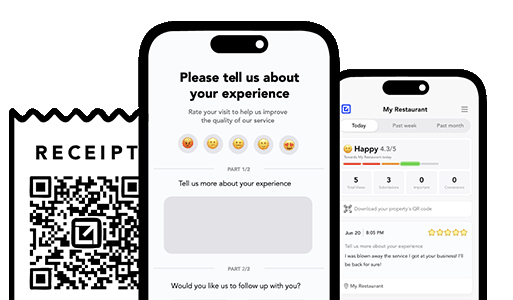
TLDR: Most pest control companies avoid asking for referrals because it feels awkward. The fix is timing and wording: ask right after a successful resolution (when the customer has relief), keep it short, and make the ‘yes’ easy. This article gives simple referral scripts for SMS, email, and in-person asks, plus a practical process: confirm the issue is resolved, send a quick thank-you, then ask for one introduction to a neighbor, friend, or family member. You’ll also learn what not to say (no guilt, no big ‘help us’ speeches), how to offer a small incentive without making it weird, and how VisibleFeedback can help by triggering referral asks only after a positive confirmation, tracking who referred who, and keeping the ask consistent across your team.
The Only Time Referral Asks Work Reliably: After Relief
Referrals don’t happen when customers “liked the tech.”
They happen when customers feel relief:
- the ants stopped
- the roaches dropped off
- the rodent noise is gone
- the mosquito bites noticeably reduced
That relief creates a moment where the customer thinks: “Thank God. That was stressful.”
That’s when your referral ask feels natural—because it’s attached to an outcome, not a sales pitch.
The Simple Referral Ask Process (Use This Every Time)
This process prevents you from asking at the wrong time.
1) Confirm resolution (“are we all set now?”)
2) Thank them (one sentence)
3) Ask for one referral (not ten)
4) Make the yes easy (a link, a name, or a “forward this text”)
If you skip #1, you’ll ask someone for referrals while they’re still annoyed. That’s dumb.
Step 1: Confirm the Outcome (Short)
SMS confirmation
Quick check — are we all set now?
Yes / No
Only send referral asks to “Yes” customers.
Step 2: Thank You + Referral Ask (SMS Templates)
Keep SMS asks extremely short.
Template A: “Neighbor” angle (best for local services)
Awesome — glad it’s resolved. If you have a neighbor who could use reliable pest control, want me to send you a quick link you can forward?
Template B: Direct ask with easy action
Great to hear. If you know anyone dealing with pests right now, can you send them this? We’ll take good care of them:
[Referral Link]
Template C: One-name introduction
Glad we got it handled. If someone you know needs help, reply with their first name and I’ll send you a short message you can forward.
This reduces effort and makes customers more likely to say yes.
Email Referral Ask Templates (For Customers Who Prefer Email)
Email is better when you want a slightly more formal tone.
Email subject lines
- “Quick question”
- “Small favor?”
- “Know anyone who needs help with pests?”
Email body
Hi [Name],
I’m glad everything is resolved.
If you know anyone who could use reliable pest control, we’d really appreciate an introduction. You can forward this link to them:
[Referral Link]
Thanks again,
[Signature]
Don’t write a novel. Nobody reads it.
In-Person Referral Ask (Technician Script)
Techs can ask right at the end, but only if the job clearly went well.
Script
“Before I go—if you have a neighbor or friend who needs pest control, we’d really appreciate the referral. If you want, I can text you a link you can forward.”
It’s simple and non-pushy. It also gives them an easy out.
What to Avoid (Referral-Killers)
These are common and they backfire.
- “We’re a small business, please help us.” (guilt)
- “Can you refer us to everyone you know?” (too big)
- “If you refer someone today you get…” (too transactional)
- asking while the customer is still uncertain (“not sure if it worked yet”)
The referral ask should feel like: “Hey, if you know someone, we’ll take care of them too.”
Not: “Please do marketing for us.”
Incentives: Optional, But Don’t Make It Weird
You can offer a small credit, but keep it clean.
Incentive SMS (light)
If you do send someone our way, we’ll add a $[X] credit to your account as a thank-you.
Don’t lead with the incentive. Lead with the outcome and the ask.
Also: if your margins are thin, skip incentives. A clean ask after a good outcome still works.
The Best Referral “Triggers” in Pest Control
These are moments with the highest success rate:
- after a follow-up visit resolves lingering activity
- after a first-time customer says “improved”
- after a quarterly customer says “all good” consistently
- after a rodent issue is fully resolved (relief is high)
Avoid asking:
- immediately after the first spray
- during an active complaint thread
- right after a scheduling mistake
Make Referrals Operational (So It’s Not Random)
If you want referrals to be consistent, you need a rule:
- referral ask goes out within 24 hours of a confirmed positive outcome
That can be manual, but most teams will forget. Consistency beats creativity here.
Track:
- how many “confirmed” outcomes you get
- how many referral asks you send
- how many referrals those asks generate
How VisibleFeedback Helps Referral Asks
VisibleFeedback makes referral asks less awkward because it can:
- trigger the ask only after a customer confirms resolution
- keep the timing consistent (no one forgets)
- log the referral source (who referred who)
- keep messaging short and uniform across your team
It turns referrals into a simple step in the service loop, not a random “maybe ask if you remember” moment.
Bottom Line
Pest control referrals work when they’re tied to relief.
Use this process:
- confirm it’s resolved
- thank them
- ask for one introduction
- make it easy to forward a link
Do that consistently and referrals become a predictable channel, not luck.