TLDR: Pest control companies lose customers between treatments not because the service was bad, but because nobody stayed in touch. The industry average retention rate hovers around 70-80%, which means a 500-customer book loses 100-150 customers every year — $30,000 to $48,000 in recurring revenue walking out the door. The four main reasons customers leave are simple: they forget, nobody follows up, no relationship exists beyond the transaction, and a competitor shows up at the right moment. The five fixes are equally simple: send a follow-up after every treatment, schedule the next appointment before leaving the current one, send a reminder two weeks before the next treatment is due, collect feedback and act on it, and add one helpful touchpoint between treatments. Reducing churn from 25% to 15% on a 400-customer book recovers $16,000 in annual revenue — from customers you already had.
Your tech sprays the baseboards, treats the perimeter, and leaves a door hanger. Three months later, the customer is supposed to call and schedule their next quarterly treatment. They do not call. You do not call. And quietly, they become someone else’s customer.
This is not a service quality problem. It is a silence problem. And it is costing pest control companies thousands of dollars a year in lost recurring revenue.
The Real Cost of Losing Pest Control Customers
Pest control is one of the few trades where recurring revenue is built into the business model. Quarterly treatments, annual contracts, seasonal mosquito or termite work — the whole business depends on customers coming back on a schedule.
But the industry average for pest control customer retention hovers around 70-80%. That means if you have 500 quarterly customers, you are losing 100 to 150 of them every year. Not because you did a bad job. Because nobody stayed in touch.
Run the math on your own numbers. If your quarterly treatment costs $75 to $120, each lost customer represents $300 to $480 in annual revenue. Multiply that by 100 customers and you are looking at $30,000 to $48,000 walking out the door every year. That is revenue you already earned once — customers who already said yes — and now you have to spend marketing dollars to replace them.
Acquiring a new pest control customer costs five to ten times more than keeping one. Every customer who drifts away costs you twice: the revenue you lose and the money you spend finding a replacement.
Why Pest Control Customers Actually Leave
Here is what most pest control owners assume: customers leave because a competitor offered a cheaper price or because the treatment did not work. That happens sometimes. But it is not the main reason.
The main reasons are quieter and more preventable.
They Forget
Three months is a long time. Your customer gets a treatment in January, and by April they have genuinely forgotten. No bugs in the house means the problem is “fixed” in their mind. They do not think about pest control again until they see a roach in July — and by then they are Googling “pest control near me” instead of pulling up your number.
No One Follows Up
Most pest control companies have no system for checking in between treatments. The customer gets a service, the tech moves on, and there is zero communication until the next appointment — if the next appointment even gets scheduled.
Three months of silence tells a customer one thing: you do not care about them outside of the invoice.
No Relationship Exists
Think about it from the customer’s perspective. They met your tech for 20 minutes. Maybe exchanged a few words. The tech did the work and left. There is no relationship. No connection. Your company is interchangeable with the next one that shows up in a search result.
Without touchpoints between treatments, you are just a commodity. And commodities get replaced by whoever is cheaper or more convenient.
A Competitor Makes It Easy
Your customer did not go looking for a new pest control company. But one knocked on their door, left a flyer, or ran a Facebook ad at exactly the right moment. Because they had no particular loyalty to you — no recent communication, no relationship — switching felt like no big deal.
You did not lose that customer to a better company. You lost them to a more visible one.
Five Fixes That Keep Pest Control Customers Coming Back
None of these are complicated. They just need to happen consistently.
1. Send a Follow-Up After Every Treatment
This is the single highest-impact change you can make. Within 24 hours of every treatment, send a short message:
“Hi [Name], this is [Company]. Just checking in after today’s treatment — everything look good? If you notice any pest activity over the next few days, let us know and we’ll take care of it.”
That message does three things. It shows the customer you care about the result, not just the payment. It opens a private channel for them to report concerns instead of writing a bad review. And it gives you a reason to be in their inbox, which keeps your company name top of mind.
A simple follow-up text takes 30 seconds but can be the difference between a customer who stays for years and one who disappears in silence.
2. Schedule the Next Treatment Before Leaving the Current One
This is Sales 101 for recurring service businesses, but a surprising number of pest control companies skip it. Before your tech leaves the property, the next quarterly treatment should already be on the calendar.
If your techs are not booking the next appointment on-site, you are relying on the customer to call you back in three months. That is a bet you will lose more often than you win.
Give your techs a simple script: “You’re all set. Your next treatment is due in [month]. I’m going to get that on the schedule for you — does [date] work, or would you prefer we call you the week before to confirm?”
That takes 15 seconds and it changes the dynamic entirely. The customer is not deciding whether to come back. They are deciding which day works best.
3. Send a Reminder Two Weeks Before the Next Treatment Is Due
Even if the next treatment is scheduled, send a reminder. People forget appointments. Plans change. A reminder two weeks out gives the customer time to confirm, reschedule, or ask questions — and it prevents no-shows that waste your tech’s time.
“Hi [Name], just a heads up — your next quarterly treatment is coming up on [date]. We’ll see you then. Need to reschedule? Just reply to this message.”
This is one of those small touches that separates companies with strong pest control customer retention from ones that are constantly backfilling their schedule. Customers appreciate the reminder. It feels professional. And it drastically cuts down on the number of people who simply forget and fall off.
4. Collect Feedback and Act On It
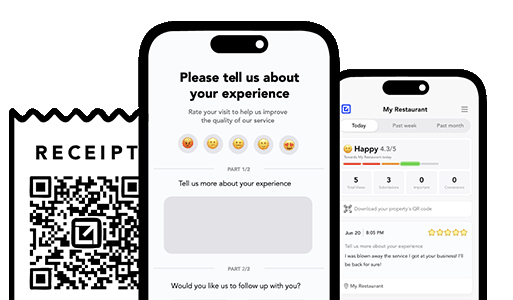
After a treatment, ask the customer how it went. Not with a 20-question survey. A single question: “How was your experience today? Any concerns?”
Here is why this matters beyond politeness. Feedback is an early warning system. If a customer is unhappy but says nothing, they are already halfway out the door. If you ask and they tell you the tech tracked mud through the kitchen or left the gate open, you can fix it. That customer stays.
The pest control companies that collect feedback consistently catch problems before they become cancellations. They also discover what their best techs are doing right — which helps train the rest of the team.
If a customer gives positive feedback, that is your opening to ask for a Google review. Happy customers will leave reviews when you make it easy and timely. Customers who hear from you only at billing time will not.
5. Add Value Between Treatments
You do not need to spam your customers. But one helpful touchpoint between treatments makes a noticeable difference in pest control customer retention.
A seasonal tip email works well: “It’s getting warmer and ants are going to start looking for ways inside. Here are three things you can do between treatments to keep them out.” Include a line at the bottom: “Your next quarterly treatment is scheduled for [date].”
You have just added value, reminded them you exist, and confirmed their next appointment — all in one message. That customer is not going anywhere.
How Systematic Follow-Up Changes the Math
Let’s say you have 400 quarterly customers and you are losing 25% of them each year. That is 100 customers gone, and at $400 per year each, that is $40,000 in lost pest control recurring revenue.
Now imagine you implement consistent follow-ups, appointment reminders, and feedback collection. You do not have to cut churn to zero. Just reducing it from 25% to 15% means you keep 40 more customers. That is $16,000 in recovered annual revenue — from customers you already had.
And those saved customers keep paying the next year too. And the year after that. Over three years, those 40 customers are worth $48,000. The compounding effect of even a modest improvement in retention is enormous.
The pest control companies growing fastest right now are not the ones spending the most on ads. They are the ones who keep the customers they already won.
Key Takeaways
- Pest control customer churn is mostly caused by silence between treatments, not bad service.
- The cost of lost customers adds up fast — a 25% churn rate on a 400-customer book means $40,000 gone every year.
- Follow up after every treatment. One message can prevent a cancellation.
- Schedule the next treatment before leaving the current one. Do not rely on the customer to call you back.
- Send reminders before upcoming treatments. People forget. Make it easy for them to stay.
- Collect feedback to catch problems early and turn happy customers into reviewers.
- Add value between treatments with seasonal tips and service reminders.
Most of these fixes are simple. The challenge is doing them consistently for every customer, every time. That is where most pest control companies struggle — not because they do not care, but because the office is busy and things fall through the cracks. VisibleFeedback automates the follow-up and reminder steps so every customer hears from you after every treatment and gets a reminder before the next one is due. It takes about 10 minutes to set up and runs in the background from there.