🚀 Start Here For Help

Whether you’re dealing with callbacks, unhappy customers, or low repeat work, we’ll help you tighten the follow up loop.

Turn Jobs Into Repeat Work

VisibleFeedback automatically texts or emails customers after every job.

  • Automated texts or emails post job
  • Catch issues before they go public
  • Reminders that drive repeat jobs
Send My First Follow Up
14 day trial, no credit card required

Recent HVAC Insights

1/10/2026
HVAC

Best HVAC Follow-Up Software: What to Look For (and What Most Tools Miss)

A practical checklist for HVAC follow-up software: follow-ups, issue recovery, reminders, and review requests—plus what most tools don’t handle well.

1/10/2026
HVAC

Dispatch-Friendly HVAC Issue Inbox: Assignment + Escalation Rules That Work

A simple issue inbox model for HVAC dispatch: clear ownership, tight escalation triggers, and daily habits that keep response times low.

1/10/2026
HVAC

Handling “It’s Still Not Cooling” Complaints: A Fast HVAC Response Playbook

A fast, calm triage workflow for “still not cooling” complaints that reduces callbacks, prevents bad reviews, and keeps conversations private.

1/10/2026
HVAC

How HVAC Companies Reduce Callbacks With a 2-Message Follow-Up

Two short messages catch most HVAC issues early: a same-day functional check and a day-two confirmation after the system has had time to run.

1/10/2026
HVAC

HVAC Customer Education Follow-Ups: Reduce Repeat Calls With One Helpful Message

One short educational follow-up after service can eliminate a surprising number of repeat calls: thermostat confusion, filter questions, normal noises, and “is this okay?” worries.

1/10/2026
HVAC

HVAC Follow-Up Templates: Texts and Emails for Repairs, Installs, and Tune-Ups

Copy/paste HVAC follow-up texts and emails for repairs, installs, and tune-ups—designed to prevent callbacks, protect reviews, and drive repeat work.

1/10/2026
HVAC

HVAC Install Follow-Up Checklist: What to Ask After a System Replacement

A practical post-install checklist that catches comfort issues, confusion, and workmanship problems early—before they turn into regret, refunds, or chargebacks.

1/10/2026
HVAC

HVAC Maintenance Reminders: Campaigns That Book More Tune-Ups

A practical reminder playbook for HVAC companies: 30/60/90 cadences tied to filters, seasonal checkups, and memberships—without sounding spammy.

1/10/2026
HVAC

HVAC Review Requests (Done Right): When to Ask and What to Say

HVAC review growth without sketchy tactics: consistent asks, smart timing by job type, and simple scripts that don’t sound needy.

1/10/2026
HVAC

HVAC Service Membership Retention: Follow-Ups That Keep Customers Renewing

Membership retention isn’t “send more promos.” It’s a simple post-service follow-up flow that proves value, resolves friction fast, and makes renewal feel obvious.

Show more insights
How HVAC Companies Reduce Callbacks With a 2-Message Follow-Up
© Photo by ThisisEngineering RAEng on Unsplash

How HVAC Companies Reduce Callbacks With a 2-Message Follow-Up

TLDR: Callbacks kill HVAC margin and create bad reviews because they usually start as small problems that weren’t caught fast enough: the system isn’t holding temp, airflow feels weak, a thermostat setting is confusing, a noise shows up at night, or the customer thinks the repair didn’t “really” fix it. A simple 2-message follow-up reduces callbacks by catching those issues early, before they become angry phone calls or public complaints. The workflow is tight: send a same-day functional check-in after the job (1–3 hours post-completion) and a day-two confirmation after the system has run through normal cycles. Use short yes/no or one-tap prompts, route “No” into immediate contact, and log outcomes so patterns show up. This article explains the exact timing, scripts, and handling rules for emergency repairs, standard repairs, and installs. It also shows how VisibleFeedback automates the loop: one-tap capture, instant alerts, and simple status tracking until resolution.


Why a 2-Message Follow-Up Works So Well in HVAC

Most HVAC issues that become callbacks fall into one of three buckets:

  • The job didn’t fully solve the problem (or the customer thinks it didn’t)
  • Something changes after the system runs longer (night cycle, humidity, longer runtime)
  • The customer is confused (thermostat, staging, “it feels different,” expectations)

The fix isn’t a long survey. It’s a fast signal + a second confirmation after the system has had time to behave normally.

Two messages are enough because they map to reality:

  • Message 1 catches immediate failures and misunderstandings
  • Message 2 catches “it came back” and “it’s not holding temp” issues after normal cycles

You’re not trying to collect perfect data. You’re trying to prevent surprises.


The Workflow (Keep It Tight)

This is the whole system:

1) Same-day functional check (1–3 hours after completion)
2) Day-two confirmation (about 24–36 hours later)
3) If either message comes back negative, contact quickly and schedule next steps
4) Log the outcome so you reduce future callbacks

That’s it. No spam. No marketing blast. Just customer service.


Message 1: Same-Day Functional Check (1–3 Hours Post-Job)

What you’re checking for

This message is designed to catch:

  • system not running at all
  • still no heat/no cool
  • immediate noise/smell concerns
  • customer uncertainty (“should it sound like this?”)
  • expectation mismatch (“it’s not 68 yet”)

Script options (pick one)

Use yes/no for emergencies and repairs. It’s simpler.

Repair / emergency (yes/no)

Hey [Name] — quick check: is the system running normally now?
Yes / No

Install (one-tap)

Hey [Name] — quick check-in on the new system: how’s everything going so far?
🙂 Great 😐 Okay 🙁 Not good

If they say “No” or tap negative

You don’t argue. You triage.

Triage prompt

Got it. What are you seeing?
Not heating/cooling / Not holding temp / Weak airflow / Strange noise / Other

Then you contact. Fast.


Message 2: Day-Two Confirmation (24–36 Hours Later)

Why day two is the sweet spot

Day two catches issues that don’t show up immediately:

  • overnight temperature swings
  • humidity complaints
  • intermittent cycling issues
  • drain/float switch problems after runtime
  • noise that only happens at certain stages
  • “it worked yesterday, now it’s off”

It also catches perception problems before they harden into anger.

Script options (keep it short)

Repairs (yes/no)

Quick follow-up, [Name] — is everything still working normally today?
Yes / No

Installs (one-tap)

Checking in again now that it’s had time to run — how’s it going today?
🙂 Great 😐 Okay 🙁 Not good

If they respond negative

Don’t ask them to type a paragraph. Ask one structured question.

Thanks — what’s the main issue?
Not holding temp / Airflow / Noise / Thermostat confusion / Other

Then assign an owner and schedule the next action.


Handling Rules (So It Doesn’t Turn Into a Mess)

A two-message system only works if the internal handling is disciplined.

Basic rules:

  • Every negative response gets an owner immediately
  • Every owned issue gets a due time
  • Don’t mark anything resolved until the customer confirms (or you have strong confirmation)

A simple internal status flow:

  • New → Acknowledged → Contacted → Resolved

If you don’t run a basic status flow, you’ll collect “feedback” and still drop issues.


Job-Type Variations (Repair vs Emergency vs Install)

Emergency no-heat/no-cool

Use message 1 as a functional check, message 2 as “still stable?”
This reduces late-night “it stopped again” calls.

Message 1:

Is the system running normally now? Yes/No

Message 2:

Is it still holding temperature today? Yes/No

Standard repairs

Same workflow, but you can tighten the language around the specific outcome:

  • “Is it cooling the way you expected?”
  • “Is the thermostat behaving normally?”

Installs

Installs have more “settling time” issues, so keep message 1 gentle and message 2 more specific.

Message 1:

How’s everything going so far? 🙂😐🙁

Message 2:

Is it holding temperature and running the way you expected today? Yes/No


Examples of Common “Saved Callback” Situations

These are the kinds of issues this catches early:

  • Customer can’t figure out thermostat schedule → you walk them through it and avoid a callback
  • Drain line starts backing up after runtime → you fix before it shuts system down
  • A minor vibration/rattle at night → you tighten a panel and avoid a bad review
  • Customer expects instant temp change → you explain staging and set expectations
  • Weak airflow complaint reveals a closed register/dirty filter → quick fix, no return trip

Most callbacks aren’t catastrophic. They’re small, neglected issues that escalate.


Logging Outcomes (So You Reduce Callbacks Over Time)

If you want the system to get better month over month, log outcomes with simple categories:

  • Not holding temp
  • Airflow
  • Noise
  • Thermostat confusion
  • Communication/expectations
  • Workmanship/parts

After 30 days, you’ll see patterns:

  • one tech causing most noise callbacks
  • a thermostat brand confusing customers
  • a specific repair type producing repeat complaints

That’s how you reduce callbacks structurally, not just case-by-case.


Where VisibleFeedback Fits

You can run this manually with a texting tool and a spreadsheet. Most teams won’t do it consistently.

VisibleFeedback makes the 2-message loop easier by:

  • sending message 1 and message 2 automatically on schedule
  • using one-tap feedback so response rates stay high
  • alerting you instantly on negative signals
  • tracking issues through a simple status flow until resolution
  • prompting a confirmation message so “resolved” actually means resolved

The value isn’t “more messages.” It’s fewer surprises and fewer wasted trips.


Bottom Line

A 2-message follow-up is one of the simplest callback reducers in HVAC:

  • Same-day functional check
  • Day-two confirmation

It’s short, it’s low-annoyance, and it catches the exact issues that become callbacks and bad reviews. If you want it running consistently without babysitting it, VisibleFeedback exists to automate the loop.
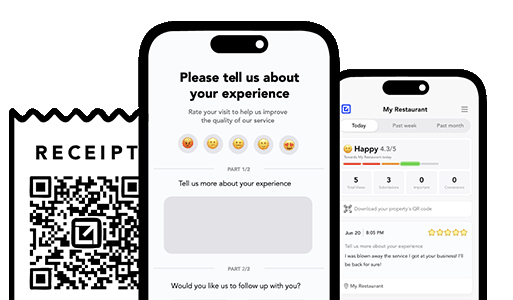
VisibleFeedback running on iphones

Turn Jobs Into Repeat Work

Text or email clients after every job. Catch issues early, recover unhappy clients fast, and drive repeat work with smart reminders.

No card needed, cancel any time

Related articles

After-Treatment Follow-Ups: What to Ask Without Triggering Complaints

1/10/2026

The right after-treatment questions reduce complaints by setting expectations, keeping effort low, and giving customers a calm path to help if activity continues.

How to Ask for Reviews Without Being Shady (And Without Review Gating)

1/10/2026

A clean, compliant way to request reviews that builds trust, avoids review gating, and still protects your reputation.

Best HVAC Follow-Up Software: What to Look For (and What Most Tools Miss)

1/10/2026

A practical checklist for HVAC follow-up software: follow-ups, issue recovery, reminders, and review requests—plus what most tools don’t handle well.

People also ask

How can I prevent negative reviews from hurting my business? You can’t stop every unhappy customer from sharing feedback, but you can intercept it before it goes public. Tools like VisibleFeedback allow customers to scan a QR code and leave feedback privately. If the feedback is negative, you’re alerted instantly so you can resolve the issue before it turns into a 1-star review.
Why are customer reviews so important for local SEO? Reviews are one of the top local ranking factors on Google. Businesses with consistent positive reviews rank higher in search results and attract more customers. By using VisibleFeedback to capture happy customer moments and guide them to Google or Yelp, you build a steady flow of authentic reviews that improve both your reputation and your local SEO.
What’s the best way to collect customer feedback in 2025? Traditional methods like comment cards and long surveys don’t work anymore, customers want convenience. The easiest way to collect real-time feedback in 2025 is by using QR codes and mobile-friendly forms. VisibleFeedback makes this simple, helping you get instant insights while turning satisfied customers into 5-star reviewers.
Authored by Austin Spaeth

Austin Spaeth

Austin Spaeth is the founder of VisibleFeedback, a tool that helps service companies automate post-job follow-ups, catch issues early, and drive repeat work with smart reminders. With a background in software development and a focus on practical customer retention systems, Austin built VisibleFeedback to make it easy to text or email customers after every job, route problems to the right person, and keep relationships strong without awkward outreach. When he’s not building new features or writing playbooks for service businesses, he’s wrangling his six kids or sneaking in a beach day.

🚀 What's your goal? Get a plan ...

🚀 Start Here For Help

Whether you’re dealing with callbacks, unhappy customers, or low repeat work, we’ll help you tighten the follow up loop.

×

👋 Wait! Before You Go

Send your first follow up today! Catch issues early and drive repeat work.

No credit card required.