🚀 Start Here For Help

Whether you’re dealing with callbacks, unhappy customers, or low repeat work, we’ll help you tighten the follow up loop.

Turn Jobs Into Repeat Work

VisibleFeedback automatically texts or emails customers after every job.

  • Automated texts or emails post job
  • Catch issues before they go public
  • Reminders that drive repeat jobs
Send My First Follow Up
14 day trial, no credit card required

Recent HVAC Insights

1/10/2026
HVAC

Best HVAC Follow-Up Software: What to Look For (and What Most Tools Miss)

A practical checklist for HVAC follow-up software: follow-ups, issue recovery, reminders, and review requests—plus what most tools don’t handle well.

1/10/2026
HVAC

Dispatch-Friendly HVAC Issue Inbox: Assignment + Escalation Rules That Work

A simple issue inbox model for HVAC dispatch: clear ownership, tight escalation triggers, and daily habits that keep response times low.

1/10/2026
HVAC

Handling “It’s Still Not Cooling” Complaints: A Fast HVAC Response Playbook

A fast, calm triage workflow for “still not cooling” complaints that reduces callbacks, prevents bad reviews, and keeps conversations private.

1/10/2026
HVAC

How HVAC Companies Reduce Callbacks With a 2-Message Follow-Up

Two short messages catch most HVAC issues early: a same-day functional check and a day-two confirmation after the system has had time to run.

1/10/2026
HVAC

HVAC Customer Education Follow-Ups: Reduce Repeat Calls With One Helpful Message

One short educational follow-up after service can eliminate a surprising number of repeat calls: thermostat confusion, filter questions, normal noises, and “is this okay?” worries.

1/10/2026
HVAC

HVAC Follow-Up Templates: Texts and Emails for Repairs, Installs, and Tune-Ups

Copy/paste HVAC follow-up texts and emails for repairs, installs, and tune-ups—designed to prevent callbacks, protect reviews, and drive repeat work.

1/10/2026
HVAC

HVAC Install Follow-Up Checklist: What to Ask After a System Replacement

A practical post-install checklist that catches comfort issues, confusion, and workmanship problems early—before they turn into regret, refunds, or chargebacks.

1/10/2026
HVAC

HVAC Maintenance Reminders: Campaigns That Book More Tune-Ups

A practical reminder playbook for HVAC companies: 30/60/90 cadences tied to filters, seasonal checkups, and memberships—without sounding spammy.

1/10/2026
HVAC

HVAC Review Requests (Done Right): When to Ask and What to Say

HVAC review growth without sketchy tactics: consistent asks, smart timing by job type, and simple scripts that don’t sound needy.

1/10/2026
HVAC

HVAC Service Membership Retention: Follow-Ups That Keep Customers Renewing

Membership retention isn’t “send more promos.” It’s a simple post-service follow-up flow that proves value, resolves friction fast, and makes renewal feel obvious.

Show more insights
Dispatch-Friendly HVAC Issue Inbox: Assignment + Escalation Rules That Work
© Photo by Berkeley Communications on Unsplash

Dispatch-Friendly HVAC Issue Inbox: Assignment + Escalation Rules That Work

TLDR: Most HVAC teams don’t have an issue-tracking problem—they have an ownership problem. Complaints, follow-ups, and ‘still not working’ messages land in too many places (calls, texts, voicemails, Google messages), and nobody is sure who owns the next step. That’s how response time explodes and small problems become public fights. The fix is a dispatch-friendly issue inbox: one place where every issue enters, a single owner assigned immediately, a small set of escalation rules for high-risk situations, and a daily routine that clears the backlog. This article gives you a practical model: the statuses to use, which issues dispatch owns vs which go to tech leads or managers, the exact escalation triggers (no-cool/no-heat, water leaks, breaker trips, chargeback/review threats), and templates for fast acknowledgement. You’ll also see how VisibleFeedback can act as the intake layer by capturing one-tap feedback, alerting dispatch instantly, and keeping a clear timeline until resolution.


Why Dispatch Needs an “Issue Inbox”

Dispatch is already the routing brain of an HVAC business. But most teams treat post-job issues like random noise:

  • a voicemail here
  • a text thread there
  • a tech telling someone “call the office”
  • a customer DM’ing your Google Business profile

When issues arrive in multiple places, two bad things happen:

  • response time becomes unpredictable
  • nobody owns the next action

An “issue inbox” fixes this by turning every customer problem into a trackable item with:

  • a single owner
  • a status
  • a next action and due time
  • an escalation path

This is less about software and more about discipline.


The One Rule That Matters: One Place for Intake

You can’t keep response times low if issues enter in five different places.

Pick one intake destination. Options:

  • a shared email address (support@ / dispatch@)
  • a shared phone inbox with call logging
  • a ticket view in your CRM
  • VisibleFeedback as the intake layer for follow-ups and feedback

Even if issues still arrive elsewhere, the policy is:

  • capture it into the inbox immediately
  • then handle it from the inbox

If you don’t force this, dispatch will constantly context-switch and things will slip.


The Status Flow (Simple on Purpose)

Use a small set of statuses with strict definitions:

  • New: issue received, not owned yet
  • Acknowledged: customer has been told “we’re on it”
  • Contacted: real conversation happened + plan set
  • Waiting: blocked (customer, parts, access) with a next follow-up time
  • Resolved: fixed + customer confirmed (or strong confirmation)

If you want a minimal version, you can omit Waiting, but it’s useful for keeping the inbox honest.

The point is that every open issue must have a next action and due time.


Assignment Rules: Who Owns What

Dispatch should own the inbox. That doesn’t mean dispatch fixes everything. It means dispatch is responsible for:

  • triage
  • assignment
  • ensuring movement through the flow

Here’s a practical ownership map.

Dispatch owns (default)

  • scheduling issues (late arrival, reschedule requests)
  • thermostat confusion / basic usage questions
  • follow-up negative ratings that are “communication” or “expectations”
  • “what’s the status?” messages
  • low-severity complaints that just need contact and a plan

Dispatch actions:

  • acknowledge immediately
  • gather quick info
  • schedule return visit if needed
  • route to tech lead/manager when required

Tech lead owns

  • repeated “still not cooling/heating” complaints after a visit
  • suspected misdiagnosis
  • “it worked then stopped”
  • nuisance but technical issues (noise, airflow imbalance) that need judgment
  • anything that might require a different tech than the original

Dispatch actions:

  • capture triage answers
  • assign to tech lead with a due time
  • keep customer updated on timing

Service manager / owner owns

  • chargeback threats, legal threats, “I’m leaving a review”
  • refunds/credits beyond a threshold
  • property damage claims
  • safety issues where liability exists
  • VIP / commercial accounts with high downside

Dispatch actions:

  • escalate immediately
  • keep customer warm with short acknowledgement
  • schedule the manager call, don’t “leave a note”

Original tech owns (optional rule)

Some companies like “tech who touched it owns it.” It can work, but only if dispatch still controls the inbox and holds due times.

If you do this:

  • dispatch assigns to tech
  • tech must contact customer within SLA
  • dispatch follows up if not done

Never let “tech owns it” become “tech disappears.”


Escalation Triggers (Concrete, Non-Negotiable)

If you want low response times, you need escalation rules that are automatic, not emotional.

Escalate immediately if any of these appear:

  • “Still not cooling” / “Still no heat” after a paid visit
  • Water where it shouldn’t be (leaks, overflow, ceiling stains)
  • Breaker trips / burning smell / electrical safety concern
  • Ice on lines + system shutting down repeatedly
  • “I’m disputing the charge” / “chargeback” / “BBB” / “lawsuit”
  • “I’m leaving a review” (especially if angry)
  • Medical vulnerability (elderly, infants, health-related urgency)
  • Commercial refrigeration / mission-critical accounts (if you handle them)

For these, the goal is:

  • same-day contact, even if same-day fix isn’t possible
  • clear plan and time window
  • escalation owner assigned instantly

If you treat these like normal tickets, you’ll create public blowups.


Triage Questions Dispatch Should Ask (Fast, Structured)

Dispatch should gather just enough info to route correctly, not run full tech support.

“Still not cooling” triage (ask in 60 seconds)

1) Is the thermostat set to COOL and below room temp?
2) Is the indoor fan running?
3) Is the outdoor unit running?
4) Current indoor temp and set temp?
5) Any ice, water, or breaker trips?

That’s enough to determine severity and who to send.

“Noise” triage

  • When does it happen (start/stop, constant, only at night)?
  • Indoor or outdoor?
  • Any vibration/rattle visible?

“Airflow/comfort imbalance” triage

  • Whole house or specific rooms?
  • Filter changed recently?
  • Any vents closed/blocked?

Keep it short. Your job is routing, not diagnosing.


Response Time Rules (SLAs That Dispatch Can Actually Hit)

If you want response times low, define a small SLA set.

Practical targets:

  • High-risk issues: acknowledge within 10 minutes during business hours, contact within 60 minutes
  • Standard issues: acknowledge within 60 minutes, contact same day
  • Waiting issues: next follow-up time must exist (no open-ended waiting)

You don’t need perfect numbers. You need consistency and visibility.


The “Ack Fast” Templates (Dispatch Copy/Paste)

Acknowledgement matters because it buys you time and reduces review risk.

Default acknowledgement

Thanks for reaching out — we’re on it. I’m going to ask a couple quick questions and then we’ll get a plan in place.

High-urgency acknowledgement (no cool / no heat)

Got it. I understand this is urgent. I’m taking ownership and we’ll get you taken care of. I’m going to ask a couple quick questions so we can move fast.

De-escalation acknowledgement (review/chargeback threat)

I understand. We want to make this right. I’m escalating this now and someone will call you shortly with the next step.

Notice what’s missing: defensiveness. You can investigate later. First you stabilize the situation.


The Daily Routine (10 Minutes, Non-Optional)

You keep response times low by keeping the inbox clean.

Once per day (morning is best): 1) Clear all New items (assign owner + send acknowledgement)
2) Review Acknowledged items (ensure contact scheduled today)
3) Review Contacted items (ensure next action exists)
4) Review Waiting items (ensure follow-up time exists)
5) Close Resolved items only after confirmation

This prevents “we’ll handle it tomorrow” from becoming “they ignored me.”


Simple Implementation Options (From Scrappy to Clean)

You can run this on almost anything if the rules are enforced.

  • Shared spreadsheet + one shared email intake (scrappy but works)
  • Trello board with statuses as columns (easy visibility)
  • CRM pipeline (if your CRM supports custom stages)
  • VisibleFeedback as the feedback intake + status workflow for follow-ups

The tool doesn’t matter as much as:

  • one intake
  • one owner per issue
  • strict escalation triggers
  • daily review

How VisibleFeedback Fits (As the Intake Layer + Workflow)

If you’re running follow-ups, VisibleFeedback can be the cleanest way to feed the issue inbox because it:

  • captures customer feedback with one tap (high response rate)
  • alerts dispatch instantly on negative signals
  • categorizes issues so triage is faster
  • provides a clear status timeline (New → Acknowledged → Contacted → Resolved)
  • supports confirmation messages so “resolved” isn’t assumed

That means dispatch isn’t hunting through text threads. They’re working an inbox.


Bottom Line

If you want dispatch to keep response times low, you need rules that remove ambiguity:

  • one intake destination
  • one owner assigned immediately
  • strict escalation triggers for high-risk issues
  • a simple status flow with due times
  • a daily routine that clears the backlog

Do that and you’ll prevent most small issues from turning into callbacks, chargebacks, or public fights.
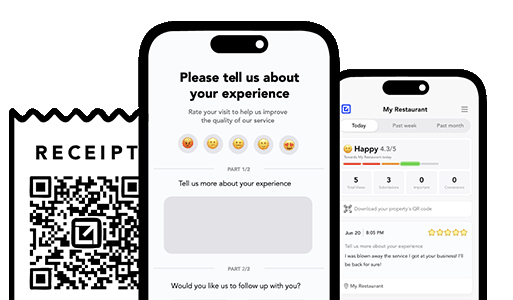
VisibleFeedback running on iphones

Turn Jobs Into Repeat Work

Text or email clients after every job. Catch issues early, recover unhappy clients fast, and drive repeat work with smart reminders.

No card needed, cancel any time

Related articles

Best Pest Control Follow-Up Software: Features That Drive Retention

1/10/2026

Most “follow-up tools” send messages. The best pest control follow-up software drives retention by closing the loop: check-ins, recovery, confirmation, and renewals.

Issue Tracking for Small Service Teams: Statuses That Prevent Problems From Slipping

1/10/2026

A lightweight status flow that keeps customer issues visible, owned, and resolved—without needing a complicated ticketing system.

The Post-Job Follow-Up Loop: A Simple System That Works

1/10/2026

A one-tap follow-up loop that catches complaints privately, keeps customers happy, and drives repeat business and reviews.

People also ask

How can I prevent negative reviews from hurting my business? You can’t stop every unhappy customer from sharing feedback, but you can intercept it before it goes public. Tools like VisibleFeedback allow customers to scan a QR code and leave feedback privately. If the feedback is negative, you’re alerted instantly so you can resolve the issue before it turns into a 1-star review.
Why are customer reviews so important for local SEO? Reviews are one of the top local ranking factors on Google. Businesses with consistent positive reviews rank higher in search results and attract more customers. By using VisibleFeedback to capture happy customer moments and guide them to Google or Yelp, you build a steady flow of authentic reviews that improve both your reputation and your local SEO.
What’s the best way to collect customer feedback in 2025? Traditional methods like comment cards and long surveys don’t work anymore, customers want convenience. The easiest way to collect real-time feedback in 2025 is by using QR codes and mobile-friendly forms. VisibleFeedback makes this simple, helping you get instant insights while turning satisfied customers into 5-star reviewers.
Authored by Austin Spaeth

Austin Spaeth

Austin Spaeth is the founder of VisibleFeedback, a tool that helps service companies automate post-job follow-ups, catch issues early, and drive repeat work with smart reminders. With a background in software development and a focus on practical customer retention systems, Austin built VisibleFeedback to make it easy to text or email customers after every job, route problems to the right person, and keep relationships strong without awkward outreach. When he’s not building new features or writing playbooks for service businesses, he’s wrangling his six kids or sneaking in a beach day.

🚀 What's your goal? Get a plan ...

🚀 Start Here For Help

Whether you’re dealing with callbacks, unhappy customers, or low repeat work, we’ll help you tighten the follow up loop.

×

👋 Wait! Before You Go

Send your first follow up today! Catch issues early and drive repeat work.

No credit card required.