TLDR: Every legitimate roofing company operates in the shadow of storm chasers — out-of-town contractors who flood markets after major weather events, do substandard work, and disappear. The result: homeowners are skeptical of all roofers. This article explains how to differentiate yourself with trust signals that scam artists can’t fake: post-job follow-up, deep review profiles, and fast private issue resolution.
The Damage Storm Chasers Do (To Your Reputation)
You know the pattern. A major storm hits your area. Within 48 hours, trucks with out-of-state plates are cruising neighborhoods. Guys with clipboards knock on doors. They offer free inspections. They promise to “handle everything with insurance.” They quote fast, start fast, and disappear faster.
Six months later, the homeowner discovers:
- Missing flashing
- Wrong shingle type
- No permit pulled
- Warranty that leads to a disconnected phone number
- Leaks that weren’t there before
Who does the homeowner blame? Roofers. Not “that specific out-of-state contractor.” The entire profession.
This creates a trust deficit that every legitimate roofing company has to overcome — every day, with every customer, before any work begins.
What Homeowners Actually Think (The Skepticism Spectrum)
Not every homeowner is equally skeptical. But most fall somewhere on this spectrum:
Level 1: Cautious (50% of homeowners)
“I’ve heard some roofers are shady. I’m going to get multiple quotes and check reviews.” These customers are open but careful. They’ll do research and can be won with good reviews and professional behavior.
Level 2: Guarded (30% of homeowners)
“My neighbor got scammed after the last storm. I don’t trust any of them until I see proof.” These customers want evidence: reviews, photos, references, proof of insurance, warranty documentation. They’re looking for reasons to trust — but they’re equally looking for red flags.
Level 3: Hostile (15% of homeowners)
“Roofers are all crooks. I’m only doing this because I have to.” These customers have been burned before (or know someone who has). They enter the relationship expecting to be disappointed. Every communication gap, delay, or imperfection confirms their bias.
Level 4: Locked out (5% of homeowners)
“I’m not hiring a roofer. I’ll patch it myself or wait until I absolutely have to.” These customers have been so burned by the industry that they avoid it entirely. They’re not in your pipeline — but they are talking about their experience to neighbors.
Your marketing can reach Levels 1 and 2. Your communication system is what reaches Level 3. And converting Level 3 into advocates is where the real competitive advantage lives.
What Storm Chasers Can Fake (And What They Can’t)
Here’s the strategic insight: storm chasers are good at mimicking the surface-level signals of legitimacy. To differentiate, you need to invest in the signals they can’t replicate.
| Trust signal | Can storm chasers fake it? | Why / why not |
|---|
| Professional website | Yes | Cheap to set up, easy to abandon |
| Branded trucks/uniforms | Yes | Temporary wraps, rented equipment |
| Low price / “free inspection” | Yes | That’s their primary tactic |
| Friendly sales pitch | Yes | They hire charismatic closers |
| Insurance paperwork | Somewhat | They know the system, but often cut corners |
| 50+ Google reviews | No | Takes months/years of real work |
| Reviews mentioning follow-up | No | Requires an actual follow-up system |
| Post-job check-in communication | No | They’re gone before the first rain |
| Response to negative reviews | No | No one monitors abandoned profiles |
| Private issue resolution | No | No office to resolve issues with |
| 30-day post-job follow-up | No | They’ve left the state |
| Local references from recent jobs | No | Can’t provide what doesn’t exist |
The bottom section of that table is your competitive moat. Everything above the line is table stakes. Everything below it is proof of legitimacy that storm chasers structurally cannot provide.
The 4 Trust Signals That Prove You’re Legitimate
Trust Signal #1: Review Depth (Not Just Stars)
A 4.8-star average with 150 reviews doesn’t just say “good roofer.” It says “this company has been doing consistent work in this community for a long time.” Storm chasers don’t accumulate 150 reviews because they don’t stay long enough.
But it’s not just the number — it’s the content. Reviews that mention:
- “They checked in the next day”
- “Came back to fix a small issue”
- “Followed up after the first rain”
- “Have used them three times now”
These phrases can’t be faked. They describe an ongoing relationship that storm chasers don’t have.
How to build this: Run a systematic follow-up and review collection process that generates keyword-rich reviews from every job. Over 6-12 months, you’ll have a review profile that screams legitimacy.
Trust Signal #2: Post-Job Communication (The Unfakeable Differentiator)
Storm chasers can’t follow up after a job because they’re not there. They’ve moved to the next storm market. This makes post-job communication the single strongest trust signal a legitimate roofer can offer.
When a homeowner sees in your reviews:
“They texted me the next day to check if everything was okay.” “They followed up after the first big rain.” “Three weeks later they checked in again.”
…they know they’re dealing with a company that plans to be around. That’s the one thing a storm chaser can never demonstrate.
Trust Signal #3: Handling Problems Visibly
Every roofer gets callbacks occasionally. The difference is how you handle them — and whether the handling is visible to future customers.
Storm chasers when a problem is reported: Gone. Phone disconnected. No response.
Legitimate roofers when a problem is reported: Fast response. On-site inspection. Fix under warranty. Follow-up confirmation.
When this shows up in reviews — “Had a small leak after a storm, they came out the next day and fixed it. No charge. That’s a company you can trust.” — it’s more powerful than 100 perfect reviews. It proves you stand behind your work.
Trust Signal #4: Proactive Storm Follow-Up
This is the ultimate legitimacy move: reaching out to past customers after a major storm to check on their roof — even when they haven’t called you.
“Big storm last night — just checking in. How’s the roof holding up? Any signs of damage? We’re scheduling inspections this week if you want us to take a look.”
Storm chasers knock on doors after storms to sell. Legitimate roofers text existing customers after storms to serve. That’s a distinction homeowners feel immediately.

Automate follow ups after every job
Catch issues early and drive repeat work with smart reminders.
How to Make the Skeptical Customer Your Best Advocate
The Level 3 customer — the hostile, previously-burned homeowner — is actually your biggest opportunity. Here’s why:
When a skeptical customer has a great experience, they talk about it. Not just a review — they tell neighbors, family, coworkers. “I finally found a roofer I can trust” is a powerful word-of-mouth message because it acknowledges the industry problem while positioning you as the exception.
Here’s how to convert the skeptic:
During the sale:
- Provide everything in writing (scope, materials, timeline, warranty)
- Offer references from the same neighborhood or zip code
- Show your review profile proactively: “Here’s what other homeowners in [area] have said”
- Pull your permit and tell them: “You can verify this with the city — here’s the permit number”
During the job:
- Daily photo updates (even if the customer didn’t ask)
- Clean the property before you leave each day
- Introduce the crew lead by name
After the job:
- Completion walkthrough with photos
- Same-day check-in text
- Day 3 follow-up
- Post-first-rain check-in
- 30-day follow-up
The result: The customer who started hostile finishes by writing:
“I was really nervous hiring a roofer after what happened to my neighbor. These guys were different. They communicated every step of the way, checked in after the job, and even followed up after the first storm. Finally found a roofer I can trust.” ⭐⭐⭐⭐⭐
That review is worth more than any ad you could buy.
The Storm Season Playbook
Storm season is when the battle between legitimate roofers and storm chasers is most intense. Here’s how to win it:
Before the storm:
- Make sure your follow-up system is set up and automated (you won’t have time to manage it manually during surge)
- Pre-draft your storm check-in message for existing customers
- Update your Google Business Profile with “locally owned,” “fully licensed,” and warranty details
During storm response (0-48 hours):
- Check in on existing customers first (proactive storm follow-up text)
- When new customers call, differentiate immediately: “We’re [Company Name], locally owned since [year]. We pull permits on every job and we’ll check in with you after every major rain for a full year.”
- Don’t compete on price with storm chasers — compete on trust
Post-storm (1-4 weeks):
- Run your full follow-up sequence on every job
- Ask for reviews specifically mentioning your follow-up: “If you appreciated how we stayed in touch, a Google review mentioning that really helps other homeowners know what to expect”
- Follow up with past customers who reported “all clear” — circle back in 30 days
Post-storm (2-6 months):
- This is when storm chaser damage surfaces. Homeowners start discovering bad work.
- Your proactive follow-ups with your customers contrast sharply with the silence from storm chasers
- Some homeowners who hired storm chasers will be looking for a legitimate company to fix the damage — your reviews and reputation position you as that company
Where VisibleFeedback Fits
Building the communication layer that separates legitimate roofers from storm chasers requires consistency — especially during storm season when you’re running at capacity.
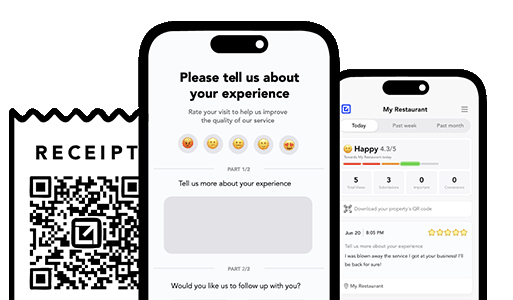
VisibleFeedback automates the trust-building system:
- Post-job check-ins go out automatically — day 1, day 3, post-rain — without your office managing a follow-up calendar
- Storm follow-ups can be sent to all past customers after major weather events
- One-tap feedback captures homeowner responses instantly (“All good” / “I see something”)
- Negative alerts route concerns to your office before they become public reviews
- Resolution tracking follows each issue to confirmed satisfaction
- Review timing asks for reviews only after confirmed positive outcomes — building the deep, keyword-rich review profile that storm chasers can’t replicate
The system runs the same way on a quiet Tuesday and during a storm surge — which is exactly when consistent communication matters most.
The Bottom Line
Storm chasers have poisoned the well for legitimate roofers. You can’t unpoison it with marketing. You can’t do it with a lower price. You can’t do it with a nicer truck.
You do it with trust signals that scam artists can’t fake:
- A deep, recent review profile built over months of real work
- Post-job communication that proves you plan to be around
- Visible problem-solving that demonstrates you stand behind your work
- Proactive storm follow-up that shows you serve, not just sell
These signals compound over time. A storm chaser who shows up tomorrow can’t replicate what you’ve built over 6-12 months of consistent follow-up and review collection.
To understand why roofing reviews tend to be especially harsh — and how the communication gap makes it worse — read our companion piece. And if you want the trust-building system running on autopilot, try VisibleFeedback free and see what it looks like when every homeowner hears from you after every job, every storm, every time.