7/17/2025
Retail
Retail Isn’t Just About Sales, It’s About the Second Sale
Retail success is about the second sale. Learn how feedback drives repeat visits.

TLDR: Most retail businesses think they know what customers want, but without real, in-the-moment feedback, they’re often flying blind. While many shoppers walk out quietly satisfied or dissatisfied, only a small fraction leave public reviews or speak up. The rest? You never hear from them, until they’re gone. This article breaks down how to create frictionless feedback systems inside your store so you can capture what’s working and what’s not, without awkward surveys or spammy emails. From fitting room QR codes to checkout counter prompts, we’ll show where and how to ask. We’ll also explore the psychology of private feedback: why customers appreciate being heard in low-pressure ways, and how this can prevent negative Yelp or Google reviews from happening in the first place. You’ll learn how to analyze recurring feedback patterns to improve layout, staffing, hours, and service flow, and how even small changes can dramatically boost perception and loyalty. Finally, we cover how VisibleFeedback automates this process, helping you collect honest feedback, alerting you to low scores in real time, and turning your best customer moments into public praise. For retail owners serious about experience and retention, this is the feedback blueprint you’ve been missing.
Most unhappy customers never say a word, they simply walk out and never come back. Studies show that 91% of dissatisfied shoppers won’t complain directly. Instead, they silently churn, or worse, leave a negative review days later when the problem can no longer be fixed.
That’s a missed opportunity. Even when shoppers are happy, they rarely leave reviews unless prompted. And when they’re mildly frustrated, they might vent later online instead of in person, once it’s too late for you to resolve the issue.
To protect your reputation and actually improve your store, you need to gather feedback in the moment, before problems escalate and before customers walk out feeling like a number.
The best retail feedback happens casually and contextually. Forget awkward email surveys or random texts. Here’s where to ask instead:
In all cases, the key is to be subtle. You’re inviting, not pressuring, customers to speak up.
Unhappy customers don’t always want refunds, they want to feel heard. When someone has a minor complaint and no outlet to share it, it festers. They tell friends. They post online. But give them a low-friction way to vent privately, and most problems disappear before they ever go public.
This is where feedback becomes a defense mechanism, not just a data source. By letting customers express themselves directly to you, you prevent frustration from boiling over.
Even more powerful: when customers feel like you genuinely care about their experience, they become more likely to return, even if everything wasn’t perfect. Why? Because you showed you’re listening, and most businesses don’t.
Beyond damage control, feedback is also how great retail businesses get better. Patterns in feedback reveal blind spots you can’t see from behind the counter.
When you analyze in-the-moment feedback at scale, small but recurring issues become clear. Fixing them doesn’t always take big money, just awareness and action.
Even better: acting on feedback and then letting customers know you listened builds loyalty. “You asked, we listened” signs or subtle layout changes signal that your store evolves with its customers. That’s powerful.
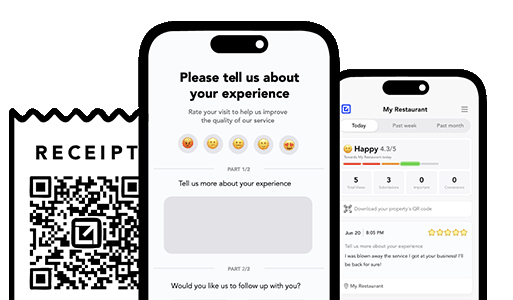
VisibleFeedback gives retailers a plug-and-play system to capture, track, and act on real-time customer input. It starts with simple QR codes placed strategically around your store.
Customers scan them, leave a quick note or rating, and your dashboard alerts you immediately if something’s wrong. You can act fast, whether that means checking in with a team member or simply improving signage.
On the flip side, when someone leaves great feedback? VisibleFeedback gently nudges them to leave a public review, helping boost your online reputation on platforms like Google and Yelp.
This isn’t about surveys. It’s about building trust, and a better business, one moment at a time.
Text or email clients after every job. Catch issues early, recover unhappy clients fast, and drive repeat work with smart reminders.

Austin Spaeth is the founder of VisibleFeedback, a tool that helps service companies automate post-job follow-ups, catch issues early, and drive repeat work with smart reminders. With a background in software development and a focus on practical customer retention systems, Austin built VisibleFeedback to make it easy to text or email customers after every job, route problems to the right person, and keep relationships strong without awkward outreach. When he’s not building new features or writing playbooks for service businesses, he’s wrangling his six kids or sneaking in a beach day.
Whether you’re dealing with callbacks, unhappy customers, or low repeat work, we’ll help you tighten the follow up loop.
No credit card required.
