2/24/2026
plumbing
How Plumbing Companies Keep Customers Coming Back (Without Chasing Them)
Most plumbing companies fix the problem and move on. Here's how the ones growing fastest turn one-time calls into repeat customers -- automatically.

TLDR: Plumbing callbacks cost $150-$300 each in labor and materials — and they’re often caused by small issues that could have been caught with a simple follow-up. Meanwhile, most plumbing companies lose repeat business not because the work was bad, but because they never stayed in touch. The customer forgets your name, sees a competitor’s truck, and calls them instead. This article covers practical strategies plumbers can use to reduce callbacks and build repeat business: following up within 48 hours of every job, doing a triple-check before leaving the site, asking the right questions after the work is done, setting up reminders for annual maintenance, and turning satisfied customers into review-writing referral sources. The plumbing companies that grow fastest aren’t always the best at plumbing — they’re the best at staying connected to their customers.
You fix a leaky faucet on Tuesday. The customer pays, says thanks, and you’re off to the next job. Three days later, a slow drip starts under the sink. The customer doesn’t call you. They call the first plumber that shows up on Google.
That’s two problems in one: a callback you didn’t know about and a repeat customer you just lost. And it happens way more often than most plumbing companies realize.
Most plumbers think of callbacks as a workmanship issue. Sometimes they are. But more often, the callback happens because of a small detail that slipped through — a fitting that wasn’t fully tightened, a valve that needed one more turn, or a customer who thought something looked “off” but didn’t say anything before you left.
The real cost is brutal. A callback typically runs $150-$300 when you factor in the drive time, the labor, and any replacement parts. That’s profit straight off your bottom line for a job you already did.
The fix starts before you leave the job site. Experienced plumbers will tell you: check your work, then check it again, then walk the customer through what you did. That last step is critical. When you show the customer the work and ask, “Does everything look right to you?” — you’re giving them a chance to flag something before you drive away.
But the real game-changer is what happens after you leave.
Here’s what separates plumbing companies that grow from ones that stay stuck: a follow-up within 48 hours of every job.
Not a sales pitch. Not a “please leave us a review” email. Just a simple check-in:
“Hey [Name], just checking in after the work we did Tuesday. Everything holding up? If anything seems off, let us know — we want to make sure it’s right.”
This does three things at once:
First, it catches problems early. If that fitting is starting to drip, the customer tells you now instead of calling someone else. You can send a tech back to tighten it — a 15-minute fix instead of a full callback.
Second, it shows you care about the work after the check clears. That’s rare in this industry, and customers remember it. Plumbing is a trust business. The customer is letting you into their home, touching systems they don’t understand, and handing you hundreds of dollars. A follow-up signals you’re not just in it for the invoice.
Third, it opens the door for the review ask. When a customer replies “Everything’s great, thanks for checking!” — that’s the perfect moment to say, “Glad to hear it. If you’ve got a minute, a Google review would really help us out.” You’re asking at peak satisfaction, which is when people are most likely to actually do it.

Here’s the uncomfortable truth: most plumbing work isn’t a one-time thing. Water heaters need replacing every 8-12 years. Faucets wear out. Drains clog. Pipes age. Sewer lines need inspection. Every customer you serve today has future plumbing needs.
But most plumbing companies treat every job like a one-time transaction. Fix the problem, collect the payment, move on. No follow-up. No reminder. No touchpoint until the customer has another emergency — at which point they Google “plumber near me” and call whoever’s first.
The data on this is clear. 68% of customers leave a service provider because they feel the business is indifferent to them. Not because the work was bad. Not because the price was too high. Because the business disappeared after cashing the check.
Meanwhile, the chances of selling to an existing customer are 60-70%. The chances of selling to a new customer? 5-20%. Your past customers are your best source of future revenue, and you’re leaving them on the table.
Turning one-time plumbing customers into repeat clients doesn’t require a huge effort. It requires a system. Here’s what that looks like in practice.
If you install or service a water heater, you know it needs a flush and anode rod check at least once a year. Your customer probably doesn’t know that. Set up an annual reminder: “Hi [Name], it’s been about a year since we serviced your water heater. Annual maintenance helps it run efficiently and last longer. Want us to schedule a check-up?”
That’s a repeat job you generated from a customer you already have. No advertising cost. No competing on price. Just a helpful reminder that books real revenue.
Every plumber knows that frozen pipes spike in winter and sewer backups increase in spring. Your customers don’t. A seasonal message costs nothing and keeps your name in their phone:
“Winter’s here. If you’ve got outdoor faucets, make sure they’re disconnected and drained. And if you haven’t had your pipes inspected in a while, now’s a good time — before a freeze catches something weak.”
You’re not selling anything. You’re being helpful. But when that customer does need a plumber in February, guess whose number they have?
The most dangerous customer is the one who’s slightly unhappy but doesn’t say anything. They don’t complain. They don’t leave a bad review. They just quietly call someone else next time.
A simple feedback request after every job catches these people. “How’d we do today? 1-5, how was the experience?” The customer who gives you a 3 isn’t a lost cause — they’re an opportunity. You can reach out, ask what happened, and make it right. That customer goes from “probably leaving” to “impressed that you cared enough to ask.”
The customers who give you a 5? Those are your review and referral pipeline. Ask them. They’re already primed to say yes.
Let’s put some real math to this.
Say you do 20 jobs a week. At a 5% callback rate, that’s one callback per week — roughly $200 in lost profit. Over a year, that’s $10,400 in callbacks alone.
Now imagine cutting that callback rate in half with consistent follow-ups. You just saved $5,200 a year.
On the repeat business side: if just 10% of your past customers book an additional job per year because of a reminder — and the average job is $350 — that’s 10 extra jobs per 100 customers, or $3,500 in revenue you did nothing to earn except send a reminder.
And consider this: businesses with 4+ star ratings generate 32% more revenue than those with lower scores. Every follow-up that catches a problem before it becomes a bad review is protecting that rating. Every happy customer you convert into a Google review is building your future pipeline.
A few things to avoid as you build this system:
Waiting too long. A follow-up three weeks after the job is pointless. The customer has already moved on emotionally. Within 48 hours is the window.
Leading with the review ask. If the first thing the customer hears after the job is “leave us a review,” it feels transactional. Lead with the check-in. Ask about the review only after you know they’re satisfied.
Only following up on big jobs. The $150 faucet repair customer is just as valuable as the $3,000 water heater install when it comes to repeat business and referrals. Follow up on everything.
Doing it manually and inconsistently. If follow-ups depend on you or your office manager remembering, they won’t happen during busy weeks. And busy weeks are when they matter most. Automate it.
VisibleFeedback automates the post-job follow-up and reminder system that turns one-time plumbing customers into repeat business. Set it up once, and every customer gets a check-in after the job and a reminder when their next service is due — without your team having to remember a thing.
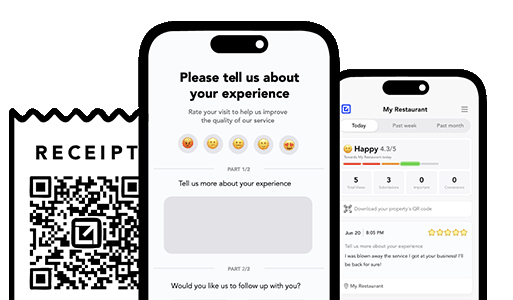
Text or email clients after every job. Catch issues early, recover unhappy clients fast, and drive repeat work with smart reminders.

Austin Spaeth is the founder of VisibleFeedback, a tool that helps service companies automate post-job follow-ups, catch issues early, and drive repeat work with smart reminders. With a background in software development and a focus on practical customer retention systems, Austin built VisibleFeedback to make it easy to text or email customers after every job, route problems to the right person, and keep relationships strong without awkward outreach. When he’s not building new features or writing playbooks for service businesses, he’s wrangling his six kids or sneaking in a beach day.
Whether you’re dealing with callbacks, unhappy customers, or low repeat work, we’ll help you tighten the follow up loop.
No credit card required.
