TLDR: After a plumber leaves, homeowners don’t call back with questions. They Google them. Searches like “is it normal for pipes to make noise after repair,” “water heater not hot enough after install,” and “drain still slow after plumber” are happening thousands of times a month — and they represent the exact moment where a satisfied customer starts becoming a worried one. This article maps out the most common post-job Google searches by plumbing job type and shows how a single follow-up message answers the question before the homeowner ever opens a browser.
Your Customer’s First Instinct Isn’t to Call You
Picture this. Your tech just left a customer’s house. Good job, clean work, paid invoice. Forty-five minutes later, the homeowner notices something. Maybe a sound. Maybe the water looks slightly different. Maybe the drain is moving but not as fast as they expected.
Do they pick up the phone and call your office?
Almost never.
They pick up their phone and open Google.
This isn’t a criticism of your customers. It’s just how people work in 2026. Googling is faster than calling. It doesn’t require explaining the problem to a stranger. It doesn’t require being put on hold. And honestly — most homeowners feel a little embarrassed asking their plumber “is this noise normal?” so they’d rather ask the internet first.
The problem is that the internet doesn’t know what job was just done in their house. It doesn’t know the context. And the answers they find — forum posts, Reddit threads, worst-case-scenario articles — tend to amplify anxiety, not resolve it.
Here’s the timeline of what happens next:
0-3 hours post-job: Factual search “Is it normal for pipes to make noise after repair?”
3-12 hours: Concern search “Water heater not getting hot enough”
12-24 hours: Blame search “Plumber didn’t fix my drain”
24-48 hours: Action search “How to leave a review for a plumber” or “best plumber near me” (they’re replacing you)
Every one of those searches is a moment where a single text message from your company could have stopped the spiral.
The Top Searches by Job Type (And What They Really Mean)
Let’s break down the most common post-job Google searches, organized by the type of work your tech just completed. For each one, we’ll show:
- What they Googled
- What they’re actually worried about
- The follow-up message that would have prevented the search
After Drain Clearing
What they Google:
“drain still slow after plumber came” “why does my drain keep clogging” “plumber snaked drain still not draining” “how long does a drain cleaning last” “signs of a bigger plumbing problem”
What they’re actually worried about: They’re wondering if the job “worked.” A snake clears the immediate blockage, but drains don’t always go from clogged to perfect instantly — especially if there’s partial buildup, a belly in the pipe, or root intrusion further down. The customer doesn’t know any of this. They just know water isn’t whooshing down the drain like it does in commercials.
The message that prevents the search:
“Your drain is cleared! A few things to know: it may take a couple of hours for everything to fully settle and flow at its best speed. If it starts slowing down again in the next few days, that could mean there’s something deeper going on (like roots or a pipe issue) and we’d want to take a closer look with a camera. If anything seems off, reply here — we’ll take care of it.”
What this does: It normalizes the “not instantly perfect” experience, sets an expectation for what “bad” actually looks like, gives them a reason to contact you instead of Google, and positions the potential upsell (camera inspection) as proactive care — not a sales pitch.
After Leak Repair
What they Google:
“is it normal to hear dripping after pipe repair” “pipe still leaking after plumber fixed it” “small drip under sink after repair normal?” “how to check for leaks after plumbing work” “moisture under sink after plumber left”
What they’re actually worried about: Water damage. That’s the big fear. Even a tiny amount of moisture after a leak repair triggers worst-case thinking: mold, ruined cabinets, soaked subfloor. The homeowner is going to obsessively check under that sink for the next 48 hours no matter what you tell them — so lean into it.
The message that prevents the search:
“Leak repair is all done. Here’s a quick tip: check under the sink tonight and again tomorrow morning, especially after running the dishwasher or garbage disposal. A small amount of residual moisture from the repair itself is normal and should dry within a few hours. If you see new dripping or standing water, reply here and we’ll send someone right back.”
What this does: It tells them to do the exact thing they were going to do anyway (check for moisture) but gives them the framework to evaluate what they find. “Residual moisture = normal. New dripping = let us know.” Now they’re checking with confidence instead of checking with dread.
After Water Heater Install
What they Google:
“new water heater not hot enough” “how long for new water heater to heat up” “tankless water heater slow to heat” “water heater making noise new install” “new water heater temperature setting” “is my water heater supposed to click”
What they’re actually worried about: They just spent $1,500 to $5,000 and want proof it was worth it. Any deviation from their old water heater feels wrong — even if the new behavior is normal (or better). Tankless systems are especially confusing because the hot water delivery pattern is genuinely different from a tank unit.
The message that prevents the search:
“Your new water heater is up and running! A few things that are totally normal with a new system: [Tank: it may take 30-60 minutes to fully heat up the first time.][Tankless: hot water may take a few extra seconds to arrive since it heats on demand — no tank keeping water warm.] You might also hear some light clicking or humming as the system cycles — that’s normal operation. If anything seems off or the water isn’t getting hot, reply here and we’ll sort it out.”
What this does: It preempts the three most common water heater Googles in one message. The customer reads it, notices the exact behavior described, thinks “oh, they said this was normal,” and moves on with their day. No Google spiral. No anxiety. No review about a “broken” water heater that’s actually working perfectly.
We’ve seen this exact scenario play out in our article on plumbing callback horror stories — a customer tanks a company with a 1-star review over a perfectly functional tankless install, just because nobody told them what to expect.

Automate follow ups after every job
Catch issues early and drive repeat work with smart reminders.
After Toilet Replacement
What they Google:
“new toilet rocks back and forth” “is my new toilet supposed to wobble” “toilet not flushing strong after install” “smell around toilet after replacement” “how tight should toilet bolts be”
What they’re actually worried about: Toilets are personal. People use them multiple times a day. If something feels even slightly off — a wobble, a weak flush, an unfamiliar sound — it nags at them constantly. And because toilet issues can lead to sewage leaks (which are genuinely serious), the anxiety escalation is fast.
The message that prevents the search:
“New toilet is in! It should feel solid and stable when you sit down — no rocking. The first few flushes might seem a little different from your old toilet (every model has its own flow pattern), but it should clear fully each time. If you notice any rocking, running, or leaks around the base, let us know right away — that’s easy to fix and important to catch early. Just reply here.”
What this does: It puts “rocking” and “base leaks” on the customer’s radar as “tell us immediately” issues (which they are), while normalizing the “flushes differently” concern (which is almost always fine). The customer now has clear criteria: rocking or leaks = call us; different flush = normal.
After Emergency Repairs
What they Google:
“temporary pipe repair how long does it last” “plumber did temporary fix when will they come back” “is it safe to use water after emergency plumbing repair” “emergency plumber never came back” “should I call a different plumber for permanent fix”
What they’re actually worried about: Everything. Emergency customers are the most anxious customer segment in plumbing. They called because water was spraying, sewage was backing up, or something was actively failing. Even after the emergency is handled, they’re on edge — wondering if the fix will hold, whether the permanent repair is actually going to happen, and whether they should trust the same company or start over.
The message that prevents the search:
“Emergency repair is done and stable. Here’s what to know: [the temporary fix / repair] should hold while we get the permanent solution scheduled. Avoid [specific instruction: running the dishwasher, using the upstairs bathroom, etc.] until the follow-up work is complete. We’ll reach out [Monday / tomorrow / within 48 hours] to schedule the next step. If anything changes before then — any new leaking, sounds, or smells — reply here immediately and we’ll send someone.”
What this does: It answers the three biggest emergency follow-up questions in one message: Is it safe? When is the real fix? What do I do if it fails again? The customer isn’t Googling “emergency plumber never came back” because you’ve already told them when to expect the follow-up.
The Anxiety Escalation Curve
Here’s the pattern behind all of these searches, visualized as a timeline:
Hour 0-1: Observation
Customer notices something. A sound, a temperature, a flow rate. Internal thought: “Hm, is that normal?” Anxiety level: Low
Hour 1-3: Google Phase 1 — Factual
They search for technical information. “Is it normal for [thing] after [job]?” They find mixed answers. Some say normal, some say disaster. Anxiety level: Medium
Hour 3-12: Google Phase 2 — Doubt
The search becomes less factual and more emotional. ”[Thing] still happening after plumber left” They start reading horror stories from other homeowners. Anxiety level: High
Hour 12-24: Google Phase 3 — Blame
Now they’re searching for who’s at fault. “Plumber didn’t fix my [thing]” “Bad plumber what to do” Anxiety level: Very high
Hour 24-48: Google Phase 4 — Action
They’ve decided you failed them. Now they’re looking for next steps. “How to write a review for a bad plumber” “Best plumber near me” (replacement search) Anxiety level: Anger
The entire escalation from “hm, is that normal?” to a 1-star review takes 24-48 hours. And at every single phase, a check-in message from your company could have intercepted it.
If you’ve read our breakdown of callback horror stories, you’ve already seen this pattern in action — real scenarios where the escalation followed this exact curve.
Why Customers Don’t Just Call You
It’s worth pausing on this, because a lot of plumbing company owners think: “If there’s a problem, they’ll call.”
They won’t. Here’s why:
1. They’re not sure it’s a “real” problem yet. They don’t want to call and be told “that’s normal” and feel stupid. So they Google first to self-diagnose.
2. Calling feels like a bigger commitment than Googling. A Google search takes 10 seconds. A phone call means waiting on hold, explaining the job history, and hoping the person who answers can help.
3. They don’t have your number handy. Your tech left a paper invoice or the number is in an email somewhere. It’s easier to just open Google.
4. It’s after hours. Many plumbing concerns surface in the evening or early morning — exactly when your office is closed. The customer isn’t going to wait until 8 AM to start worrying.
5. They feel like they “should” know this. There’s a subtle embarrassment factor. “I just paid a professional — I should know if this is normal.” So they quietly Google instead of asking.
A follow-up message removes every one of these barriers. It arrives on their phone. It asks a simple yes/no question. It doesn’t require them to explain anything. And it works at 7 PM just as well as 10 AM.
How to Be the Answer Before They Google
The strategy is simple: send the information they would have Googled, before they need to Google it.
This means your follow-up messages aren’t generic “hope everything went well!” fluff. They’re job-specific, practical, and anticipate the exact concern the customer is likely to have.
Here’s a quick reference for what to include by job type:
| Job type | What to address in your follow-up |
|---|
| Drain clearing | Might not be instant; re-clog within days = deeper issue; reply here |
| Leak repair | Check tonight + tomorrow morning; residual moisture normal; new drips = reply |
| Water heater (tank) | First heat-up takes 30-60 min; light sounds normal; not hot = reply |
| Water heater (tankless) | Slight delay is normal; clicking/humming normal; not hot = reply |
| Toilet replacement | Should be solid, no rocking; flush pattern may differ; base leak = reply |
| Emergency repair | What’s temporary vs. permanent; what to avoid; when we’ll be back; emergency = reply |
| Garbage disposal | May smell for first few uses; run cold water with it; jamming = reply |
| Sump pump | Check valve sound normal; test monthly; water in basement = reply immediately |
If you want ready-to-use templates for each of these, we put together a full set in our plumbing follow-up templates article — copy/paste SMS and email messages for every common job type.
The Compound SEO Benefit (Yes, This Helps Your Google Ranking Too)
Here’s a bonus most plumbing companies don’t think about: when you prevent the anxious Google search, you also generate the review that boosts your own Google ranking.
Think about it:
- Customer gets your follow-up → feels taken care of → confirms positive outcome → gets a review request → writes a 5-star review mentioning specific keywords (“water heater install,” “same-day follow-up,” “professional and thorough”)
Those review keywords help your Google Business Profile rank for the exact searches other homeowners are making. “Best plumber for water heater install near me” → your profile shows up with multiple reviews mentioning “water heater install.”
Compare that to what happens without follow-up:
- Customer has a worry → Googles it → finds mixed answers → anxiety builds → no review (or bad review) → your profile stagnates
The same system that prevents bad reviews also generates the keyword-rich positive reviews that bring you more business. It’s a flywheel — not a one-time fix.
As we showed in our breakdown of why the 5-star plumber next door outranks you, the difference between a 3.8-star and a 4.9-star plumber isn’t skill — it’s the communication system that generates volume and prevents damage.
Where VisibleFeedback Fits
Building job-specific follow-up messages and sending them at the right time for every job is the right idea. Doing it manually — remembering, customizing, tracking responses, following up on negatives — is where most companies break down.
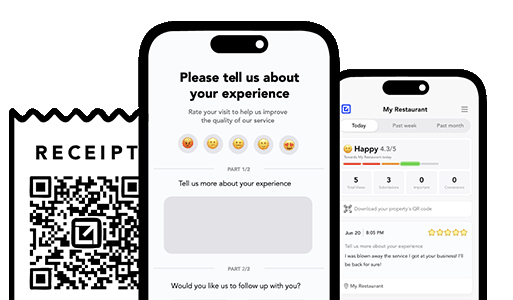
VisibleFeedback makes this automatic:
- Timed check-ins go out on schedule after every job, without anyone remembering to send them
- One-tap responses make it effortless for customers to reply (they’re already on their phone — one tap is easier than opening Google)
- Negative alerts route to your office instantly so you can answer the question before the customer asks Google
- Resolution tracking makes sure every concern gets followed through to confirmation — not just acknowledged and forgotten
- Smart review requests go out only after confirmed positive outcomes, generating the 5-star reviews that compound your ranking
The result: your customers stop Googling their worries and start texting them to you. That’s a fundamentally different relationship — and a fundamentally different reputation.
The Bottom Line
Every plumbing job creates a window — usually 1-24 hours — where the customer has questions they’re not going to ask you. They’re going to ask Google. And Google is going to give them anxiety, worst-case scenarios, and a direct link to your review page.
The fix isn’t better plumbing. It’s better timing. A follow-up message that arrives before the worry escalates. Job-specific information that answers the exact question they were about to search. And a reply path that’s easier than opening a browser.
Be the answer before they Google the question.
If you want that system running automatically for every job, try VisibleFeedback free and see what happens when your customers stop searching and start trusting.