TLDR: You’ve seen it. A competing plumbing company in your area has a 4.9-star average with hundreds of reviews. You know their work isn’t magic — some of their techs used to work for you. So what gives? The difference almost never comes down to technical ability. It comes down to everything that happens around the technical work: how quickly they confirm the appointment, whether the tech texts when they’re on the way, how the office follows up the next day, and whether unhappy customers get intercepted before they post publicly. This article breaks down a side-by-side comparison of two fictional (but very realistic) plumbing companies and shows exactly where the 5-star company pulls ahead.
A Tale of Two Plumbers
Let’s call them River City Plumbing and Summit Plumbing.
They operate in the same metro area. They do the same types of work — residential repairs, water heater installs, drain clearing, emergency calls. Their techs have similar certifications. Their pricing is within 10% of each other. If you watched both teams fix a leaking supply line, you wouldn’t be able to tell the difference.
But here’s how they show up online:
| River City Plumbing | Summit Plumbing |
|---|
| Google rating | 3.8 stars | 4.9 stars |
| Total reviews | 47 | 214 |
| Reviews in last 90 days | 3 | 28 |
| 1-star reviews | 9 | 4 |
| Owner responses | Some | All, within 24 hours |
| Review keywords | “no follow-up,” “had to call back,” “never heard from them” | “professional,” “checked in next day,” “easy to reach” |
If you’re a homeowner searching “plumber near me,” which one are you calling?
Let’s trace the customer journey for the same job — a basic water heater replacement — through both companies, and see exactly where the gap forms.
Round 1: The Phone Call
River City Plumbing
The homeowner calls. It goes to voicemail. They leave a message. Someone calls back 4 hours later, confirms availability for “sometime Thursday,” and says the tech will call when they’re heading over.
Summit Plumbing
The homeowner calls. A person answers (or they get a callback within 20 minutes). The office confirms Thursday between 9 and 11, sends a text confirmation immediately, and adds:
“You’ll get a text from your tech when they’re on the way. If anything changes, just reply to this message.”
Where the gap starts
The job hasn’t even happened yet and Summit is already ahead. The customer feels informed, respected, and in control. River City’s customer is already slightly anxious — wondering if Thursday is confirmed, whether they’ll get a heads-up, and whether they should take the whole day off work.
Scoreboard after Round 1:
| River City | Summit |
|---|
| Customer confidence | Low | High |
| Effort required from customer | Called, left voicemail, waited | Called, got confirmation, done |
Round 2: Day of the Job
River City Plumbing
The tech shows up at 10:45. No advance text. The homeowner had been watching the window since 8 AM. The tech does good work — removes the old unit, installs the new one, tests it, cleans up. He says “you’re all set” and hands over the invoice. He’s out the door in 90 minutes.
Summit Plumbing
The tech sends a text at 9:15: “Hey, this is Mike from Summit. Heading your way — should be there around 9:45.” He arrives at 9:40. Same quality of work. Before he leaves, he says:
“Everything’s running great. You’ll probably notice the water heats up a little differently than your old tank — that’s normal. If anything seems off tonight or tomorrow, you’ll get a check-in text from our office. Just reply to it and we’ll take care of it.”
Where the gap widens
Both techs did identical work. But Summit’s customer feels like they hired a professional operation. River City’s customer feels like they hired a guy with a van.
Scoreboard after Round 2:
| River City | Summit |
|---|
| On-the-way notification | No | Yes |
| Arrival within expected window | Barely | Early |
| Expectation-setting before leaving | None | Clear and specific |
| Customer feeling at the door | “I think we’re good?” | “These guys have it handled” |
Round 3: That Evening
River City Plumbing
The homeowner takes a shower. The water is hot but takes longer to reach temperature than they expected. They’re not sure if this is normal. They think about calling but it’s 8 PM and they don’t want to bother anyone. They’ll “see how it goes.”
Summit Plumbing
The homeowner notices the same thing — water takes a bit longer. Then they remember: the tech mentioned this. Normal. They relax.
At 7 PM, they get a text:
“Quick check-in on your new water heater — how’s everything working so far? 🙂 Great / 😐 Okay / 🙁 Not good”
They tap “Great.” Done.
Where the gap becomes a canyon
River City’s customer is sitting with a small worry. It’s probably fine. But the worry is there, and nobody from River City is asking about it. That worry is the seed of a bad review.
Summit’s customer had the same concern, got reassurance from the tech’s earlier explanation, and just confirmed everything is good — all in one tap. That “Great” response is now logged, and Summit’s system knows this is a happy customer.
Round 4: The Next Morning
River City Plumbing
Nothing. Silence.
The homeowner’s spouse takes a shower and says the water “doesn’t feel as hot.” The homeowner now has confirmation bias — something must be wrong. They Google “new water heater not hot enough.” They find forum posts about bad installations. Their anxiety spikes.
Summit Plumbing
The homeowner gets a second check-in:
“Quick follow-up — is the water heater still running the way you expected today? Yes / No”
They reply “Yes.” (Their spouse hasn’t complained — the water is fine.)
What’s actually happening here
The same product. The same installation. The same slight learning curve. One customer is spiraling into doubt. The other confirmed everything is fine — twice.
Scoreboard after Round 4:
| River City | Summit |
|---|
| Post-job check-ins | 0 | 2 |
| Customer anxiety level | Rising | Zero |
| Issue detection opportunity | None | Two chances to catch problems |
Round 5: One Week Later
River City Plumbing
The homeowner has mostly adjusted to the new water heater. The water is fine. But that initial worry lingers as a vague bad taste. When a neighbor asks “who did your water heater?” they say “some company… River City I think. They were okay.” No referral. No review.
Three weeks later, they get a generic email from River City’s office: “Please leave us a review on Google!” They ignore it. They don’t feel strongly enough either way — and honestly, the anxious first night left a mild negative impression.
Summit Plumbing
Two days after the install, Summit’s system detected two positive check-ins. It automatically sent a review request:
“Glad everything’s working great! If you have a minute, a quick Google review helps other homeowners find reliable plumbing. Here’s the link: [Google Review Link]”
The homeowner taps through and writes:
⭐⭐⭐⭐⭐ “Mike was on time, explained everything, and they even checked in the next day to make sure it was all working. Really professional. Will use again.”
The final gap
Same work. Same customer. Same water heater. Completely different outcome.
| River City | Summit |
|---|
| Review collected | No | Yes — 5 stars |
| Review content | N/A | Mentions communication, check-in, professionalism |
| Referral likelihood | Low | High |
| Customer retained | Unlikely | Very likely |
The 7 Touchpoints That Separate 3.8 Stars From 4.9 Stars
Every one of these is a communication moment, not a plumbing moment:
1. Fast initial response — answering the phone or calling back within 20 minutes, not 4 hours
2. Clear scheduling — a specific window, confirmed via text, not a vague “sometime Thursday”
3. On-the-way notification — a simple text from the tech so the customer isn’t guessing
4. Expectation-setting before leaving — 30 seconds of “here’s what to expect” prevents 90% of post-job anxiety
5. Same-day check-in — one message asking “how’s it going?” within hours of completion
6. Next-day confirmation — a second touchpoint that catches issues after the system has run overnight
7. Smart review request — asking for a review only after confirmed satisfaction, with a direct link and easy flow
That’s it. Seven touchpoints. None of them require better plumbing skills. All of them require a system.
“But My Guys Are Too Busy for All That”
This is the most common objection, and it’s valid — if you’re imagining your techs and office staff doing all of this manually.
Here’s the reality of what “all that” actually takes:
| Touchpoint | Who does it | Time required |
|---|
| Fast callback | Office | Already doing this (just faster) |
| Text confirmation | Automated | 0 minutes |
| On-the-way text | Tech (or automated) | 15 seconds |
| Expectation-setting | Tech | 30 seconds at the door |
| Same-day check-in | Automated | 0 minutes |
| Next-day check-in | Automated | 0 minutes |
| Review request | Automated | 0 minutes |
Five of the seven touchpoints can be fully automated. The tech adds maybe 45 seconds to their day. The office just needs to respond when a check-in comes back negative — which is exactly the call they’d want to know about anyway.
This is not a staffing problem. It’s a systems problem.

Automate follow ups after every job
Catch issues early and drive repeat work with smart reminders.
The Negative Review Prevention Layer
Here’s something the 5-star plumber next door understands that most companies don’t: you can’t prevent all problems, but you can prevent almost all bad reviews.
Problems will happen. Fittings will drip. Drains will re-clog. Customers will be confused about their new equipment. That’s plumbing.
The difference is what happens next:
Without a follow-up system:
- Problem occurs → Customer stews → Customer writes 1-star review → You find out publicly → Damage done
With a follow-up system:
- Problem occurs → Check-in catches it within hours → Office responds fast → Issue resolved privately → Customer feels taken care of → 5-star review
We wrote an entire article breaking down real callback horror stories and how each one could have been intercepted with a single follow-up message. Every story follows the same arc: fine work, zero follow-up, brutal review.
The 5-star competitor isn’t avoiding problems. They’re catching them before they become public.
The Review Volume Problem
Even if you never get another bad review, you still have a volume problem.
Google’s algorithm favors businesses with:
- Higher average ratings
- More total reviews
- More recent reviews (last 90 days matters a lot)
- Reviews with relevant keywords (“plumber,” “water heater,” “leak repair”)
A 4.5-star company with 200 reviews will outrank a 5.0-star company with 12 reviews almost every time. Volume signals trust to both the algorithm and the human scanning the results.
The 5-star plumber next door isn’t just preventing bad reviews — they’re actively generating good ones by asking at the right moment, every single time.
Most plumbing companies only get reviews from two types of customers:
- People who are angry (they’re motivated to warn others)
- People who are thrilled (they want to praise you unprompted)
That leaves out the giant middle — customers who were satisfied, had a good experience, and would happily leave a review if someone made it easy at the right time.
That middle group is where the volume comes from. And reaching them requires a system, not hope.
What About the Customers Who Were Going to Leave Bad Reviews Anyway?
Some people are unreasonable. Some jobs genuinely go sideways. You can’t prevent every 1-star review.
But here’s what a follow-up system does even in those cases:
It gives you a private channel first. When a frustrated customer taps “Not good” on a check-in message, that response comes to your office — not to Google. You get the chance to respond, apologize, and fix the problem before they go public. Many customers who would have left a 1-star review will never write it if they feel heard and see action.
It creates a paper trail. If a customer does leave a bad review after you’ve already attempted resolution, your public response can reference the steps you took: “We reached out the day after your service, addressed the issue immediately, and confirmed resolution.” That response tells future customers that you take service seriously.
It buries the outliers. If you’re generating 8-10 positive reviews per month, one unreasonable 1-star review barely dents your average. Without volume, one bad review can drop you from 4.5 to 4.2.
The Compound Effect Over 12 Months
Let’s model what happens when two companies — one with a follow-up system, one without — run for a year:
| Metric | No system | With system |
|---|
| Jobs per month | 80 | 80 |
| Reviews collected/month | 2-3 (organic only) | 10-15 (systematic) |
| Bad reviews caught privately | 0 | 5-8/month |
| Bad reviews posted publicly | 2-3/month | 0-1/month |
| Rating after 12 months | 3.6 → 3.5 (declining) | 4.3 → 4.8 (climbing) |
| Total reviews after 12 months | ~70 | ~220 |
| Google local pack visibility | Low | High |
| Cost per lead (paid ads needed) | Increasing | Decreasing |
Over 12 months, the company with a system doesn’t just have better reviews — they have a fundamentally different business trajectory. Lower ad spend, more organic leads, higher close rates, better customer retention.
The 5-star plumber next door didn’t get there overnight. They got there by running a system consistently for months.
How VisibleFeedback Builds This for You
You could piece together parts of this system with a texting app, a Google review link, and good intentions. Some companies do. Most stop after a few weeks because it requires someone to remember, every time, for every job.
VisibleFeedback makes the entire 7-touchpoint system automatic:
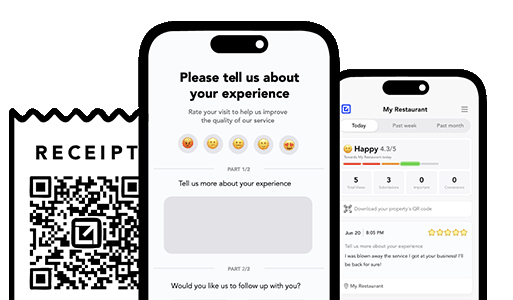
- Post-job check-ins send automatically based on job completion — same-day and next-day, no one has to remember
- One-tap feedback means customers reply in seconds, keeping your response rates high (no surveys, no forms)
- Instant negative alerts route to your office so you can respond fast — not hours or days later
- Issue tracking follows each negative response through a resolution flow so nothing falls through the cracks
- Smart review timing sends review requests only after a confirmed positive outcome — which means your Google profile fills with 5-star reviews from genuinely satisfied customers
- Consistent execution is the key — the system runs the same way for every job, every tech, every day, without adding work to your office
The result is the same gap we described above — except you’re on the right side of it.
The Bottom Line
The 5-star plumber next door doesn’t have better plumbers. They have better communication around their plumbing.
Seven touchpoints — most of them automated — separate a 3.8-star company from a 4.9-star company. The work is the same. The customers are the same. The market is the same. The difference is that one company treats the job as done when the invoice is paid, and the other treats it as done when the customer confirms they’re happy.
If you want to close that gap, start with what you can control: follow up after every job with a simple check-in, catch problems before they go public, and ask for reviews at the moment when customers are most likely to say yes.
Or, if you want the system running on autopilot, try VisibleFeedback free and see what 90 days of consistent follow-up does to your rating.
Your competitor already figured this out. Now it’s your turn.