TLDR: Most 1-star plumbing reviews don’t come from terrible work. They come from what happens after the tech leaves: a slow drain that returns, a fitting that drips overnight, a customer who doesn’t know what’s normal and can’t reach anyone. The homeowner sits with the problem for a day or two, gets frustrated, and writes the review before ever calling back. This article walks through real-world callback horror stories that plumbing companies deal with — from emergency repairs that re-leak to water heater installs that confuse customers to drain jobs that clog again within 48 hours. Each story follows the same pattern: the work was adequate, the follow-up was nonexistent, and the review was brutal. You’ll see exactly how a simple post-job check-in could have caught every one of these issues privately, triggered a fast resolution, and turned a potential 1-star review into a loyal repeat customer.
The Pattern Behind Every Plumbing Horror Story
Every plumbing company owner has had the moment. You open Google, see a new review notification, and your stomach drops.
One star. A paragraph of anger. The customer’s name sounds familiar — you think the job went fine. Your tech said everything was good. The invoice was paid. No complaints at the door.
So what happened?
Here’s what happened: the customer noticed something after your tech left. A drip. A slow drain. Lukewarm water. A sound they didn’t expect. They waited a day, maybe two, hoping it would resolve. It didn’t. They got frustrated. They looked for your number, couldn’t find it easily, or didn’t want to deal with the hassle of calling and explaining everything again. So they did the thing that felt easiest — they opened Google, clicked one star, and told the world.
The job wasn’t the problem. The silence after the job was.
This pattern repeats across the plumbing industry every single day. And it’s almost always preventable.
Horror Story #1: The Leak That Came Back Overnight
What happened
A homeowner calls for an emergency kitchen sink leak. Your tech arrives, finds a corroded fitting under the sink, replaces it, tests the water, confirms no drip, and leaves. Clean job.
That night, the homeowner runs the dishwasher for the first time since the repair. The vibration loosens the connection slightly — not enough to spray, but enough to create a slow drip onto the cabinet floor. By morning, there’s a small puddle. The homeowner opens the cabinet, sees water damage starting on the wood, and panics.
The review
“Had them fix a leak under my kitchen sink. Seemed fine when they left. Woke up to water all over the cabinet floor. Now I have water damage AND I have to call someone else to actually fix it. Complete waste of $350. Do NOT use this company.”
What would have prevented it
A same-day follow-up text sent 2-3 hours after the repair:
“Thanks again — we wrapped up your leak repair today. Quick heads-up: check under the sink tonight and again tomorrow morning for any moisture, especially after running the dishwasher. If you see anything at all, reply here and we’ll take care of it right away.”
That one message does three things: it tells the customer what to watch for, it gives them a direct line back to you, and it shows you care about the outcome — not just the invoice.
If the customer had replied “I see a drip,” your office sends a tech the next morning. The homeowner feels taken care of. No water damage. No review. Possibly a 5-star review instead.
Horror Story #2: The Water Heater That “Didn’t Work”
What happened
Your crew installs a new tankless water heater. Everything is functioning correctly. The tech explains the basics, hands over the manual, and leaves.
The homeowner tries to take a shower that evening. The water takes longer to heat up than their old tank unit — which is completely normal for tankless systems. They don’t remember the tech mentioning this. They adjust the temperature on the unit, accidentally setting it too low. Now the water is barely warm.
They try again the next morning. Same issue. They assume the unit is defective. They’re angry because they just spent thousands of dollars on something that “doesn’t even work.”
The review
“Paid over $4,000 for a new tankless water heater and it barely produces hot water. The installer didn’t explain anything and now we’re stuck with cold showers. Called the office and got voicemail. Terrible experience from start to finish.”
What would have prevented it
A next-morning check-in text:
“Quick check-in on your new water heater — is it heating up the way you expected? Yes / No”
Customer replies “No.” Your office calls within the hour, walks them through the thermostat setting (or sends a tech for a 10-minute adjustment), and the problem is solved before the frustration hardens into a review.
The unit was fine. The installation was fine. The customer just needed 60 seconds of guidance that nobody provided after the sale.
Horror Story #3: The Drain That Clogged Again in 48 Hours
What happened
A customer calls about a slow bathroom drain. Your tech snakes it, pulls out a significant blockage, runs water for a few minutes to confirm flow, and leaves.
Two days later, the drain is slow again. The original blockage was a symptom of a deeper issue — partial root intrusion or a bellied pipe — but the immediate snake job cleared the visible problem. The customer doesn’t know any of this. All they know is they paid for a service that “didn’t last two days.”
The review
“They cleared my drain and it was clogged again within 48 hours. Either they didn’t do it properly or they knew it would come back and didn’t tell me. Either way, I’m out $200 and back to square one. Avoid.”
What would have prevented it
Two things. First, a clear expectation set by the tech before leaving:
“The drain is cleared. If it slows down again within a few days, it could mean there’s a deeper issue like roots or a pipe problem. If that happens, let us know and we’ll scope it — that way we fix the real cause, not just the symptom.”
Second, a next-day check-in:
“Quick check — is the drain still flowing normally? Yes / No”
If the customer replies “No” or even “it’s getting slow,” you’re already in the conversation. You can explain the situation, offer a camera inspection, and position yourself as the company that follows through — not the company that takes the money and disappears.
Horror Story #4: The Toilet That Rocked
What happened
Your tech replaces a toilet. The wax ring is seated, the bolts are tightened, and everything looks solid. The tech does a flush test, checks for leaks, and leaves.
Over the next week, the customer notices the toilet rocks slightly when they sit down. It’s subtle at first, then more noticeable. They don’t call because they figure they’re imagining it, or maybe it’s “normal.” After two weeks, they notice a faint smell. The wax seal has started to fail from the movement. Now there’s a potential sewage issue.
The review
“Had a toilet replaced and within two weeks it started rocking and now there’s a sewage smell. I expected better from a ‘professional’ install. Wouldn’t recommend.”
What would have prevented it
A 48-hour check-in text after the install:
“Quick check after your toilet install — is everything solid? No rocking, running, or leaks around the base? Yes / No”
If the customer mentions even slight rocking, you send someone back to re-seat it before the wax ring fails. A 15-minute fix prevents a sewage problem, a callback, and a devastating review.
Horror Story #5: The Emergency Call With No Follow-Through
What happened
A pipe bursts on a Saturday night. You send an on-call tech who stops the flooding, makes a temporary repair, and tells the homeowner, “We’ll get someone out Monday to do the permanent fix.”
Monday comes. Nobody calls. The homeowner waits. By Tuesday afternoon, they call your office. The receptionist doesn’t have notes about the Saturday call. She says she’ll have someone call them back. Nobody does.
Wednesday, the homeowner writes the review.
The review
“Pipe burst on Saturday. They came out and did a temporary fix and said they’d be back Monday. Nobody came Monday. Nobody called. I had to chase them down and STILL didn’t get a call back. Absolutely unreliable. Found another plumber who actually showed up.”
What would have prevented it
An automated Monday morning follow-up:
“Following up on Saturday’s emergency visit — we want to make sure everything is stable and get the permanent repair scheduled. Is the temporary fix still holding? Yes / No. Reply here and we’ll get the next step on the calendar today.”
That message does two things: it shows the customer they weren’t forgotten, and it creates an internal trigger to schedule the follow-up work. Even if the office dropped the ball on the handoff, the automated message catches it.

Automate follow ups after every job
Catch issues early and drive repeat work with smart reminders.
Why These Stories Keep Happening
Every one of these horror stories follows the same three-part pattern:
- The work was acceptable (not perfect, but not incompetent)
- Something small happened after the tech left (a drip, a setting, a recurring symptom, a missed follow-up)
- Nobody checked in, so the small thing became a big thing — and the customer’s only outlet was a public review
The painful truth is that most plumbing companies don’t have a follow-up system. They rely on the customer to call back if there’s a problem. And most customers won’t call. They’ll just stew, get angrier, and eventually write the review.
Silence after a job is not neutral. It communicates: “We got paid. We’re done. You’re on your own.”
Even if that’s not what you intend, that’s what the customer feels.
The Real Cost of Callback-Driven Reviews
Let’s talk numbers, because bad reviews aren’t just an ego hit — they’re a revenue problem.
A single 1-star review can:
- Drop your average rating enough to lose position in Google’s local pack
- Reduce click-through rates on your Google Business Profile by up to 30%
- Scare off customers who read the review before ever calling you
- Cost you $1,000–$6,000+ in lost lifetime customer value (depending on your average job size and repeat rate)
A callback itself costs:
- A second truck roll (fuel, labor, opportunity cost of a billable job)
- Office time to triage, schedule, and manage the return visit
- A customer who now has doubt — even if you fix the issue perfectly
And here’s the compounding problem: the review stays online even after the issue is resolved. A future customer searching “plumber near me” sees the horror story. They don’t see that you eventually fixed it. They see the one star and move on to the next listing.
Prevention is not just cheaper than recovery. In many cases, recovery isn’t even possible.
The Simple System That Prevents All of This
You don’t need complex software or a dedicated customer success team. You need a basic follow-up loop that runs after every job:
Step 1: Same-day completion message
Send a short text within 2-3 hours of job completion. Include:
- What the customer should watch for (specific to the job type)
- A direct reply path (“reply here if anything seems off”)
- A calm, reassuring tone
Step 2: Next-day check-in
Send a simple yes/no or one-tap check-in the following morning:
“Quick check — is everything still working properly? Yes / No”
That’s it. You’re not asking for a survey. You’re asking one question.
Step 3: Fast response on negative replies
If someone replies “No” or describes an issue:
- Acknowledge within 30 minutes during business hours
- Ask one triage question (what are you seeing? where?)
- Schedule the next step with certainty (“We’ll have someone there tomorrow between 9 and 11”)
Step 4: Confirm resolution
After any return visit or phone fix:
“Quick confirmation — is everything working properly now? Yes / No”
Don’t assume “resolved” until the customer confirms.
Step 5: Review request (only after positive outcome)
Only after a confirmed positive resolution do you ask for a review. This timing matters — you’re asking someone who just experienced great service recovery, or someone whose job went perfectly and confirmed it.
This entire loop takes 3-5 text messages per job. It prevents thousands in lost revenue. Need copy/paste messages for each step? We built a complete set of plumbing follow-up templates covering repairs, installs, and emergencies.
What Makes Plumbing Especially Vulnerable to Callback Reviews
Not all trades are equal when it comes to callback risk. Plumbing is uniquely exposed for a few reasons:
Water damage escalates fast. A slow drip in an HVAC system is annoying. A slow drip in plumbing can cause mold, rot, warped flooring, and ceiling damage within days. Customers know this, and their anxiety is justified. When they see moisture after a repair, they don’t think “minor issue” — they think “disaster.”
Plumbing problems are visceral. Sewage smells, standing water, toilet malfunctions — these aren’t abstract inconveniences. They make the home feel unlivable. The emotional intensity drives faster, angrier reviews.
Emergency customers are already stressed. Many plumbing calls start as emergencies. The customer was already upset before your tech arrived. If the follow-through isn’t perfect, that stress converts directly into a bad review.
Symptoms can recur. Drain clogs, pipe leaks, and fixture issues can resurface for legitimate reasons (root intrusion, pipe condition, usage patterns). Without proper expectation-setting and follow-up, recurring symptoms look like incompetence.
All of this means that plumbing companies need follow-up more than almost any other trade. The margin for error is smaller, and the consequences of silence are bigger. We mapped out exactly what homeowners Google after your plumber leaves — and the anxiety escalation is fast.
How VisibleFeedback Prevents Plumbing Callback Reviews
You can run the follow-up system described above manually. Some companies do it with a texting app and a spreadsheet. The problem is consistency — it works when someone remembers, and it breaks the first time the office gets busy, a tech forgets to log a job, or the weekend on-call throws off the rhythm.
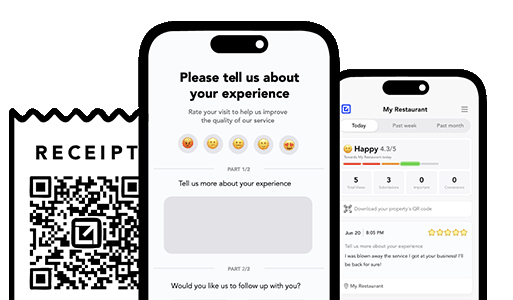
VisibleFeedback makes the system automatic, consistent, and trackable:
- Automated post-job check-ins — sends the same-day and next-day messages on schedule, for every job, without anyone remembering to do it
- One-tap feedback capture — customers tap a single button instead of typing a response, which means much higher reply rates
- Instant negative alerts — when a customer signals a problem, your office gets alerted immediately so you can respond fast (not hours or days later)
- Issue tracking to resolution — each negative response creates a trackable issue with a simple status flow (New → Contacted → Scheduled → Resolved → Confirmed) so nothing falls through the cracks
- Confirmation prompts — the system sends a follow-up after return visits to confirm the issue is actually resolved, so “resolved” means resolved
- Smart review timing — review requests only go out after a confirmed positive outcome, which means your Google profile fills with reviews from happy customers, not angry ones
The result: fewer callbacks, fewer bad reviews, faster issue resolution, and more 5-star reviews — all without adding chaos or headcount to your office.
What to Do If You Already Have Bad Callback Reviews
If you’re reading this and thinking, “I already have some of these horror story reviews on my profile,” here’s how to handle them:
Respond publicly and professionally. Don’t argue. Don’t get defensive. Acknowledge the experience, explain what you’ve done to fix the issue (if applicable), and mention that you’ve implemented a follow-up system to prevent it from happening again.
Example response:
“We’re sorry about your experience. You’re right that we should have followed up after the repair, and we take full responsibility for that gap. We’ve since implemented a post-job check-in system so we catch issues like this early and make them right. If you’d be willing to give us another chance, we’d like to make this right — please call us directly at [phone].”
Then actually fix the system. The response above only works if it’s true. Implement the follow-up loop so the next 50 reviews tell a different story.
Over time, consistent 5-star reviews push the old horror stories down. You can’t delete them, but you can bury them with volume and quality. If you want to understand exactly how the highest-rated plumbing companies generate that volume, read our breakdown of why the 5-star plumber next door outranks you — the answer has nothing to do with plumbing skill.
The Bottom Line
Every plumbing callback horror story follows the same script: acceptable work, a small post-job issue, zero follow-up, and a brutal public review. The fix is not better plumbing — it’s better communication after the plumbing.
A simple post-job check-in system catches problems early, gives customers a direct path to resolution, and turns potential 1-star reviews into repeat customers. It’s the cheapest, highest-ROI investment a plumbing company can make.
The companies that check in after the job don’t have horror stories. They have loyal customers.
If you want to run this system automatically — same-day and next-day check-ins, instant alerts, issue tracking, and smart review timing — try VisibleFeedback free and see how it works for your plumbing company. No long contracts, no setup headaches. Just fewer callbacks, fewer bad reviews, and more customers who actually trust you.