2/12/2026
Electrician
How Electricians Can Prevent Bad Reviews Before They Happen
Most bad reviews for electricians come from the same 5 preventable problems. Here's how to identify and fix them before a frustrated homeowner opens Google.

TLDR: Most electrical companies know they need more Google reviews. Few have a system to get them. This article provides a concrete 90-day playbook — broken into three phases — that takes an electrical company from inconsistent review collection to a predictable system generating 8-15 new reviews per month. Each phase includes specific actions, scripts, and benchmarks.
Before we get to the playbook, it’s worth understanding why electrical companies specifically tend to underperform on review volume:
1. The work feels “expected.” When an electrician installs an outlet and it works, the customer thinks “good, that’s what I paid for.” There’s no “wow” moment like a kitchen renovation or a new roof. The work is invisible and functional — not emotional.
2. Electrical customers don’t think to leave reviews. Unlike restaurants (where reviewing is culturally normalized) or dramatic services (where emotions run high), electrical work is utilitarian. The customer moves on with their day.
3. Many electricians work through contractors or builders. A big portion of revenue comes from B2B work where the end homeowner never even knows your company name. Review opportunities are structurally fewer.
4. No one asks. This is the biggest one. Most electrical companies simply don’t ask for reviews — or they ask once via a generic email that gets ignored.
The playbook below fixes all four of these problems.
Before Day 1, let’s audit where you stand:
| Metric | Struggling | Average | Strong |
|---|---|---|---|
| Total Google reviews | Under 20 | 20-75 | 75+ |
| Average rating | Below 4.3 | 4.3-4.6 | 4.7+ |
| Reviews in last 90 days | 0-2 | 3-8 | 9+ |
| Owner responds to reviews | Rarely | Sometimes | Always, within 48 hours |
| Post-job follow-up system | None | Inconsistent manual | Automated |
If you’re in the “struggling” or “average” columns, this playbook is designed for you. If you’re already “strong,” Phase 3 will still add value.
Goal: Build the follow-up loop, collect your first 10-15 reviews, and train your team.
Day 1-2: Get your Google review link ready.
Go to your Google Business Profile → “Ask for reviews” → copy the direct link. This is the link you’ll include in every review request. Test it yourself — make sure it opens directly to the review form.
Day 3-4: Create your follow-up messages.
You need three messages:
Message 1 — Same-day check-in (2-3 hours after the job):
“Thanks for choosing [Company Name]. Quick check — is everything working as expected after today’s electrical work? Yes / No”
Message 2 — Next-day follow-up (24 hours later):
“Quick follow-up — still looking good today? Any questions about anything we installed or worked on? Yes, all good / No, I have a concern”
Message 3 — Review request (sent only after positive check-ins):
“Really glad everything’s working well. If you have a minute, an honest Google review helps other homeowners find reliable electricians. Here’s the link: [Google Link]. Thanks!”
Day 5-7: Brief your team.
Every tech needs to do one thing before walking out the door: a 30-second expectation set. It sounds like this:
“Everything’s tested and working great. You might notice [specific normal thing for this job type]. If anything seems off, you’ll get a check-in text from our office later today — just reply to it. We want to make sure everything stays good.”
That’s it. Thirty seconds. It primes the customer to expect the follow-up and respond to it.
While you’re building the new system, go back and collect reviews from customers who are already happy.
Pull a list of jobs from the last 60 days. Filter for:
Send a personal text or email:
“Hi [Name] — this is [Your Name] from [Company]. We did your [job type] back in [month]. I hope everything’s still working great! If you’ve had a good experience with us, we’d really appreciate an honest Google review. It helps other homeowners find us. Here’s the link: [Google Link]. Thanks!”
Benchmark: You should be able to collect 5-10 reviews in weeks 2-3 from past customers alone. This gives you an immediate boost while the new system ramps up.
By now your infrastructure is set up and your team knows the 30-second expectation set. Start the follow-up loop on every new job:
Phase 1 Benchmarks (End of Day 30):
| Metric | Target |
|---|---|
| Reviews collected from past customers | 5-10 |
| Reviews collected from new loop | 3-5 |
| Total new reviews in 30 days | 8-15 |
| Negative check-ins caught privately | 2-4 |
| Team compliance (30-second brief) | 80%+ |
Goal: Automate the loop, catch every negative signal early, and build the response habit.
Manual follow-up breaks. It works when someone remembers and fails when the office gets busy. By now you’ve proven the loop works — time to automate it.
What to automate:
What stays manual:
This is where a tool like VisibleFeedback becomes valuable — it automates the message timing, one-tap responses, negative alerts, and review routing without requiring your office to manage a texting cadence.
By now you’ll be catching negative signals through your check-in system. The goal is speed and resolution:
The interception protocol:
| Step | Action | Timeframe |
|---|---|---|
| 1 | Customer signals negative | Instant alert to office |
| 2 | Office acknowledges | Within 30 minutes (business hours) |
| 3 | Triage question | “What are you seeing? Where?” |
| 4 | Resolution scheduled | Same day or next business day |
| 5 | Resolution completed | Per schedule |
| 6 | Confirmation sent | “Is everything good now? Yes / No” |
| 7 | If yes → review request | Only after confirmed resolution |
Why this matters for reviews: A customer who had a problem, reported it through your check-in, saw fast action, and got it resolved will often leave a better review than a customer who had zero issues. “They came back and fixed it right away” is powerful social proof. That’s the service recovery paradox in action — the same pattern plays out in every trade.
Starting now, respond to every Google review within 48 hours:
For 5-star reviews:
“Thanks [Name]! Glad everything’s working perfectly. We appreciate you taking the time — it means a lot to our team.”
Keep it short, genuine, no sales pitch.
For 4-star reviews:
“Thanks for the kind words, [Name]. If there’s anything we could have done better, we’d love to hear — always looking to improve.”
For 1-3 star reviews:
“We’re sorry about your experience, [Name]. That’s not the standard we hold ourselves to. We’d like to make it right — please reach out to us directly at [phone/email].”
Never argue. Never explain. Just acknowledge, take responsibility, and offer resolution.
Phase 2 Benchmarks (End of Day 60):
| Metric | Target |
|---|---|
| New reviews this month | 8-12 |
| Total reviews collected (60 days) | 16-27 |
| Negative signals intercepted | 80%+ before going public |
| Average response time on negatives | Under 1 hour |
| Review response rate (owner) | 100% |

Goal: Turn your reviews into marketing fuel, optimize for keywords, and build the self-sustaining flywheel.
By now you have 20-30+ reviews. That’s not just a rating — it’s a content library.
Pull quotes for your website: Look for reviews that mention specific services, specific outcomes, or specific team members. These make powerful testimonials:
Use reviews in your ads: Google Ads and social media ads that include real review quotes outperform generic copy. “Don’t take our word for it — here’s what [Name] said after their panel upgrade.”
Feature reviews on your Google Business Profile posts: Google lets you create posts on your business profile. Share a customer quote with a photo of the work (with permission) once a week.
Here’s a subtle but powerful tactic: the content of your reviews affects your Google ranking.
Reviews that mention “panel upgrade,” “electrical repair,” “whole home rewire,” or “EV charger install” help your profile rank for those searches. You can’t tell customers what to write — but you can influence it.
How: Make your review request specific to the job:
“Glad your [panel upgrade / lighting install / EV charger circuit] is working great! If you have a minute, an honest Google review really helps. Here’s the link: [Google Link]”
By naming the service in the request, you prime the customer to mention it in the review. It’s not manipulation — it’s context. And it compounds over time as your profile accumulates keyword-rich reviews across multiple service types.
At this point, the system should be self-sustaining:
The flywheel effect:
Phase 3 Benchmarks (End of Day 90):
| Metric | Target |
|---|---|
| New reviews this month | 10-15 |
| Total reviews (90 days) | 26-42 |
| Average rating | 4.7+ |
| Google local pack visibility | Improved |
| Review-sourced marketing materials | 3-5 quotes in use |
| Phase | Focus | Key actions | Review target |
|---|---|---|---|
| Phase 1 (Days 1-30) | Foundation | Set up loop, train team, mine past customers | 8-15 |
| Phase 2 (Days 31-60) | Consistency | Automate, intercept negatives, respond to all reviews | 8-12 |
| Phase 3 (Days 61-90) | Compound | Mine content, optimize keywords, build flywheel | 10-15 |
| Total | 26-42 new reviews |
If you were starting at 20 reviews with a 4.2 average, you’re now at 46-62 reviews with a 4.7+ average. That’s a fundamentally different Google presence — and a fundamentally different competitive position.
You can run this playbook manually. Phase 1 is designed to be manual so you learn the system. But by Phase 2, automation isn’t optional — it’s what makes the system consistent.
VisibleFeedback handles:
The playbook gives you the strategy. VisibleFeedback gives you the execution engine.
You don’t need more customers to get more reviews. You need a system that asks the right customers at the right time in the right way.
The 90-day playbook works because it starts with what you can do today (mine past customers, brief your team), builds toward consistency (automate the loop, catch negatives), and compounds over time (keyword-rich reviews, marketing reuse, flywheel growth).
If you understand why silence after electrical work kills your reputation, this playbook is the antidote. And if you want the execution running on autopilot from Day 1, try VisibleFeedback free and see what 90 days of consistent follow-up does to your Google rating.
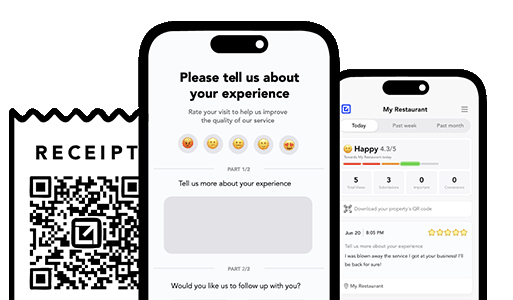
Text or email clients after every job. Catch issues early, recover unhappy clients fast, and drive repeat work with smart reminders.

Austin Spaeth is the founder of VisibleFeedback, a tool that helps service companies automate post-job follow-ups, catch issues early, and drive repeat work with smart reminders. With a background in software development and a focus on practical customer retention systems, Austin built VisibleFeedback to make it easy to text or email customers after every job, route problems to the right person, and keep relationships strong without awkward outreach. When he’s not building new features or writing playbooks for service businesses, he’s wrangling his six kids or sneaking in a beach day.
Whether you’re dealing with callbacks, unhappy customers, or low repeat work, we’ll help you tighten the follow up loop.
No credit card required.
